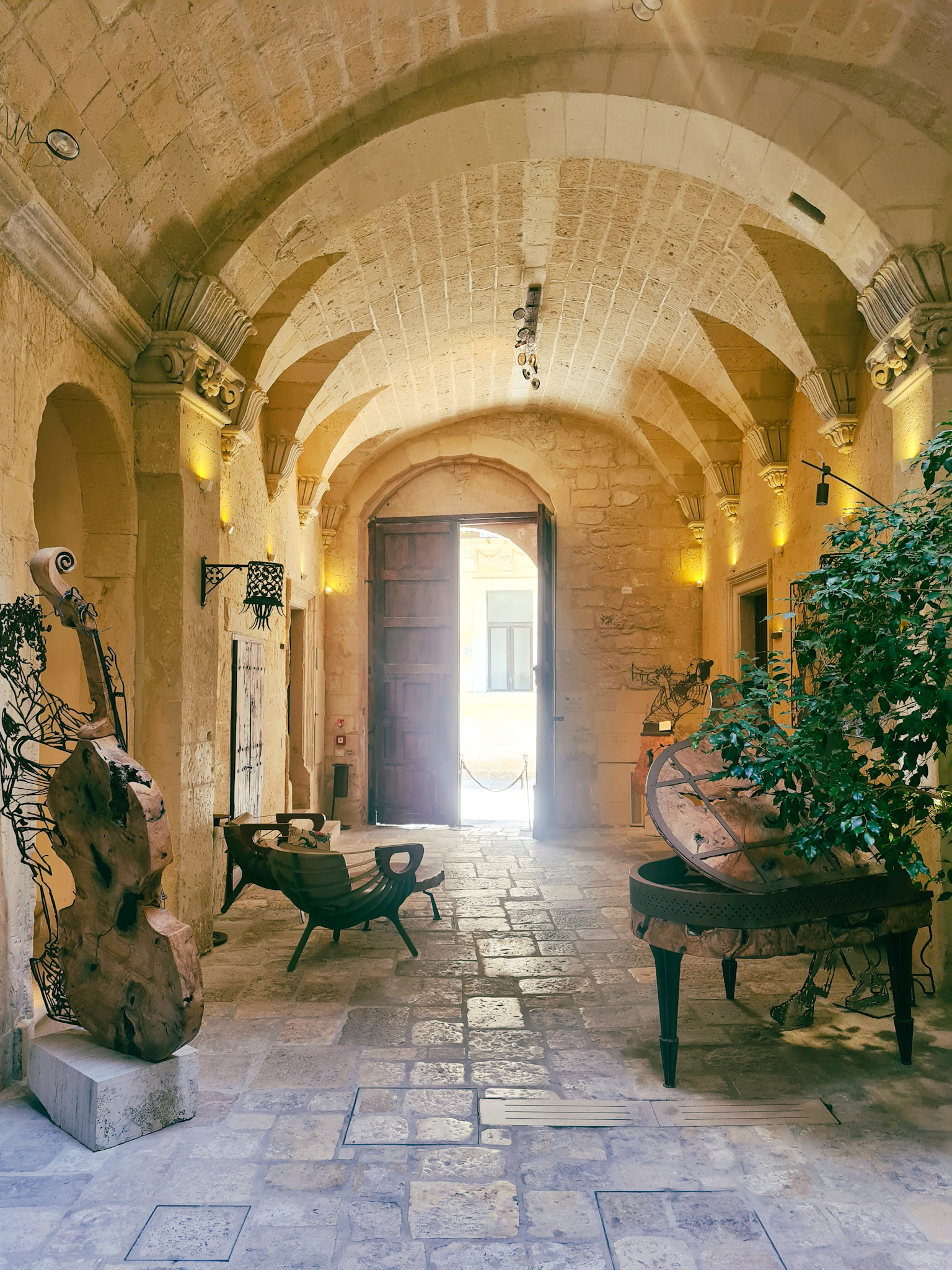
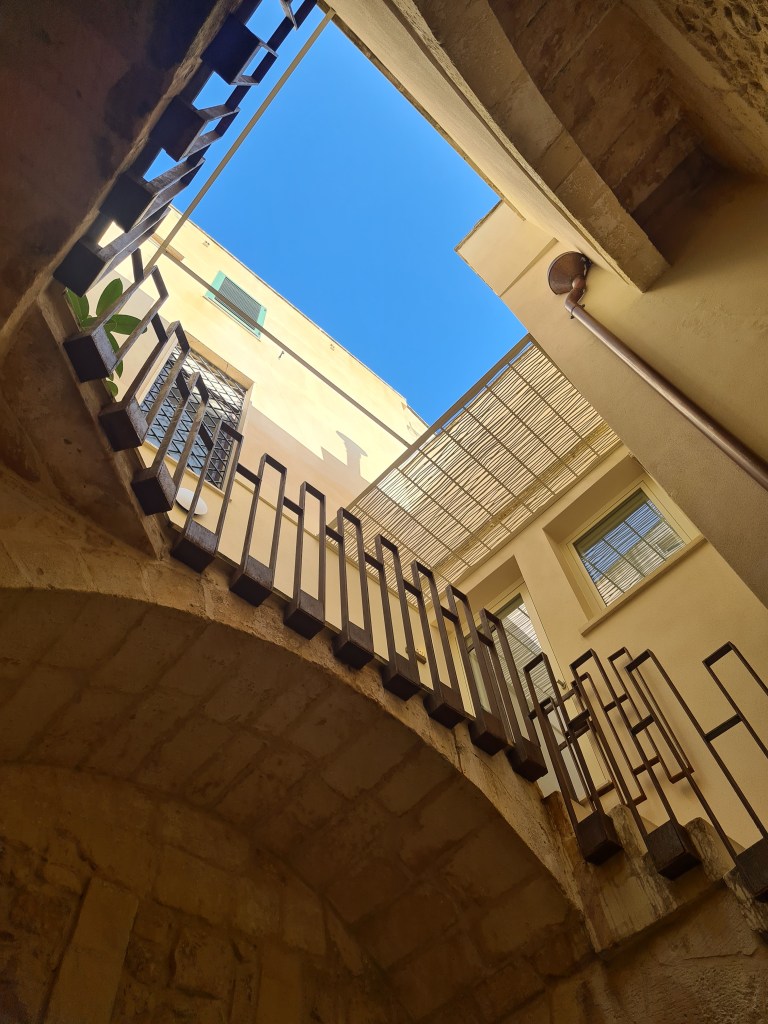
Pollicastro Boutique Hotel is one of those places you know is going to be special before you’ve even stepped through the door. It might be something to do with the hordes of tourists leaning over a stanchion rope to take pictures of its impressive atrium lobby. From the outside, Pollicastro feels more like a museum than a hotel.
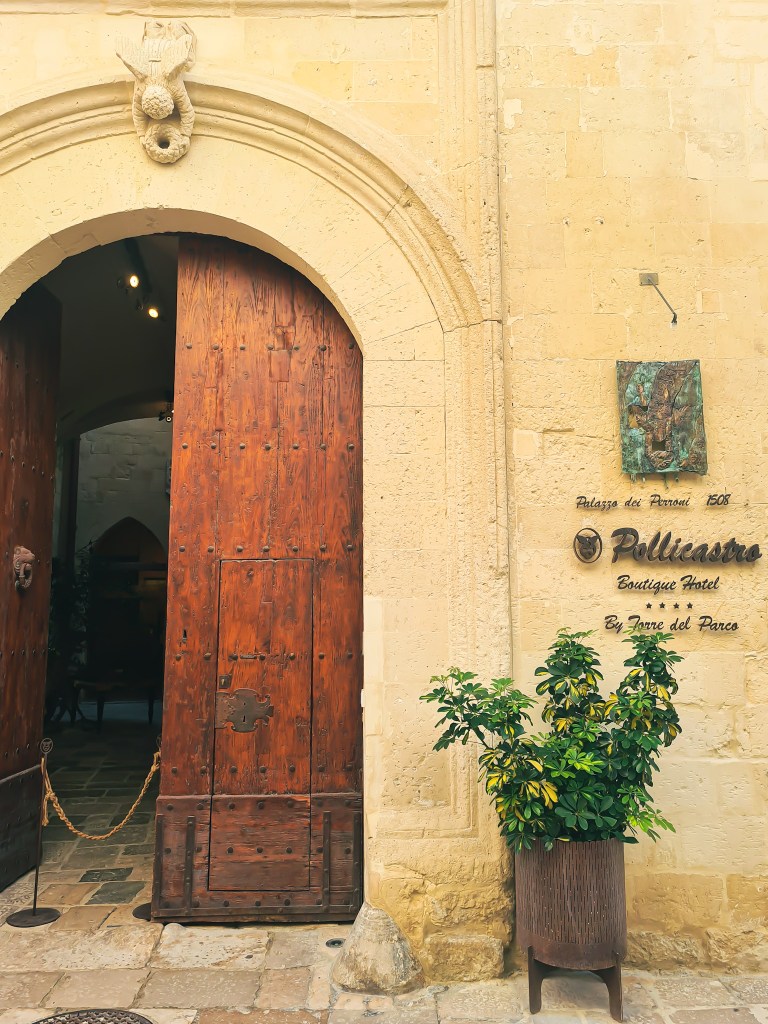
Pollicastro is located in the heart of the town of Lecce, Puglia. It’s a pretty town known for its stunning baroque architecture and ornate churches. The doors of the hotel open right onto the town’s main pedestrianised street; you can’t get more central than this (problematic if, like us, you brought a car. No vehicles are allowed in the old town of Lecce, but the hotel runs a shuttle service to a private car park outside the town walls).
Pollicastro comes with its own fascinating mythology, starting with its name. It is said that in the year 1219 Saint Francis of Assisi knocked on the hotel’s wooden portal to ask for food. He saw an apparition of a young boy carrying puddhricasciu, the traditional bread of the town. Puddhricasciu evolved into ‘Pollicastro’ and the miracle was immortalised through a carving above the entryway of an angel carrying bread, which is also the hotel’s emblem.
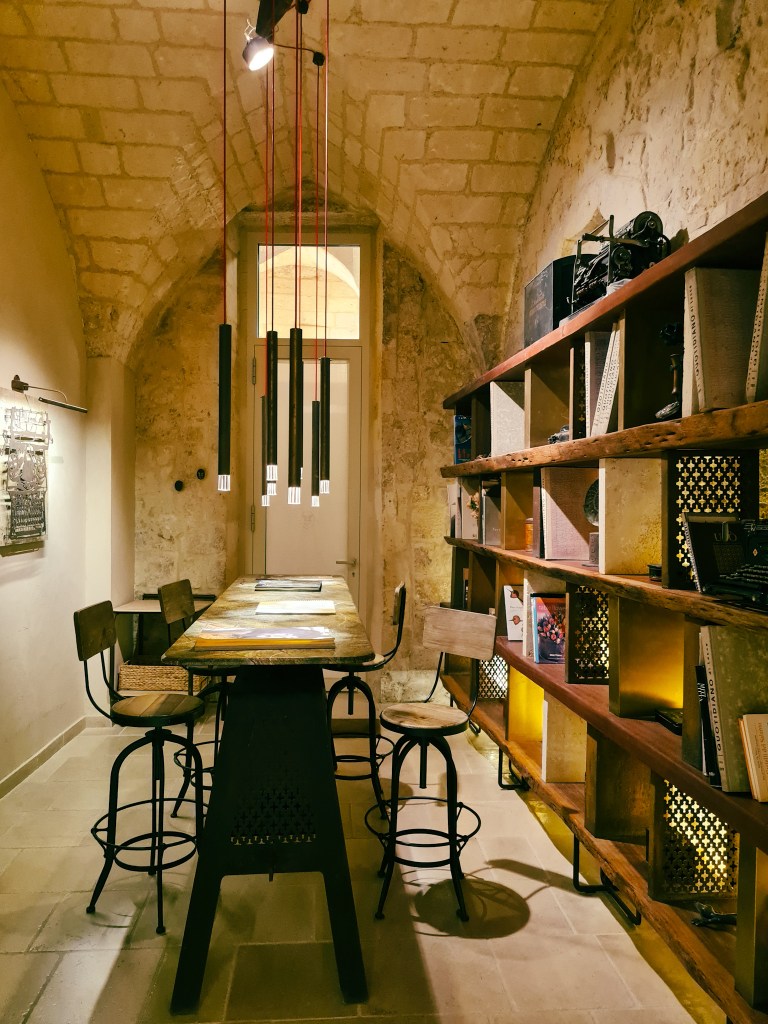

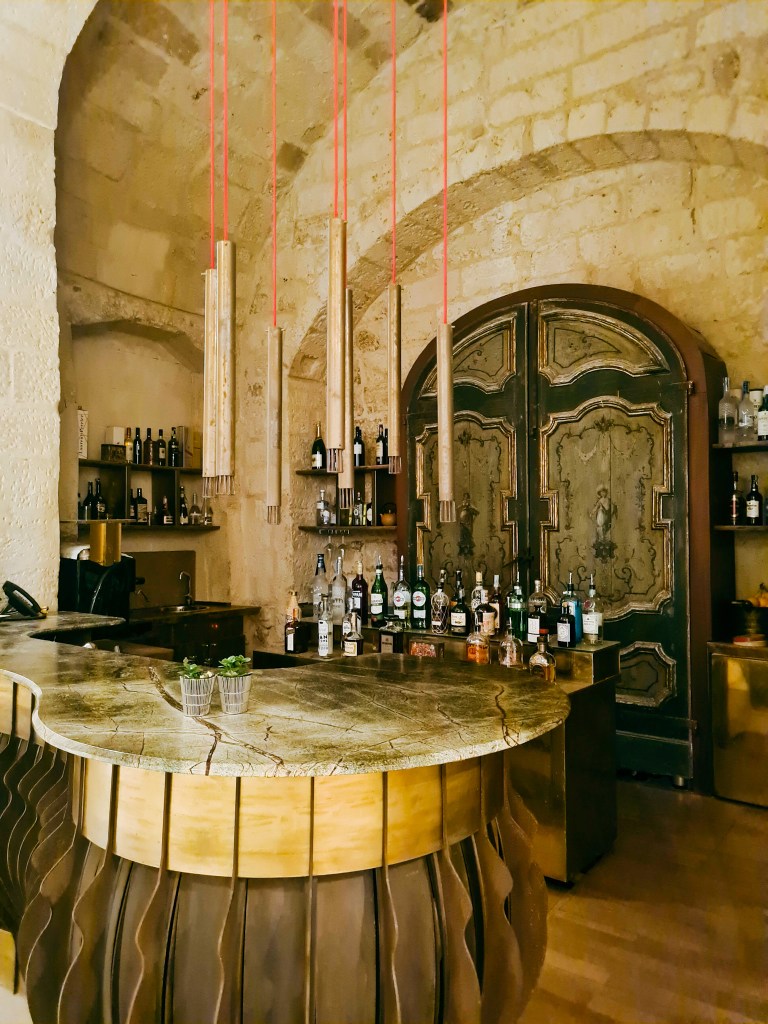
And whether the story is mythology or truth, Pollicastro just feels historically important. The communal areas on the ground floor could be carved from limestone caves. Chandeliers and spotlights cast a golden glow over antique furniture and natural wood table tops. The gilded bar is a special feature, with a huge art nouveau wardrobe as the focal point, and the wooden shelves of the dining room are filled with a veritable apothecary of vintage liqueurs and spirits – the sort that wouldn’t look out of place in a bar in 19th century Paris.
Pollicastro is a small boutique hotel but with a good selection of rooms to choose from, ranging from the Classic room to the Grand Deluxe Nyphaeum Suite, which is just as impressive as it sounds and includes its own private mini spa and underground cave pool, complete with waterfall.
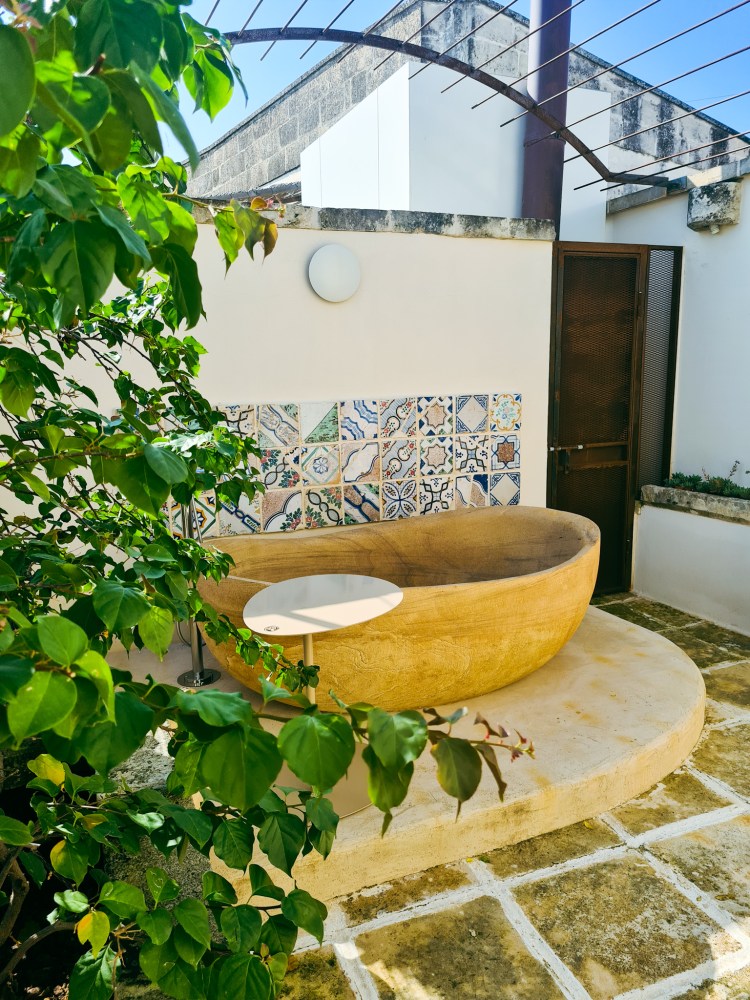
The bedrooms are all designed with the same golden hues, clean lines and wooden features as the rest of the hotel. Each is different, and each has its own special features, from private balconies to outdoor baths carved from stone.
The more accessible Classic rooms boast less of the novelty features but retain the same quality design and flourishes – all embellished with the hotel’s emblem. Bathrooms contain carved stone sinks, fluffy towels, and products made with local ingredients. All of the rooms come with capsule coffee machines, robes, and linen slippers.
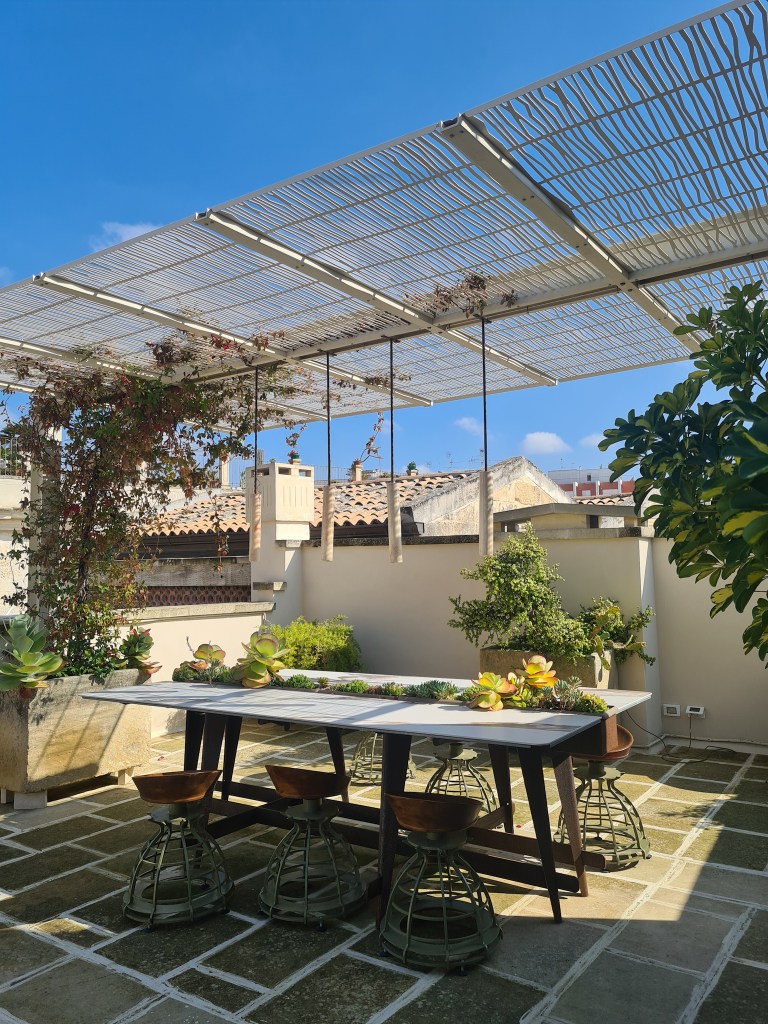
Despite the town centre location, guests of Pollicastro can still enjoy quiet moments in the sun from the shelter of the rooftop terrace – a puzzle of different terraces and levels adorned with plants, dining areas and spaces to sunbathe, all with a view to the ornate facades of nearby churches.
Sufficient attention must be paid to the Pollicastro breakfast, which is an extraordinary cultural experience in itself. On arrival, guests are asked to choose between four breakfast tasting (yes, tasting) menus: the Salentino (featuring specialities from the Salento region), the pugliese (with tastes specific to Puglia), the Griko (reflecting the cultural and historical ties between Puglia and Greece) and the deceptively delicious Healthy menu.
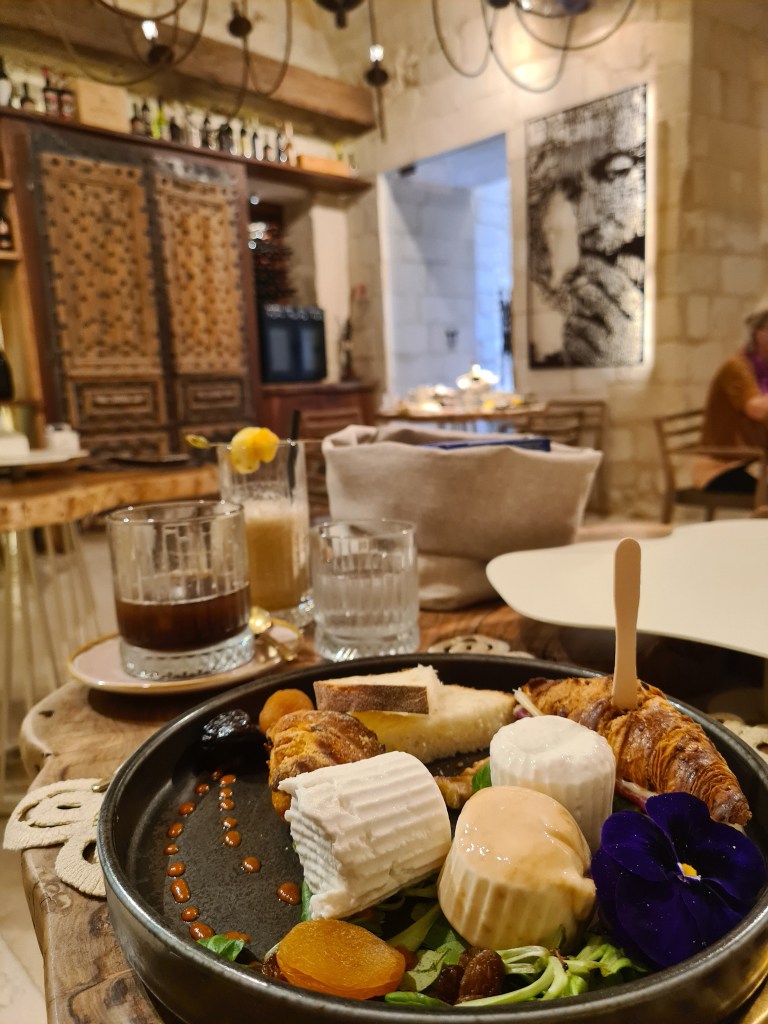
The good news is that substitutions are permitted, so you can try a little of everything. We opted for the pugliese menu – a mix of delicacies and ingredients local to the region such as croissant with ham from nearby Martina Franca, Apulian cheeses, dried fruits, freshly-baked breads (it was, after all, provided since the 1200s), and panzerotti, a must-try in Puglia.
We are in Italy and so due importance is given to the choice of coffees available on the menu. We opt for the town’s own caffè leccese – iced coffee with a touch of almond milk – with a fruit smoothie on the side.
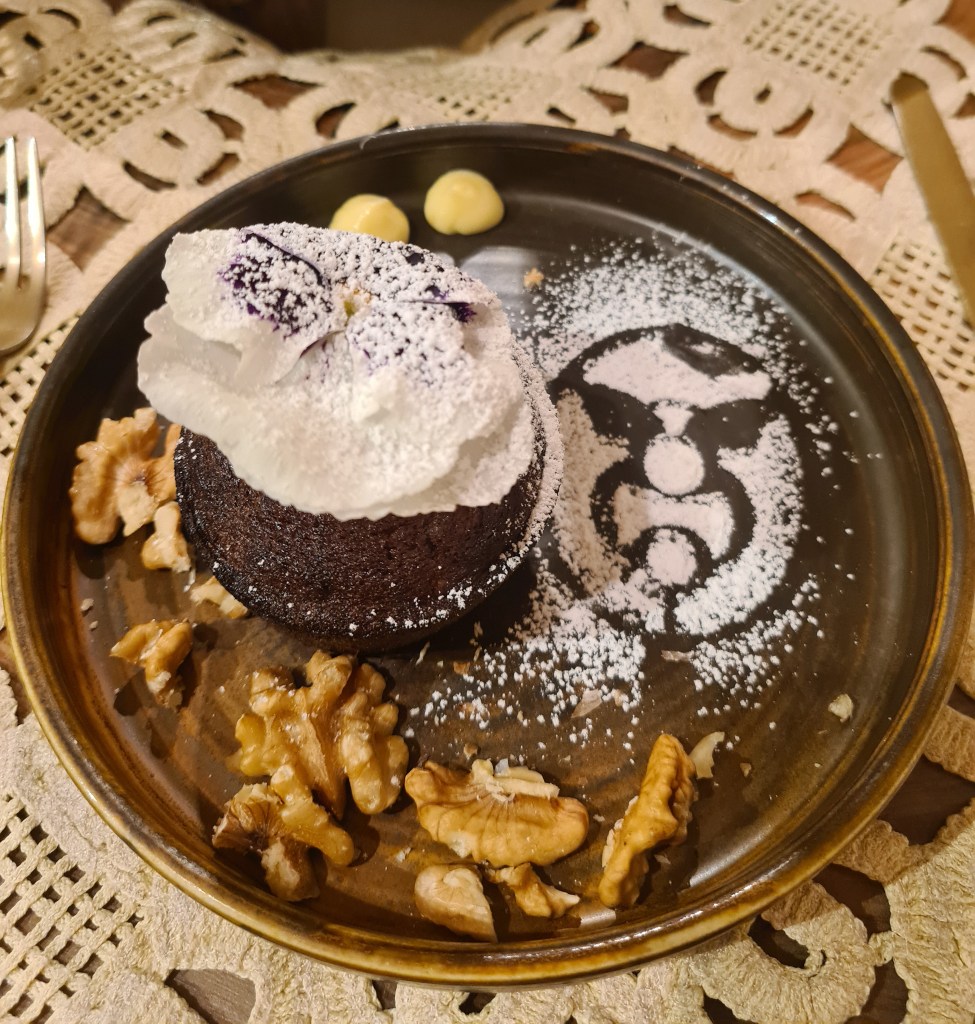
The sweet course is a cake of walnut and cinnamon, placed beside an icing sugar impression of the hotel’s angelic emblem.
There are plenty more local favourites to try on the other menus, such as pasticciotto (sweet pastry filled with custard), rustico (puff pastry with mozzarella and tomato), Greek spanakopita, and brioche from Salento.
Throughout our trip in Puglia we noticed a recurring theme: a lack of any coherence behind the system for awarding stars to hotels. Large generic chains would be rated five stars, while some of the boutique properties we stayed at, which provided comparatively outstanding quality and service, were only given three or four stars. This is also the case for Pollicastro, which feels underrated at four stars.
Puglia is a region full of picturesque hilltop towns and pretty coastal villages. It makes planning an itinerary for a short trip a very difficult task. We would definitely recommend including spending some time in Lecce within any itinerary, and Pollicastro is the perfect place to step right out of the front door and begin exploring. If it’s good enough for Saint Francis, it’s certainly good enough for us.
We stayed
in a Classic room, priced at around 250eur per night including an excellent breakfast
Book directly on the hotel’s website to take advantage of a 10% discount.
This was not a press stay – all opinions are our own
Discover more from
Subscribe to get the latest posts sent to your email.
 thewanderluxe.co.uk