Everything about 13C is surprising. It starts with the entrance – an unimposing door off a nondescript street in an area of central Amman that doesn’t feel like there’s much else around. Arar Street could be a commercial area of any city, surrounded by apartment buildings and furniture shops, save for the fact that it’s a stone’s throw from the city’s fanciest hotels.
It certainly doesn’t feel like we’re about to walk in to the headquarters of Jordan’s second oldest and most successful wine producer, Zumot wines. This is the winery’s city centre showroom and we’ve been invited to a tasting; an experience we didn’t imagine possible in a Middle Eastern country with a historical reputation of conservatism. Like Jordan itself, Zumot is challenging stereotypes.
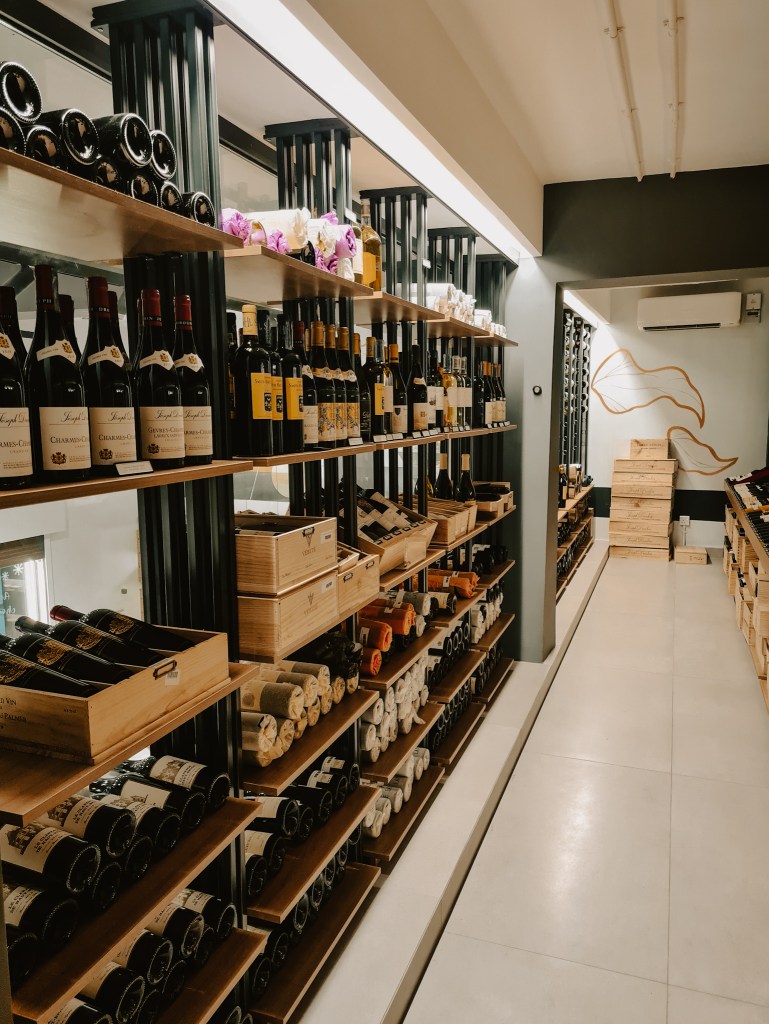
We enter 13C through the showroom – cabinet after cabinet of the most impressive wine and spirit selection we’ve seen throughout our time in Jordan. By the time we arrive in Amman we’ve travelled the length of the country and the scarcity of choice when it comes to alcoholic drinks is noticeable. Most restaurants we’ve eaten in are dry and the ones that do sell alcohol have to comply with local law that requires any drinking to take place in licensed venues and behind closed doors.
And yet here we are, standing in the centre of the country’s capital city, in a room filled from top to bottom with a wine selection that wouldn’t be out of place in Bordeaux. There’s an enviable collection of rare and premium spirits, including shelves full of aged single malt whiskies (13C has the most extensive collection of Macallan in Jordan).
Our guides for the day are Zumot’s trifecta of wine specialists: Joseph Moukarzel, 13C’s wine expert and Manager, Iva Boiuklieva, the Winemaker at Zumot Wines, and Bulos Zumot, Managing Director and grandson of Bulos Zumot Snr, who founded the company in the fifties.
The story of how Zumot Wines came to be is one of ambition ahead of its time. Bulos Zumot Snr started the business in 1954 as a vintner with dreams of one day transforming Jordan into a renowned wine-producing country. And his dream wasn’t too far-fetched given that this is a region with a history of wine that predates any other; some of the first wines ever produced were made in Christian churches in nearby Palestine. But Jordan of the 1950s was undergoing a period of intense political turmoil and the time to realise Zumot’s dream wasn’t yet.
Fast-forward to modern day and we’re in the tasting room of 13C, upstairs from the main showroom. Below a ceiling installation made entirely of wine bottle corks sits a long table surrounded by chairs – this is where the team hosts regular tasting events, inviting Amman residents to sample wines from the wineries of Burgundy to the vineyards of Argentina and beyond. Joseph is the face of 13C online, posting social media-friendly educational guides on everything from learning how to read wine labels to understanding appellations. It is clear that in the 70 years since the organisation began, the objective remains the same: to create a nation of discerning wine drinkers. Adjacent to the tasting room is a glass-walled room where 13C’s special collection is kept. It’s a temperature-controlled room lined with bottles of impressive provenance and age, some from leading French wineries like Château Palmer, Château Haut-Brion and Verité.
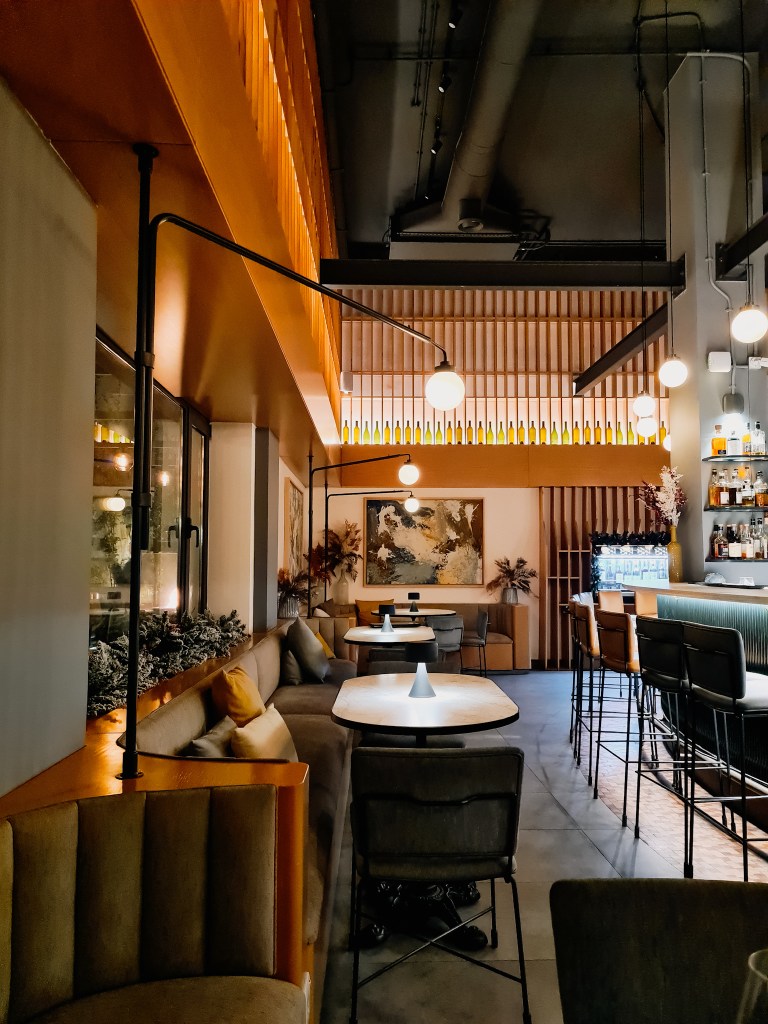
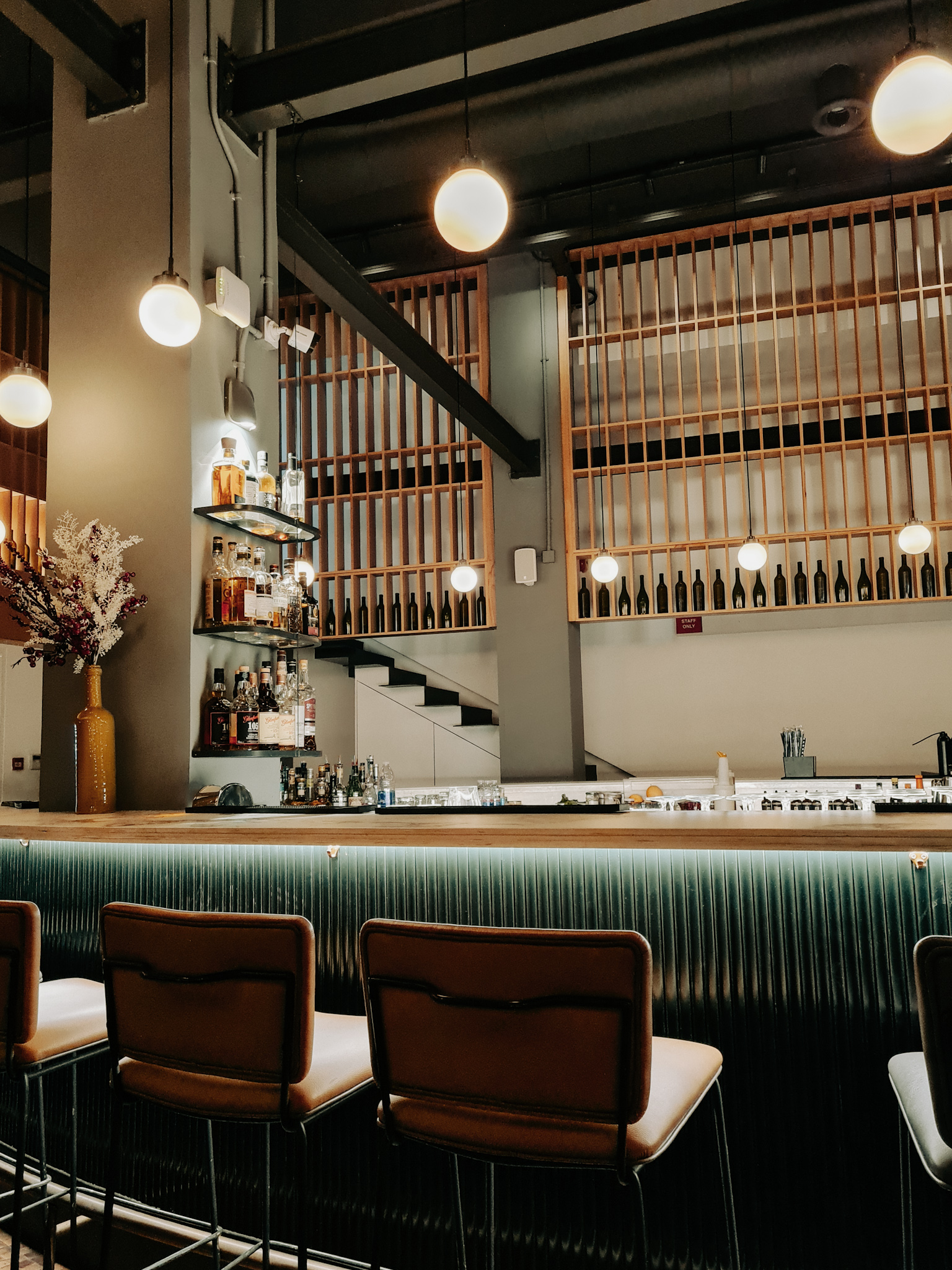
13C offers a full cyclical journey of discovery: you learn about the wine in the tasting room, you pick your favourite to take home from the showroom, and the most surprising element of all is the area in which to sit down and relax with a glass. The Bar in the Back is a speakeasy-style wine bar – you guessed it – at the back of the shop, undiscernable from the street outside.
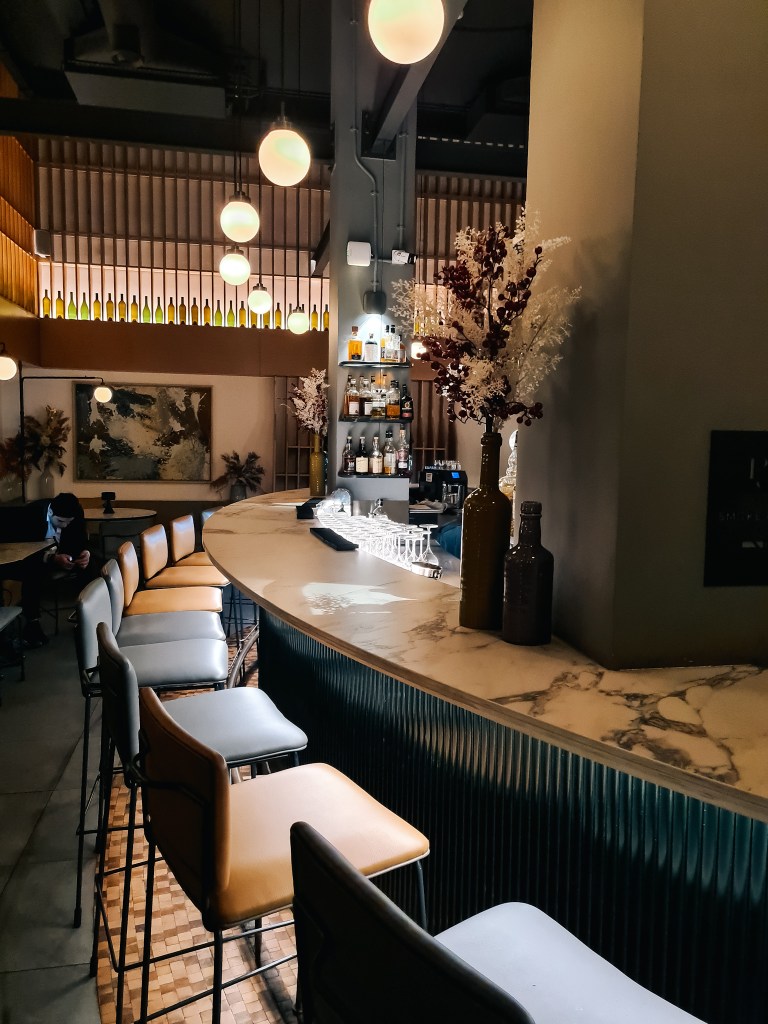
Another nondescript door transports us to a surprisingly chic mid-century interior with velvet banquettes, mood lighting, and a huge circle of marble-topped bar in the centre of the room. Around the walls, wine bottles double as an artistic feature, illuminated against pink panelling.
We visit on a Friday when most things in Amman are closed. It’s still early and there are just a handful of tables catching up over a glass of wine. When asked how easy it is to run a wine business in a predominantly muslim country, Bulos paints a picture of a youthful, liberal Amman where religion and culture exist comfortably in unison for many people.
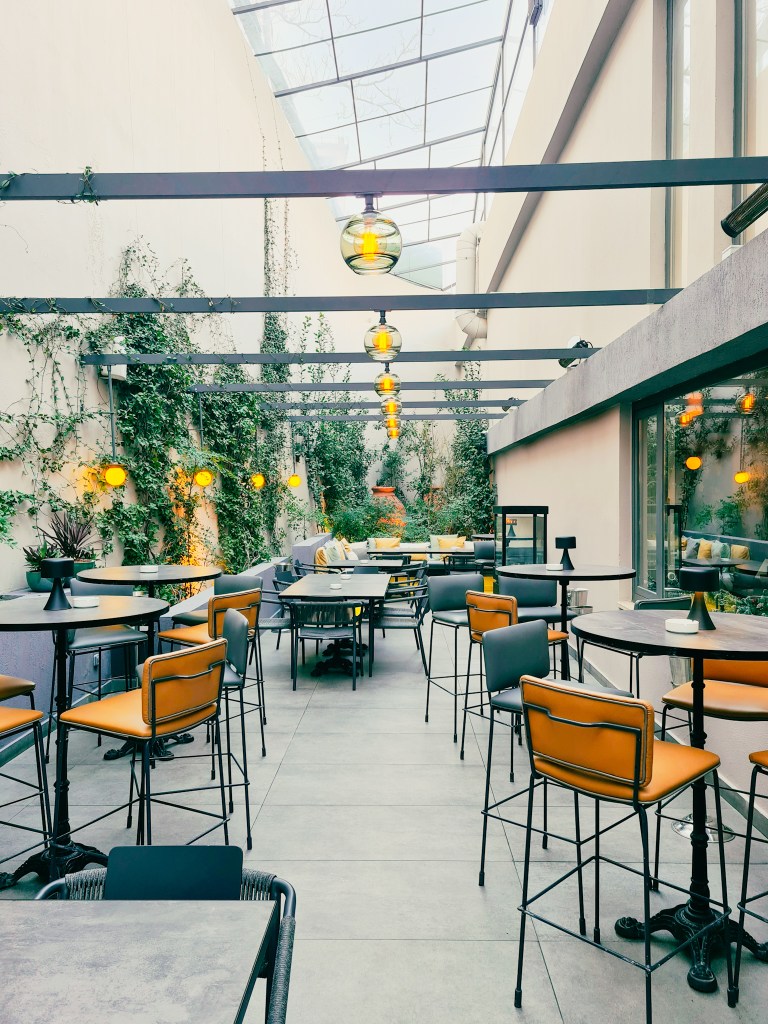
The design of the Bar in the Back is not just aesthetically pleasing but also built for year-round enjoyment. There’s an indoor-outdoor terrace with a removable skylight that provides heat and shelter in winter and can be completely detached in summer. When we visit on a chilly January day, patio heaters are lit creating a cosy al fresco alternative.
Wine is undoubtedly the star of the show and main event at 13C; however, it’s certainly not the only reason to visit. In fact, 13C’s Bar in the Back has just been named, for the second year in a row, among the top 50 best restaurants in the Middle East and North Africa.
The Bar in the Back is an informal set up, designed for enjoying high quality food that goes well with the wines on offer. The menu is designed to make the pairing process as easy to access as possible for guests, with sections distinguished by flavour profiles (‘Bold and Meaty’, ‘Earthy and Delicate’). And, of course, there’s a suggested wine pairing for every dish.
International favourites are given a Middle Eastern twist with a fusion of Levantine and European flavours. Amman has some excellent and internationally-renowned restaurants to choose from, many of which specialise in old school French cuisine or traditional Jordanian dishes. Few have embraced contemporary tastes and a new style of Middle Eastern dining as skillfully as The Bar in the Back has.
It’s izakaya-style dining with small plates aimed at maximum experimentation. Coconut encrusted miso black cod sits comfortably alongside coq au vin tartine and courgette fries.
In a country where meat dominates more menus, this is a refreshing balance of tastes for any palate, including a good selection of vegetarian and vegan dishes.
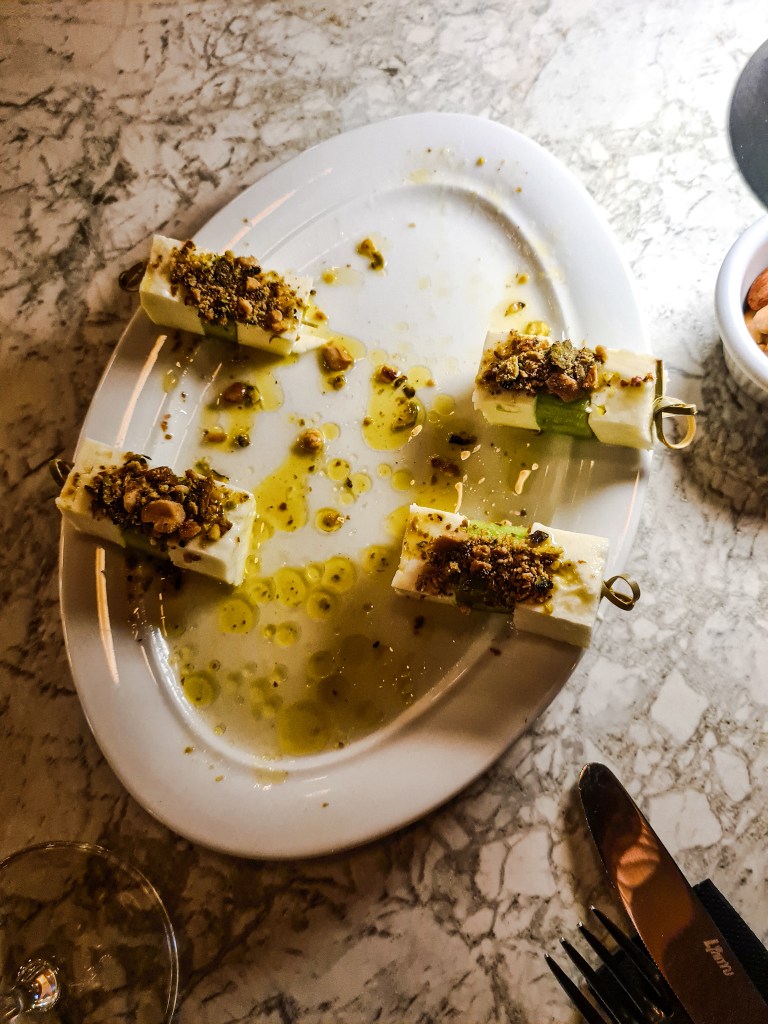
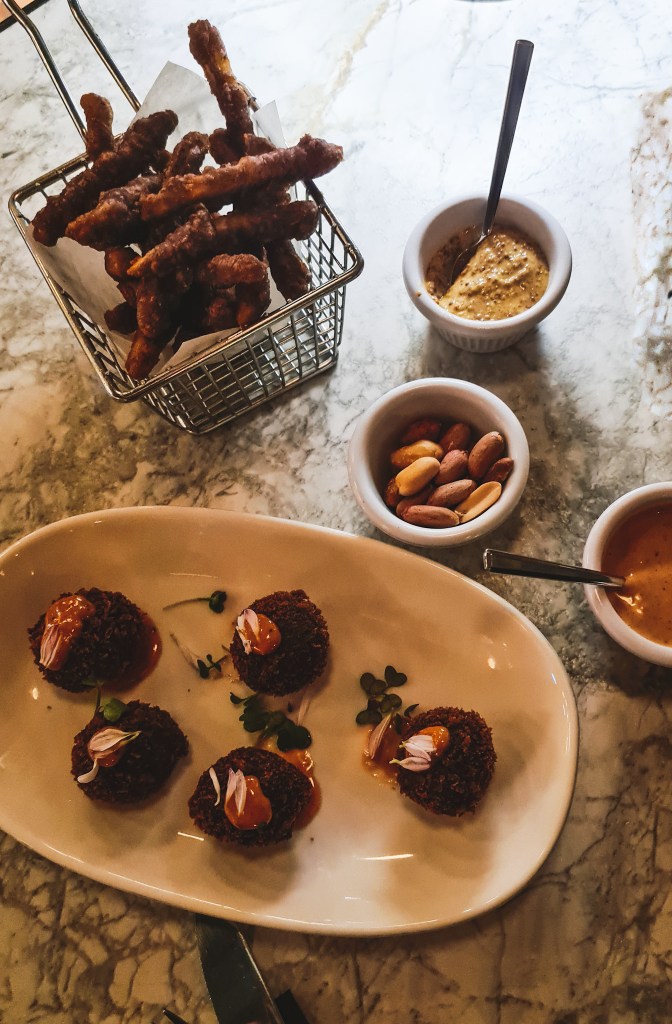
It’s early still and we opt for the more casual bar snacks menu to be enjoyed alongside the Saint George sauvignon blanc we’re drinking. The Tasali skewers of halloumi and cucumber are drizzled in olive oil and lemon and topped with a crunch of nuts. The panko-crusted falafel is given an unexpected east Asian twist with a katsu dressing. The fries are wine-battered rather than the traditional beer batter, and served with a dijon mustard accompaniment.
It’s a subtle twist on traditional bar snacks that brings to the fore the team’s international outlook and strong sense of Jordanian identity.
It is heartening to see the recognition enjoyed by the different brands in the Zumot Wines family. When Bulos Zumot Snr first set up shop in the 1950s with a dream of one day seeing a Jordan that specialises in high-quality wines, could he have imagined that this family name would signify one of the most prolific wine producers in Jordan and a brand synonymous with offering Jordanians the opportunity to better understand wine and to buy and consume it with ease?
What began as the planting of 34 grapes in the ’90s has transformed into a global-facing business with a desire to effect cultural change when it comes to wine drinking. 13C is far more than just a place to enjoy a glass with friends; it’s changing the face of how Jordanians interact with wine.
As we enjoy the last bite of falafel and the last sip of wine on a wintery day in Amman, we can’t help but feel that supporting cultural change has never been so pleasant.
We drank
Zumot Saint George Winemaker’s Selection Sauvignon Blanc – 16JOD
Zumot Saint George Winemaker’s Selection Pinot Noir – 16JOD
We ate
Tasali skewers with halloumi and cucumber – 6.95JOD
Wine battered fries – 5.45JOD
Panko falafel with katsu sauce – 5.95JOD
http://www.13C.wine
This was a press visit – all opinions are our own
Discover more from
Subscribe to get the latest posts sent to your email.
