A short bus journey from the fairytale streets of Old Bruges and far from the hordes of camera-toting tourists, past the city walls and windmills, brings you to the suburb of Sint-Kruis. It’s a quiet residential place with tree-lined avenues and family homes. It’s certainly not where you’d expect to find a two Michelin star restaurant just tucked away among suburbia.
De Jonkman is the brainchild of husband and wife duo Filip Claeys and Sandra Meirlevede who, together, have created a winning recipe for fine, honest and regional haute cuisine that has astounded locals, tourists and critics alike. De Jonkman’s glowing reputation precedes it and as such we arrive expecting a grand entrance. To our surprise, the restaurant is a modest Flemish-style villa that blends discreetly into its surroundings. We later discover that this particular villa is a former hunting lodge from the nearby Male Castle. It’s clear that, despite a strong dose of Flemish humility, nothing about De Jonkman is ordinary.
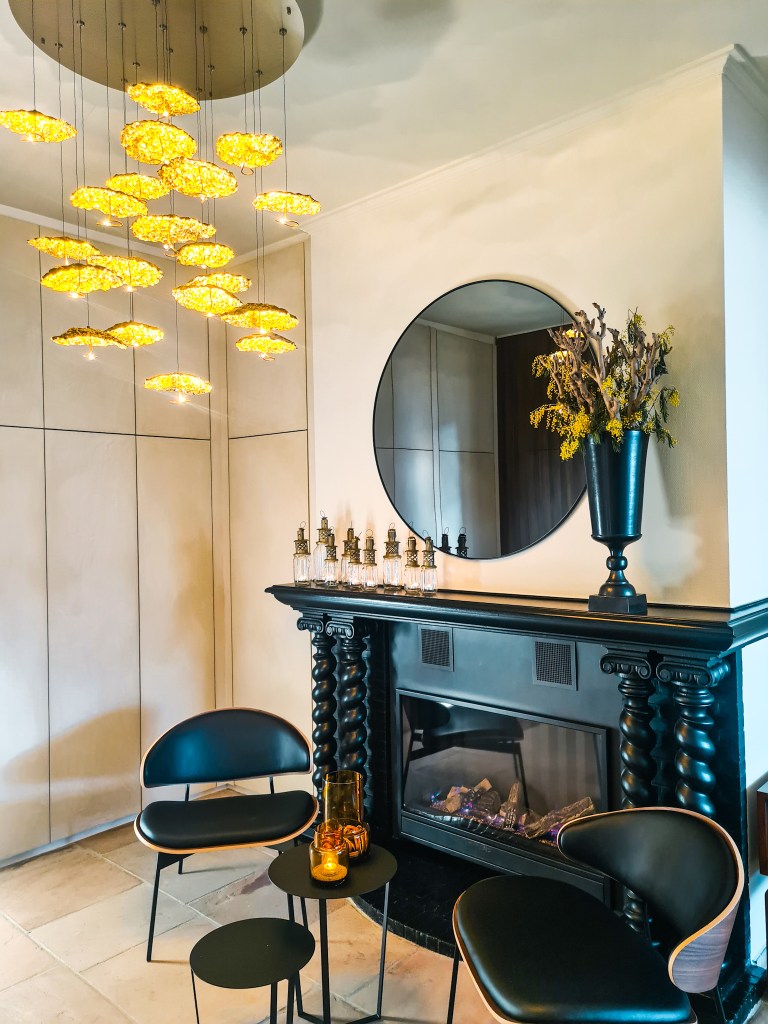
The homely setting gives the sense that you’re dropping in at a friend’s house for lunch. We arrive on a crisp winter’s day and the sun is streaming in from the garden beyond. There are just a couple of occupied tables at this early hour and De Jonkman has an unexpected peacefulness; there are no pots clanking in the kitchen or waiters running around frantically. Diners are speaking in hushed tones to a backdrop of low music and a bubbling fountain outside. The fire is lit, adding an illusion of warmth to the winter sunshine.
Our waiter introduces himself and offers a glass of champagne or the house cocktail to begin. A promising start. We opt for the champagne, which is a crisp blanc de blanc chardonnay from maison Assailly.
De Jonkman specialises in tasting menus expertly crafted by Head Chef and co-owner Filip, whose innate understanding of seasonality and provenance resonates with every bite. The borders of Bruges expand to the North Sea, incorporating the port of Zeebrugge – formerly one of the most important trading ports in Europe. As such, Bruges has always had a strong sea-faring tradition, and the connection to the North Sea in particular is palpable at De Jonkman. Filip’s grandfather was a fisherman, and it is because of this he has developed a particular respect for fish and seafood native to the North Sea. The species play a central role in his menus, and this heritage was his motivation for founding North Sea Chefs, an alliance focussing on sustainable use of fish from the region. Sustainability is a concept that runs through everything at De Jonkman, earning the restaurant an additional green Michelin star for sustainable practices.
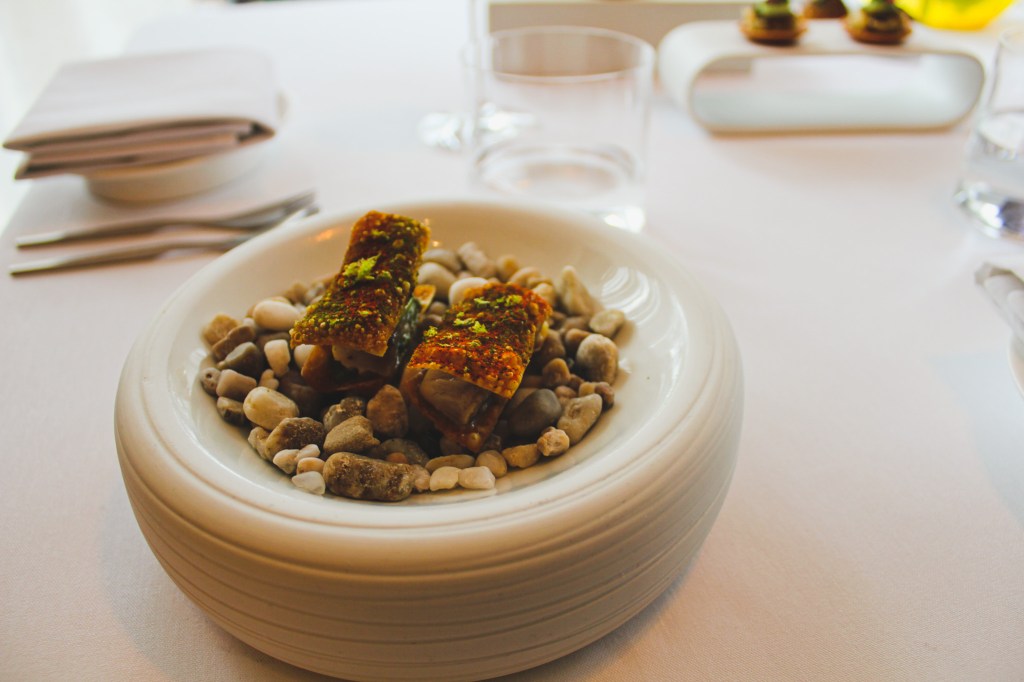
A selection of gourmet amuse bouche begins our introduction to depths and shores of the North Sea: a millefeuille of mackerel with pesto and lime; welks served with coriander, slow cooked beef with mustard, and sweet profiterole with dogfish. Dogfish? We question whether the name is lost in translation but it transpires that this is our first encounter with the lesser-spotted dogfish, a small shark native to the North Sea.
Despite the relatively relaxed surroundings, the service at De Jonkman is assertive and confident. We are attended to by three different waiters, each of whom introduces themselves and explains each dish they bring with knowledgeable ease.
To accompany the tasting menu we opt for a wine pairing selection. It’s a bold menu of lesser-known wineries and regions; a crisp white from Slovenia brings out the freshness of the seafood, a Slovak pinot noir is served in glasses specially designed for the blend, a Mullineux from South African winery Kloof Street balances the creaminess of a vacherin sauce.
We move on to a quail’s egg coated in a mushroom crisp. It has been cooked with a precision that keeps the yolk completely liquid inside – a perfect combination of buttery softness and earthy flavours when eaten as instructed in a single bite.
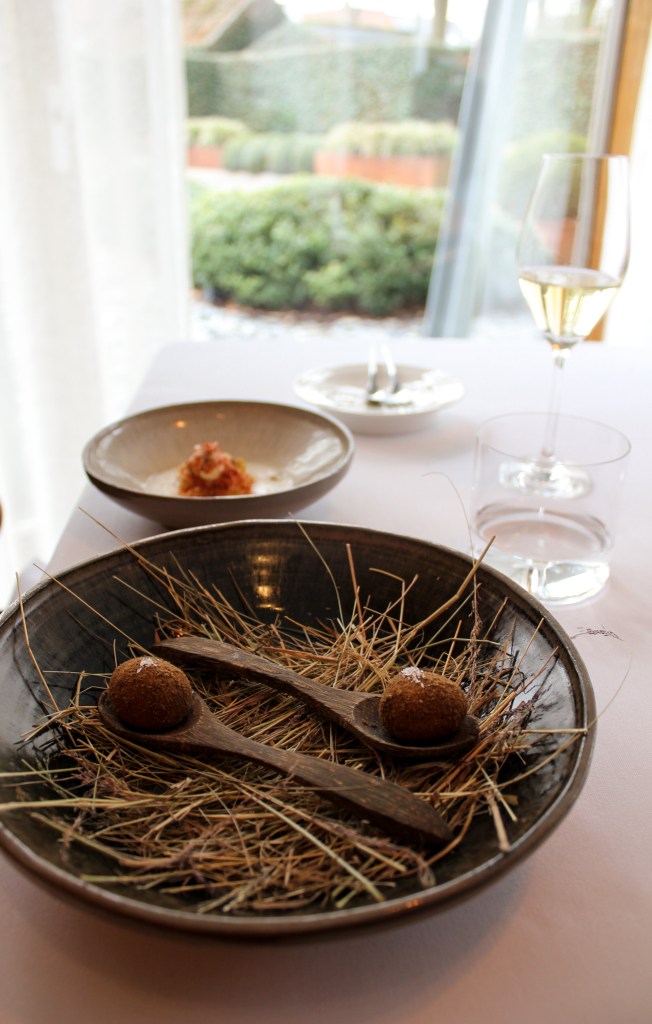
A chorizo ravioli brings Mediterranean flavours closer to home with the use of a local cheese from Bruges. Homemade mixed grain sourdough bread – still warm – is brought to the table with salted butter.
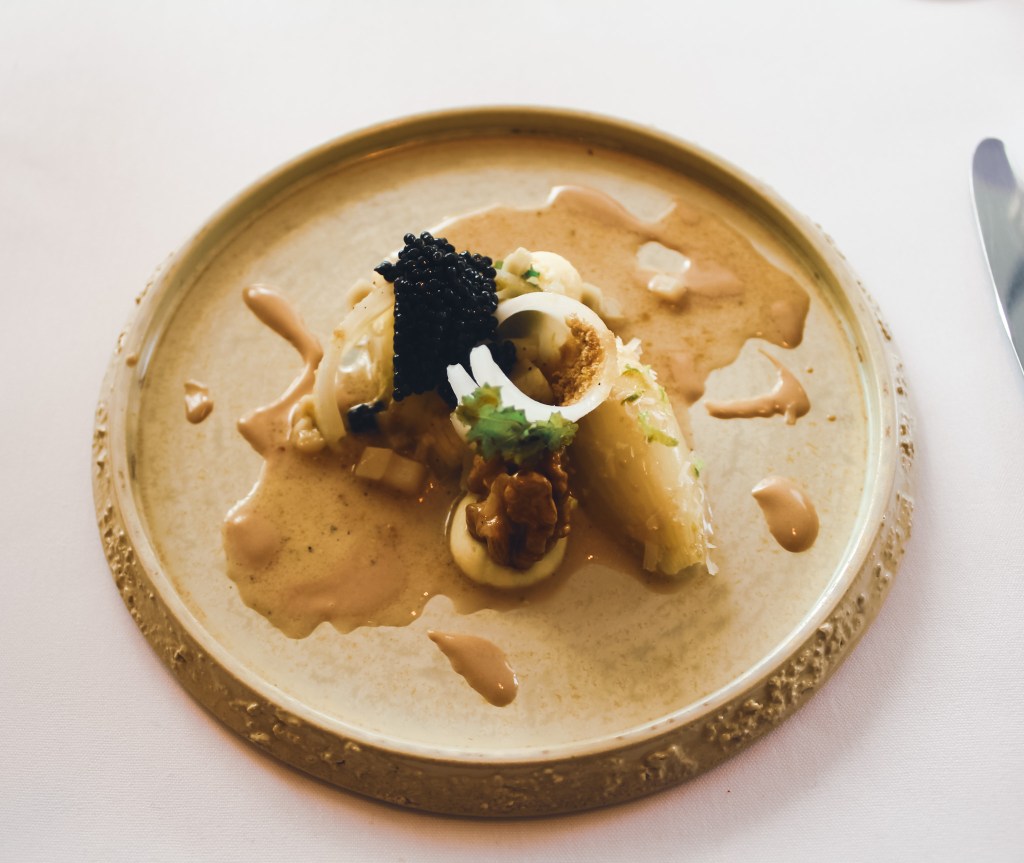
The next dish is a fish course that brings together classic French flavours and North Sea produce in a sublime medley that makes you want to throw down your napkin and exclaim, “ah ha!”. If one dish could explain De Jonkman’s winning formula, it would be this one. Fresh cuttlefish is served on a bed of onions with a sweet undertone and garnished with parsley. A vinaigrette based on cuttlefish adds a rich sauce, and the pièce de resistance is a generous dollop of caviar from north Italy, served by the waiter straight from the jar.
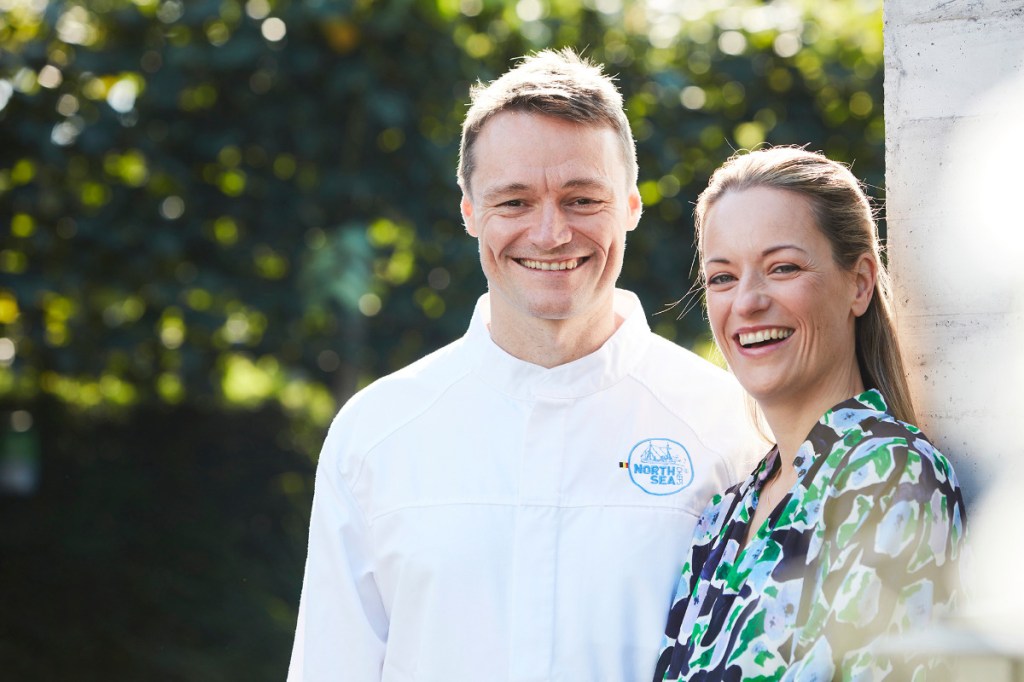
The ambience at De Jonkman is something that many fine dining restaurants try and fail to achieve without appearing forced or disingenuous. It is in equal parts relaxed and elegant – something that has much to do with the ownership. It is, after all, rare for a small family business to achieve this level of renown. Filip is the second generation of chefs in his family, having cut his teeth at legendary Dutch restaurant Oud Sluis under Sergio Herman. Sandra’s path was slightly less conventional, having swapped a career in fashion design to focus on De Jonkman. The potential was clear and the professional change paid off as De Jonkman received its first Michelin star in 2008, two years after opening, and a second in 2011. Filip was named Chef of the Year by Gault Millau in 2015.
The focus on promoting North Sea fish is more than a labour of love for Claeys. Despite noticing a decline in profit when he began to use these lesser-known varieties in his menus, he believed in the quality and persevered. Soon his clientele also began to appreciate how these new flavours could work with more traditional ingredients. Thanks in the great part to the promotional endeavours of North Sea Chefs, these species have started appearing on menus of other restaurants too.
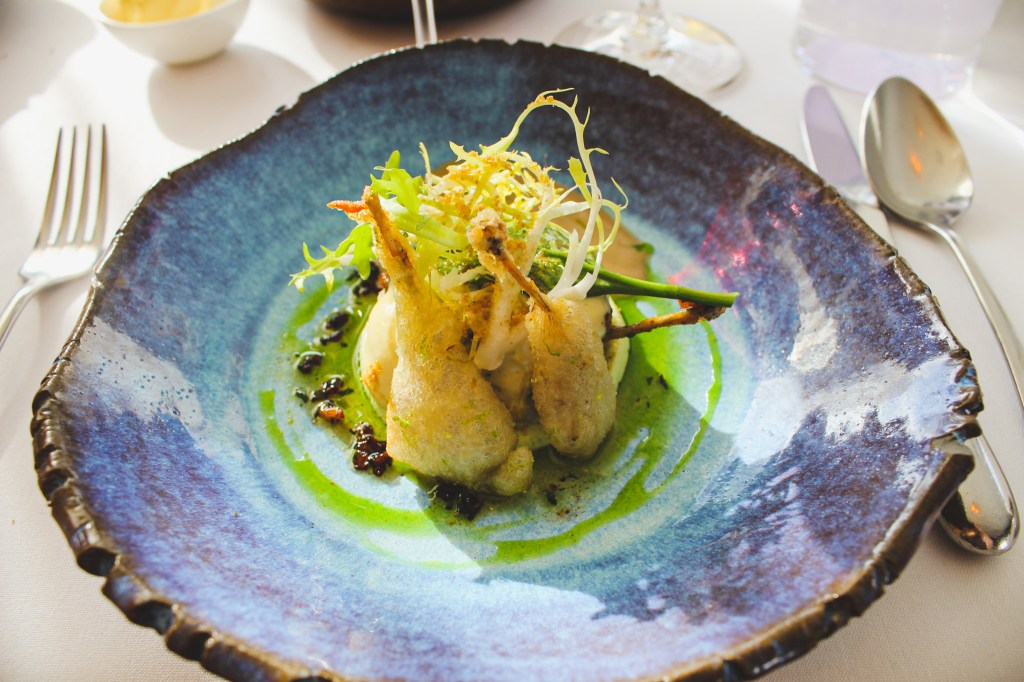
Back in the dining room, the next dishes on the tasting menu take us on a whistle-stop tour of Belgium’s land and sea; frog’s legs, lightly battered and served on a parsley dressing, designed to be eaten with the hands. It’s so delicate that the crisp just melts away at the first bite. Next is a succulent seabass fillet – a North Sea fish served Indian Ocean style with Indian spices and coconut; a slice of butternut squash is engraved with the restaurant’s motif.
Before the third main dish, we’re offered a palate cleanser of dentelle de Bruges (‘lace from Bruges’ – a paper-thin biscuit crisp) served with a blood orange and cointreau cream-like concoction. It’s served cold like ice cream but has a consistency closer to pannacotta, and to get to the main part you have the fun task of cracking through the dentelle de Bruges with a spoon.
The finale of the main courses is small fillet of wild duck, perfectly medium-rare and served with a medley of rich flavours: mushrooms, shavings of garlic Swiss cheese, a 7-spice mix made by Filip, and presented alongside a tartelette of chicory, Belgium’s favourite vegetable. A powerful red wine from Piedmont is the ideal partner.
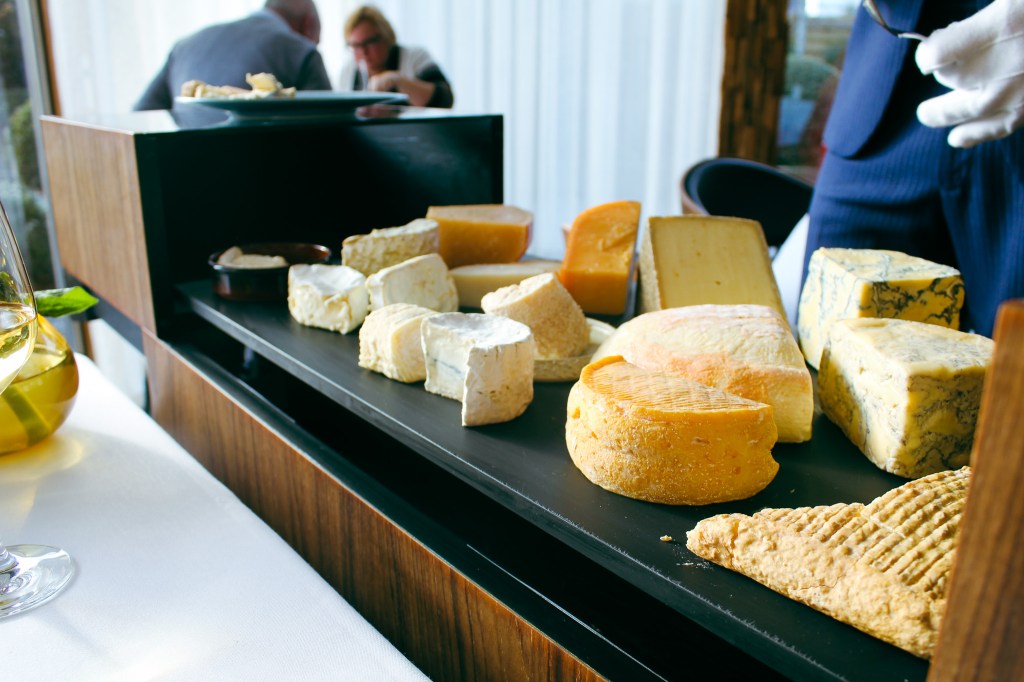
It’s time for dessert and little do we know that we’re about to start a whole new tasting menu experience. The waiter rolls a cabinet towards our table; the lid slides apart and we’re presented with the most impressive cheese board we’ve ever seen. After carrying out a short quiz to ascertain our preferences, he creates an on-the-spot cheeseboard catered to our tastes. Among the personalised choices are a goat’s cheese from Nouvelle Aquitaine, a creamy brie-like variety from the mountains of Chamrousse, and a cheese from closer to home, made in a farm in West Flanders.
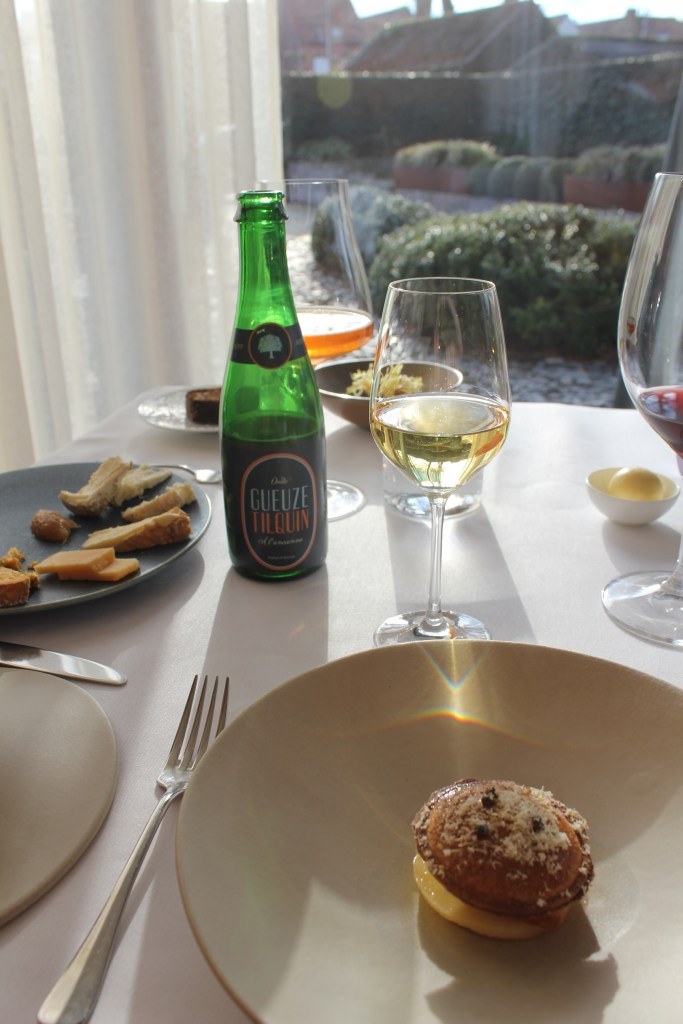
If there’s one thing De Jonkman understands very well, it’s how to get the most out of Belgian flavours, and so rather than the traditional wine pairing this cheeseboard is served with an Oude Gueuze beer, its sour and sherry-like sweetness providing the perfect complement to the salty richness of the cheese.
Unable to choose between the two, we also opt for the sweet dessert option, which comes in two parts: a soft biscuit sandwich filled with cream and pear, and a separate mini pear sponge. Alone, the pear is almost painfully citric but when tasted together with the biscuit and cream it alchemises into a subtle blend of sweetness and zest that tickles the tastebuds.
With the dessert we enjoy our final wine of the tasting menu, an excellent finisher: a sweet but light riesling from Germany’s Selbach-Oster winery.
We are more than sated following course after course of culinary goodness, each dish seemingly more impressive than the last. However, we’ve managed to save just enough space for a generous petit fours course with coffee. Over canneles bordelais (custard and vanilla tarts from Bordeaux with their recognisable ribbed shape and solid texture, sure to be found in the window of any good French patisserie), madeleines, macarons, and raspberry cream tarts, we ruminate over everything we’ve eaten, remembering the pleasant surprise of each first bite.
We’re mid-reflection when the waiter brings a box to the table. For a second it seems like he’s offering an after-dinner cigar, but closer inspection reveals that the box is filled with peanuts, on top of which are two very realistic biscuit cigars filled with chocolate. Each cigar is embellished with a printed image of Filip in Cuban attire and mouth full of cigars. The box reads: “Smoking kills but this cigar can save your life”.
In an industry where a Michelin star often brings with it a haughty ambiance and steely service, De Jonkman is subverting what it means to hold the accolade.
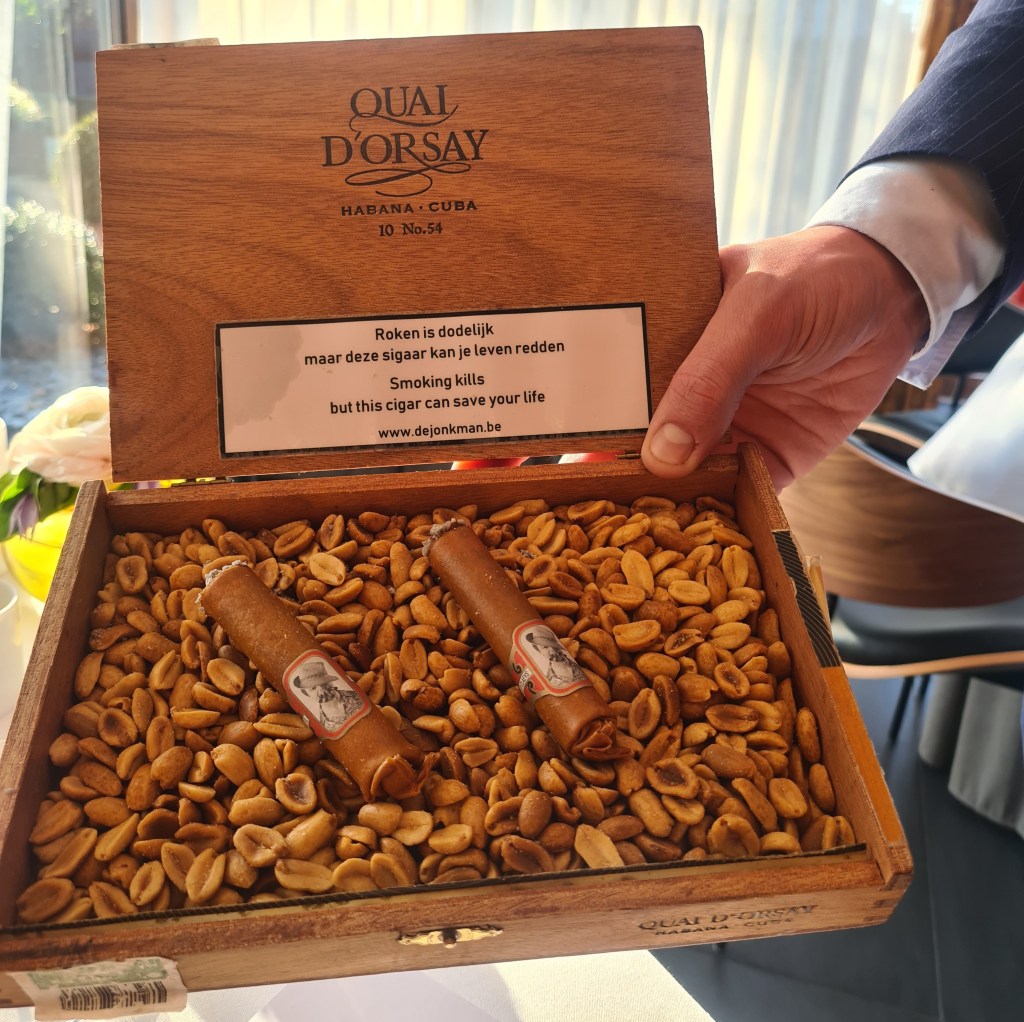
It’s undeniable that Filip and Sandra have established a food and service offering of incomparable quality, and in doing so have created something really special. But they’re also not taking themselves too seriously in the process. Eating at De Jonkman is a pleasure; it’s relaxed and fun. There’s no strict dress code or stuffy surroundings, and when we chat to Filip at the end of our meal he is polite and softly-spoken and speaks about his fishing heritage with a fondness that has so palpably translated into his cooking.
At the time of writing, the De Jonkman team had just learned that they’ve retained their two star rating (and additional green star) for another year. It’s a huge compliment and well-deserved recognition but it’s unlikely to faze the couple; the menu will continue to spotlight North Sea produce, the location will remain a homely villa on the outskirts of Bruges, and – we can only hope – the Head Chef will still be served in caricature form on the label of an edible cigar.
We ate
A specially designed tasting menu similar to the current menu ‘The Season by Filip Claeys’ priced at €195
We drank
a paired wine tasting menu, created by De Jonkman’s resident sommelier
You can book directly through the restaurant’s website.
This was a media visit – all opinions are our own
Discover more from
Subscribe to get the latest posts sent to your email.
 thewanderluxe.co.uk