Marseille’s reputation precedes it, for better and for worse. As the popular song goes: it’s not the capital – it’s Marseille, baby – and you’re unlikely to find a place that epitomises contrast quite like the capital of Provence. The newspapers would have you believe that it’s a scene of violence with riots breaking out every other night, with barely any reference to its thriving art, music, fashion and food scenes. It’s no coincidence that Chanel chose the city as the setting for its Cruise 2024/25 show (more on the campaign for this show later); it’s vibrant, cool, and – yes – a little rough around the edges at times.
As the international entry-point for Provence, Marseille also has its fair share of luxury hotel and hospitality options. There are plenty of big-name, 100+ room resorts in the city and surroundings, most of which offer a very pleasant experience. But it feels like cheating to come to such a distinctive city and stay in a generic resort, so instead we’ve chosen to stay somewhere that embraces the multicultural spirit of the city, the richness of its art scene, and the welcoming nature of its people.

The magical place that incorporates all of these things is Casa Youm – a boutique guesthouse in the L’Estaque neighbourhood, which sits on the hills to the west of the city. L’Estaque is a place worth experiencing in its own right.
Though technically Marseille’s 16th arrondissement, L’Estaque feels like a totally separate village. With the construction of factories in the 1800s (mainly producing tiles), it became an industrial town where artists flocked to take advantage of the cheaper way of life.
At one time or another, the town was home to Cézanne, Georges Braque, and Picasso, and the distinctive red roofs of its houses can be seen in some of their most famous works.
And there’s no place to get closer to the spirit of these artists than Casa Youm, where Paul Cézanne, one of history’s most celebrated post-Impressionist artists, actually lived and painted for a time. The house has a colourful history, having had just two owners – both artists – prior to its current proprietors.
The house was bought by couple Amira and Edouard in 2021, who were, at the time, living between Paris and Marseille and juggling successful careers in the city. They were looking for a new project, and the pandemic presented the perfect opportunity to relocate and start fresh. They spent some time searching for a house that could work as a guesthouse, and fell in love at first sight when they first walked through the doors of Casa Youm. It’s not surprising; this is a truly unique house (it’s easy to see what would have attracted the artistic greats). Set over three floors, the main house is divided into private quarters shared by Amira, Edouard and their dog, Mastock, three guest suites, each with their own style and personality, and shared living spaces.
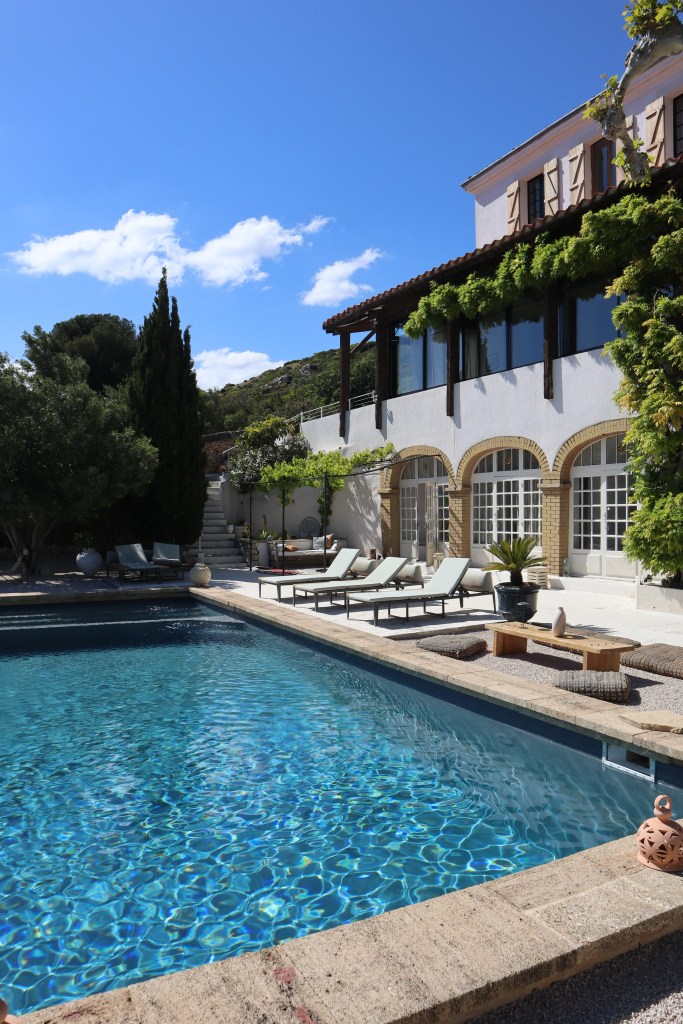
The ground floor is characterised by huge latticed windows in the original style of the house, which create a greenhouse effect in winter when the provençal sun shines through, warming the communal areas. The middle floor of the house has been completely renovated in a more modern all-glass design, and the upper floor could be plucked straight from a provençal country home, with classic features like wooden shuttered windows and swathes of creeping ivy.
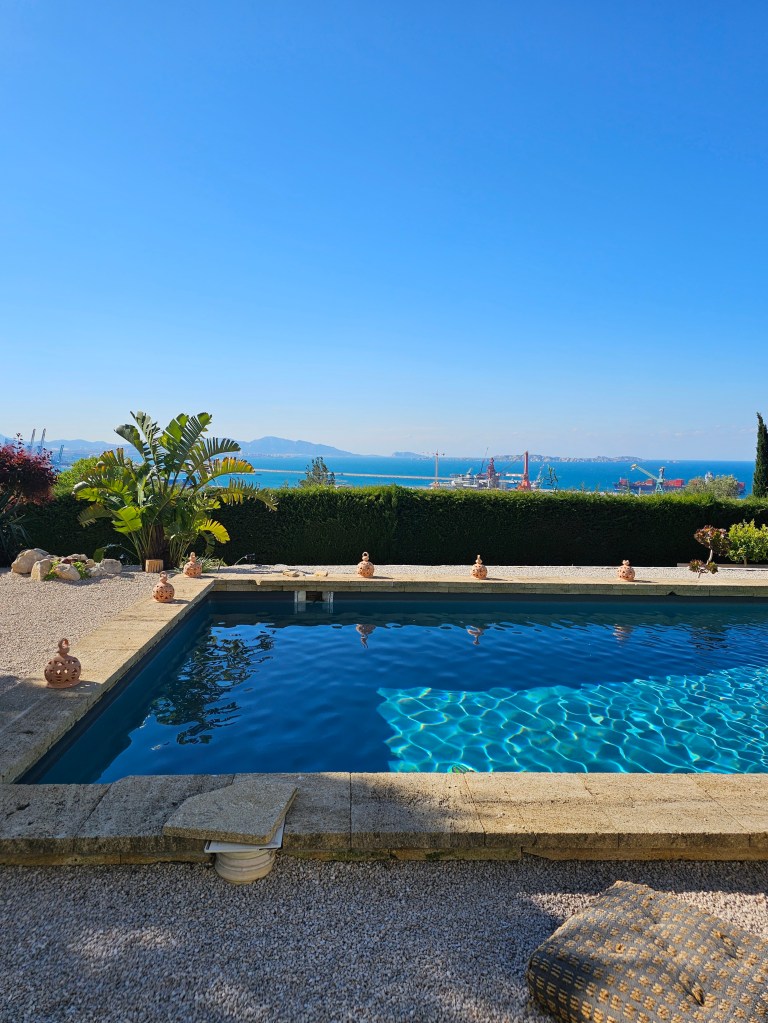
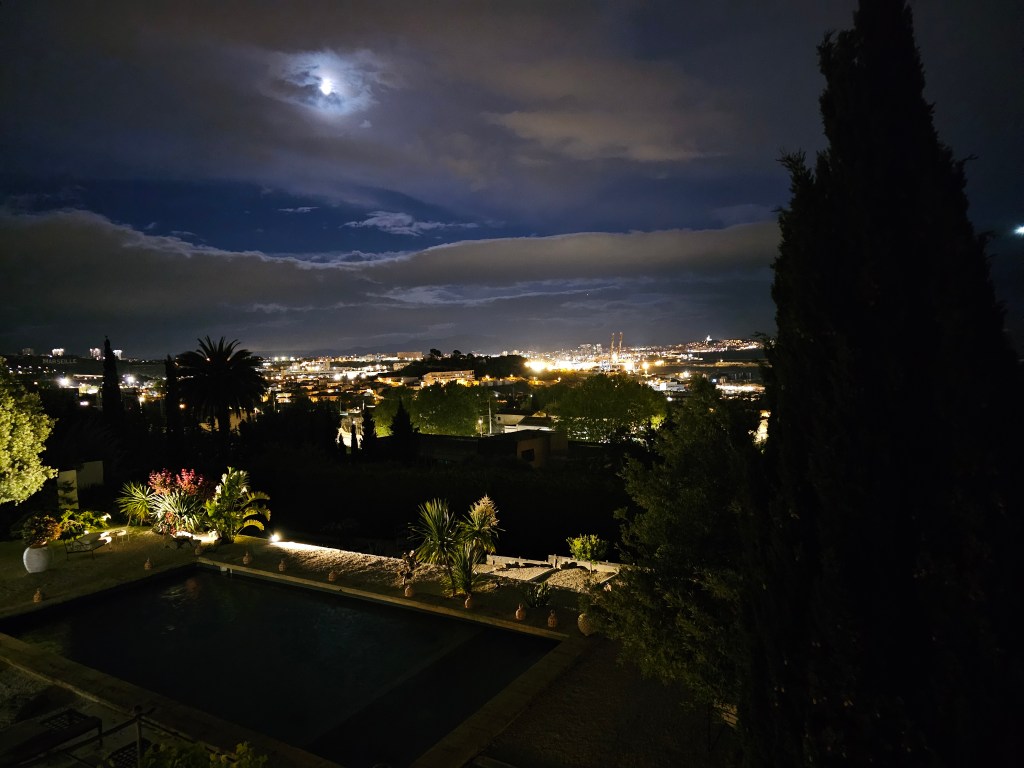
The house sits within bucolic gardens – a small patch of tranquility just a short distance from the lights and noise of Marseille. So close by, in fact, that the pool terrace offers an incredible view of the entire city, including the huge hillside lettering bearing the city’s name – Marseille’s answer to the Hollywood sign. We arrive in spring, on a day when the Mistral winds are in full force and rustling through the cypress trees and flowers of the garden. Other than this, the only sound is the occasional passing-by of the train between L’Estaque and Marseille centre, which is conveniently located just ten minutes’ walk from Casa Youm.
Perhaps the most intriguing architectural feature of the house is the ‘cabanon’ – a tower at the back of the garden, which stands tall over the rest of the house and provides a perfect viewing platform for breathtaking sunrises/sunsets over the Mediterranean. Today, the room is a multifunctional space that is used for activities like pilates retreats or art workshops, which the guesthouse hosts.
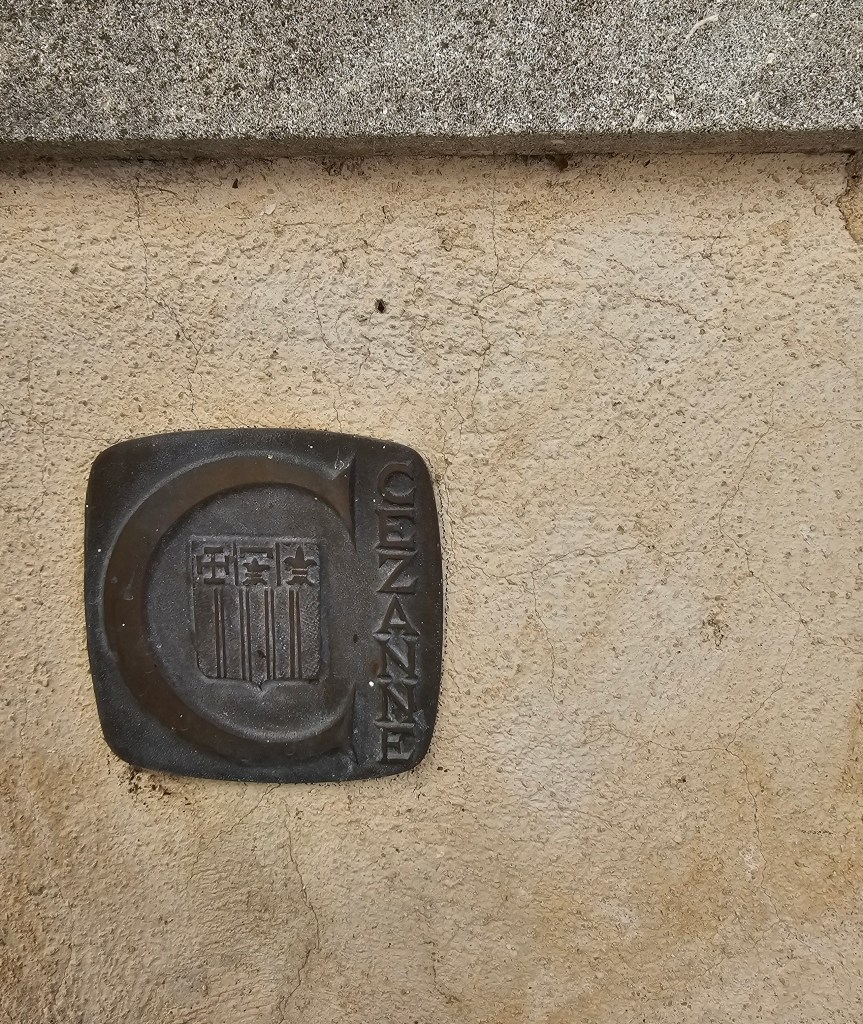
It’s a setting that fosters inspiration, so it’s not surprising to hear that when experts analysed Cézanne’s paintings of L’Estaque, they concluded that this was the likely spot from which his painting took place (certain enough that a plaque was erected in the garden to mark the cultural relevance of the house). The couple also found flecks of years-old paint in the room during renovation of the property.
On arrival at Casa Youm, we’re given a warm welcome and instantly feel like we’re visiting a friend’s home – a far cry from the generic reception desks of the super hotels in the city. The member of the family most excited to see us is Mastock, who, despite his size (Mastock means ‘hefty’ in French, and he certainly lives up to the moniker) is a bouncy and affectionate mascot, eager to greet the many guests coming to the house. We settle in to the sun loungers on the terrace and Amira brings us a welcome snack of homemade lemonade and a plate of traditional sablé biscuits from Marseille, which Mastock eyes up hopefully from the sidelines.
The guesthouse’s name – Youm – translates from Arabic to English as ‘day’, but is, in its native meaning, a more poetic description of the period between sunrise and sunset – a fitting name for this magical place, which offers a unique vantage point to appreciate these bookend moments of the day. It’s also a nod to one part of the owners’ heritage – something that is weaved through the house’s design and decoration. Amira was born in Tunisia, and Edouard in the south of France, but with southern Italian roots. They are just one example of the melting pot of cultures in the south of France, in particular in Marseille, where immigrants from nearby Italy and north Africa relocated from the 17th century onwards, bringing their unique cultures and flavours with them.
We’re staying in the Terra suite, which is the hotel’s largest guest room. It’s located on the ground floor, with a covered private terrace that attracts the sun during the day. As the name suggests, the suite is a blend of natural hues and materials, characterised with a couple of show-stopping features. The materials used are natural and earthen: a mix of stone, tile and concrete with touches of north African design, such as a tiled Moroccan-style bath the size of a small plunge pool.
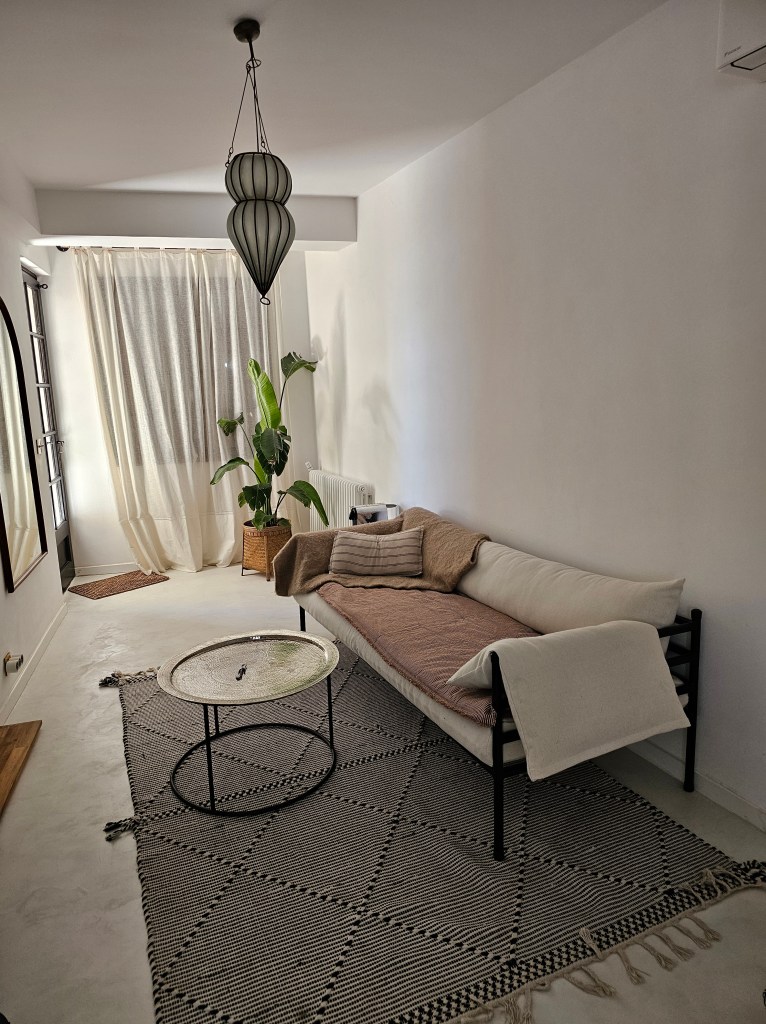
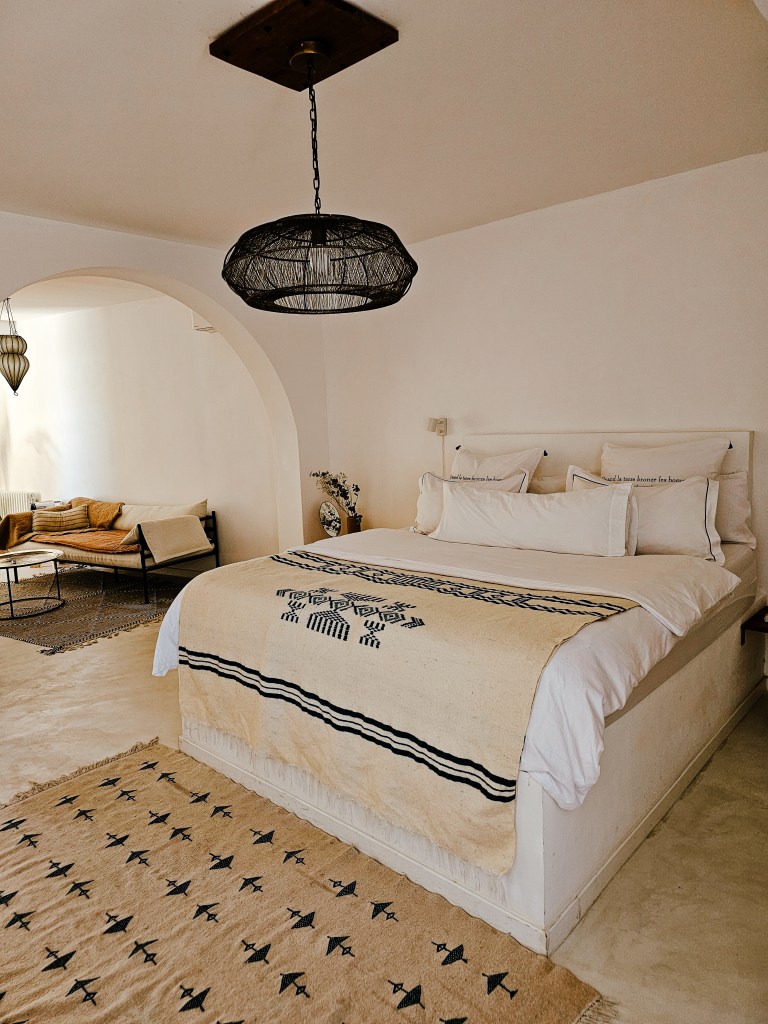
The floor – which was hand-poured by Amira – is smooth white concrete that seamlessly blends into a base for the bed and vanity unit. The bed is a generous size, sitting high on its concrete base, and is strewn with crisp white bedding and throws embroidered in intricate north African patterns. The pillows are stitched with a Tunisian proverb in French, which translates to “when the sun bronzes, there’s nothing for man to do but take a nap”; Apt in this room, with its low light and cool shade from the south of France summer, and plenty of lazing spots including a day bed in the sitting area.
In addition to the Moroccan bath, there is a rain shower tiled in the same terracotta mosaic. The vanity unit is a feature of note, with unique conical basins in stone, a combination of white concrete and wood, and Tunisian-style sconce lamps at either side.
Casa Youm has partnered with French brand Codage Paris for the cosmetics, and a generous provision of their products line the stands.
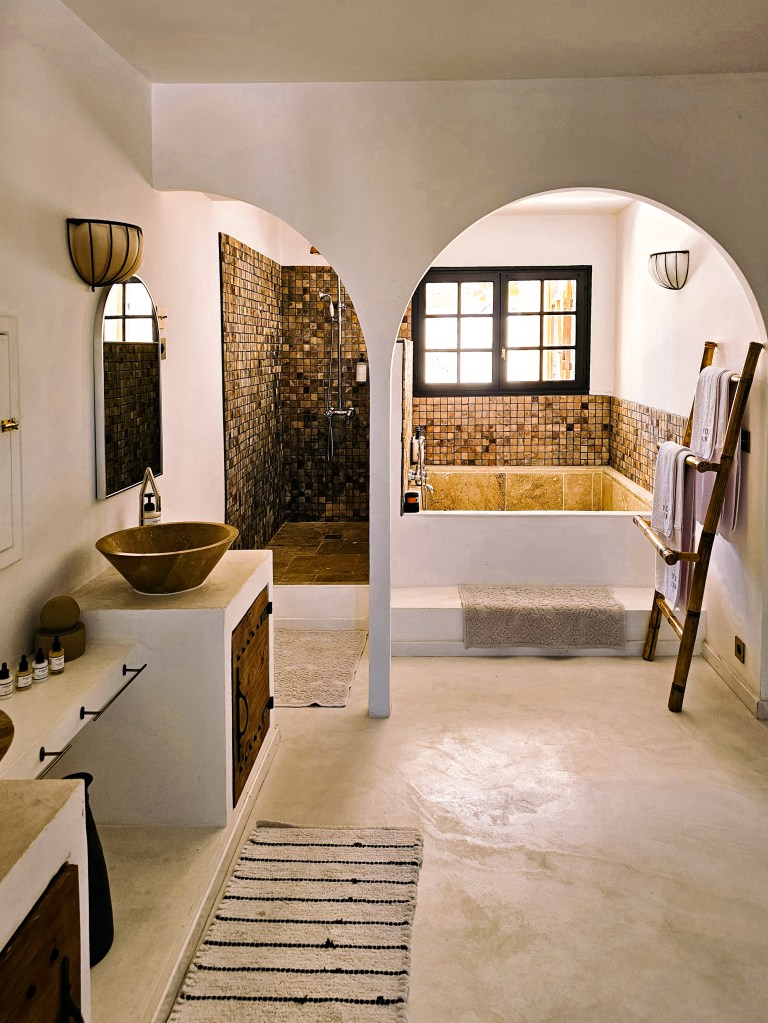
The bright white towels are embroidered with the name of the guesthouse. The bathroom is completely open plan (so, important that you know your roommate well!) with a separate room for the toilet.
There are two other suites – Sole and Nubian – to choose from, both featuring the same high standard of comfort and well thought-out personal touches. Sole is a bright space in shades of sunset, with touches of brushed brass and stone with accents of traditional north African design like studded doors, the sort you find all over Marrakech; Nubian a smaller suite decorated in blush and neutral tones, with an upper balcony overlooking the gardens and with views to the sea.
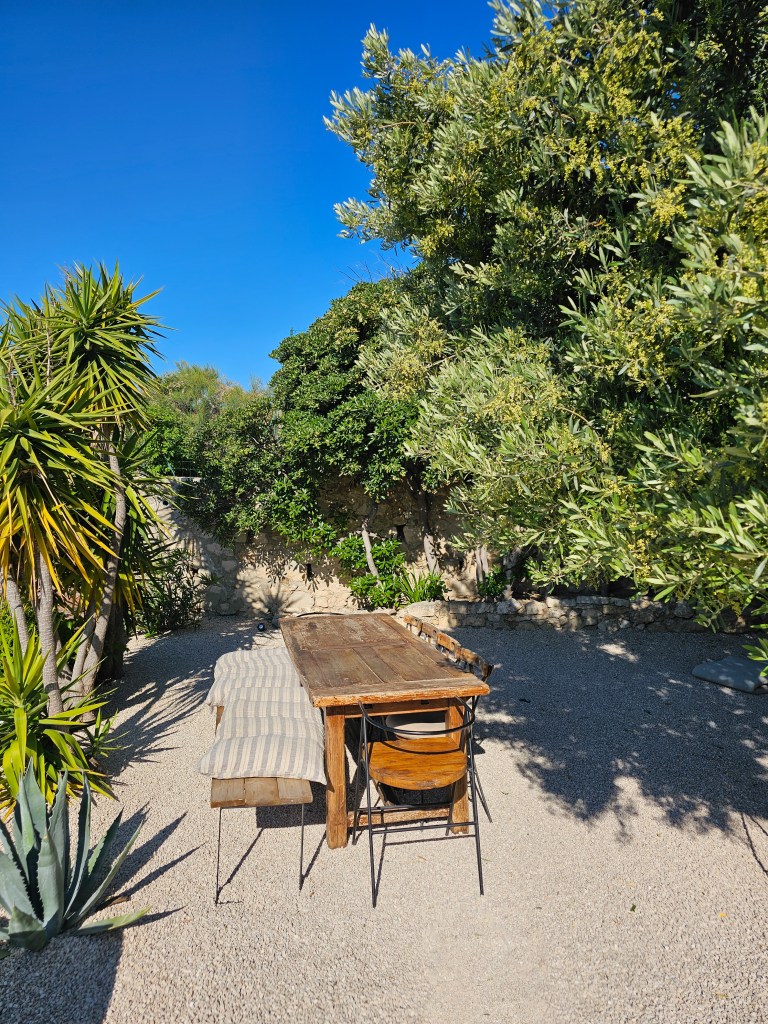
Outside, the garden and terrace is a love letter to Mediterranean cultures; cypress and olive trees stand side-by-side with palms – a symbol of the Côte d’Azur. Around the pool, terracotta lanterns are a reminder of the exotic gardens of Moroccan riads. Guests can choose between sun-drenched loungers or shaded spaces to sit on cushions at ground-level; the atmosphere is informal and familial.
Today, it’s clear to see why the area came to be known as the ‘blue coast’, as the rays of sun magic the pool into a shade of brilliant turquoise, and the Mediterranean sea beyond melts into a cobalt sky. From this terrace, the rugged silhouettes of the Île Pomègues and Îles du Frioul are visible on the horizon, and the buzz of nearby Marseille is palpable.
The terrace is also used for events from time to time – everything from yoga retreats to corporate celebrations, and in good weather (which is most of the year in this part of the world) breakfast and dinner can be served here al fresco. Just a few weeks prior to our visit, the terrace played host to a corporate celebration with the Chanel team, who were in town to launch a new advertising campaign set in Marseille. Casa Youm can also be seen in campaigns for major brands like Dior, Noo Paris, and Balenciaga.
In keeping with the homely ethos, hospitality is an important part of the overall experience, and the vast majority of guests choose to incorporate some delicious home-cooked food as part of their stay. It’s a regular changing set menu, lovingly prepared by the couple and served as though you’re dining at their home (which, technically, you are).
As the Mistral is still blowing a little too strongly to dine outdoors, Amira has created a cosy set-up for us in one of the communal sitting rooms, which opens onto the pool terrace. As the sun sets, the room is set aglow with candelabras and soft music. It’s a wholesome three-course spread, freshly made that evening and full of Mediterranean flavours.
The surroundings might conjure up images of an Andaluz haçienda, but tonight’s menu is very much influenced by Casa Youm’s Italian roots: to start, a hearty salad loaded with strawberries, tomatoes, pine nuts, ricotta and mozzarella, followed by conchiglie pasta shells stuffed with broccoli and ricotta, baked in a coconut and tomato sauce. Unfortunately, it’s dinner for one this evening as our guest has been struck down with food poisoning. The couple shows genuine care for the situation, with Amira going above and beyond by offering to make a warming soup from Tunisia – her mother’s recipe – from scratch and at short notice.
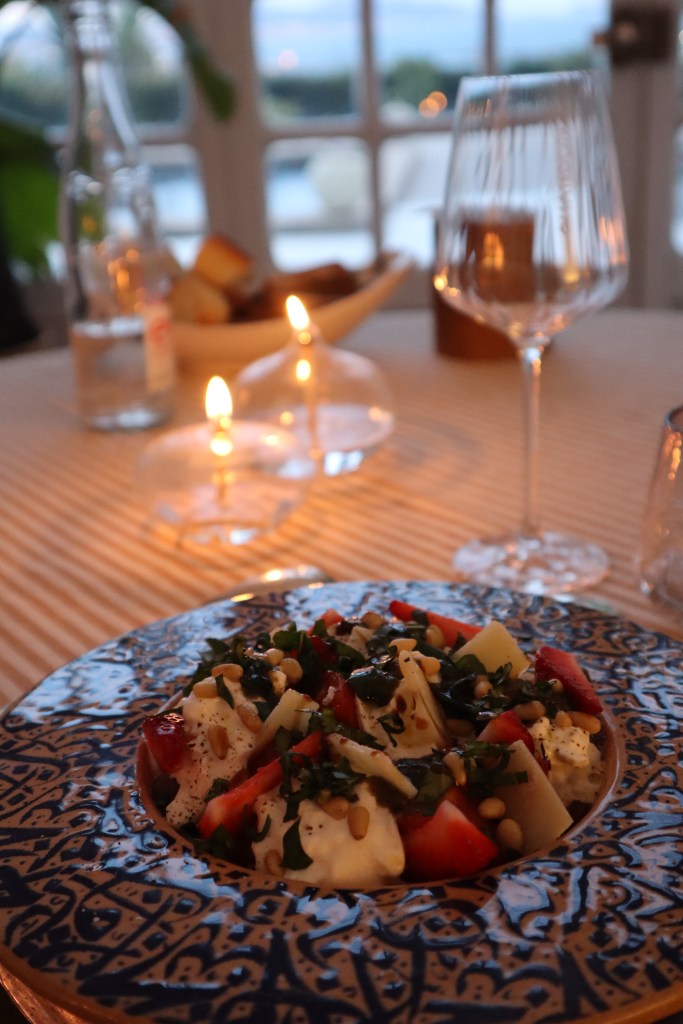
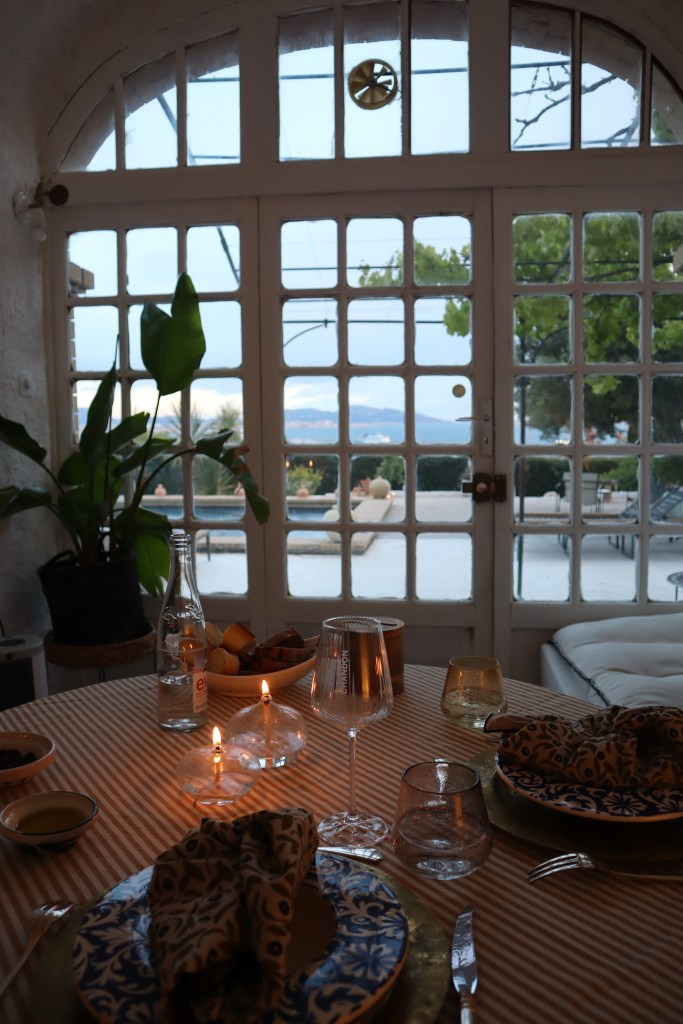
The meal finishes with a sort of semifreddo for dessert, sprinkled with red fruits and nuts, and served alongside coffee, which arrives in intricate north African silverware.
The dining experience is one of simple Mediterranean dishes made with good quality ingredients; home cooking in a homely environment. Even the way Amira casually offers us a glass of wine is akin to dining at a friend’s house.
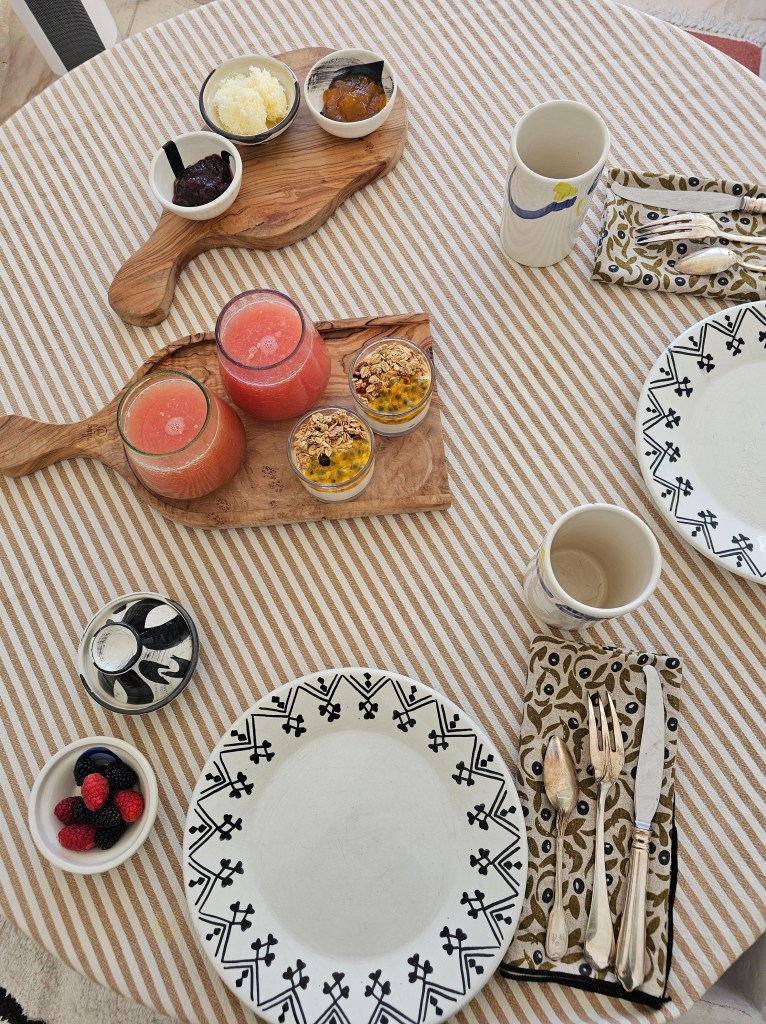
After a comfortable night’s sleep in our cosy room we test the Moroccan bath, the room flooded with the delicious scent of Codage Paris products, before heading back to the dining room, which takes on a completely different ambience with the morning light streaming in. Breakfast (which is included in the room price) is like a lucky dip, served in numerous tiny terracotta pots with lids that lift off to reveal fresh fruit, scrambled eggs, and jams. Layered pots combine yoghurt, muesli and passionfruit, and we drink freshly squeezed juice from the garden’s grapefruits.
We’ve felt so at home during our time at Casa Youm that leaving brings a tinge of sadness. Amira, Edouard and Mastock all assemble in the garden to see us off, waving as we drive away. It’s always a pleasure to stay somewhere that feels both personal and comfortable, with the right balance of privacy and attentiveness.
As for the area, L’Estaque is a peaceful vantage point from which to comfortably experience Marseille (and avoid the chaotic traffic!), while benefitting from a slower paced way of life, and an opportunity to walk in the footsteps of artistic greats. We couldn’t be more pleased with our decision to shun the five star behemoths in favour of a stay that captures the real vibrance of the city, provided by locals. And if luxury is defined as a state of great comfort, then this is surely one of the most luxurious spots in all of Marseille.
We stayed
in the Terra Suite, priced from €240 per night, including breakfast (2 night minimum stay).
We ate
A three-course meal cooked by our hosts. Table d’hôtes service is available on request for an additional cost.
Book directly through the hotel’s website.
This was a press stay – all opinions are our own.
Discover more from
Subscribe to get the latest posts sent to your email.
 thewanderluxe.co.uk