Sri Lanka’s unique combination of natural diversity and climate has made for an island teeming with different species and wildlife, drawing visitors from all over the world to the relatively small island. If the numerous tourist blogs and online guides are to be followed, there’s a tried-and-tested tourist trail that leads travellers south of the island to the Yala national park, where visitors are all but guaranteed encounters with elephants and the jungle’s biggest names. The downside of following the road well-travelled is that, more often than not, you could find yourself clambering among jeeps and fighting off other tourists for so much as a glimpse.
Yala is so well-known that most visitors don’t even consider an alternative. But what if there were another national park where you’d have an abundance of wildlife all to yourself; one so wild that you have to leave the grid entirely during your stay. This alternative exists, and we visited: it’s called Gal Oya National Park.
Gal Oya is situated in the Central eastern plains of the country – warm and sunny from June to September while the southern regions are still drying out from the southwest monsoon. Its principal resort, Gal Oya Lodge, is a British-owned, Sri Lankan-run luxury resort, where guests are invited to disconnect and fully engage with their surroundings through a diverse and well-curated programme of activities and adventures.
The experience begins before you’ve even arrived at the Lodge, with a picturesque journey from the south (and equally picturesque from other directions) that traverses parts of Yala. We’d already seen several elephants in the wild by the time we arrived, including one close encounter with a large male that caused a natural traffic block as he stretched to eat some leaves on the other side of the road.
Within a few miles of the Lodge, you enter a dead-zone for mobile signal and Internet. This is the real wilderness. Fortunately, Sri Lanka’s tourism system runs like a well-oiled machine for navigating situations like these, and Gal Oya Lodge is one of many hotels that offers free accommodation and board for drivers, making it a more appealing option for private chauffeurs. Reaching Gal Oya by public transport isn’t impossible but is certainly a more challenging option, so it’s worth paying the higher cost of a private transfer. This secluded location is the basis of its appeal, but the team at the Lodge takes care of all the logistical challenges in the background, liaising directly with our driver so all we have to do is turn up and enjoy the journey.
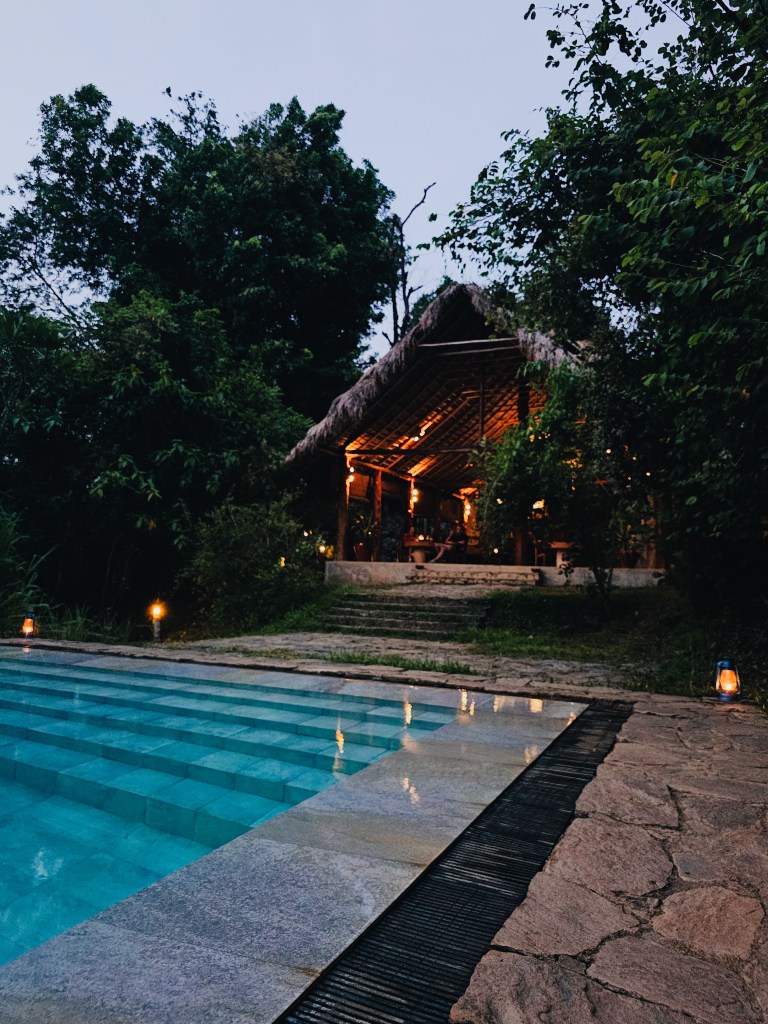
It’s already dark by the time we arrive – pitch black, in fact, due to the total absence of light pollution.
Our guide leads us through shaded jungle paths by torchlight to the main reception: a pavilion-like structure with wooden pillars and a thatched roof, completely open at the sides to bring guests as close as possible to the jungle just beyond.
We’re offered a cold towel and chilled iced tea – a treat that reoccurs each time we return to the Lodge from an excursion.
We already know what to expect during our stay as the Lodge has provided us with the menu of possible activities prior to arrival. The only variable is the weather and the animals as everything here works on nature’s timetable – and not the other way round (we never feel as though situations are manufactured for tourists, and any sightings are down to a combination of luck and the knowledge of our guides).
This knowledge element is of great importance at Gal Oya Lodge, and guests are assigned a dedicated naturalist for the duration of their stay. Our naturalist has a degree in marine biology and is an expert on Sri Lankan fish, birds and butterflies, which he passionately shares with us throughout our stay. It becomes clear early on that this will be a differentiating factor versus other nature reserves in the country.
It’s no surprise that there are very few alternative hospitality options around, so a stay at Gal Oya Lodge is designed to be an all-encompassing experience, where eating, drinking and entertainment all takes place on site. Guests have the option to choose between B&B, half- and full-board options.
When we arrive, a newly-formed group of guests is playing a board game together at one of the dining tables. Downstairs, an older solo traveller is sitting at the bar, chatting with the barman about Sri Lanka’s changing face over the years, while sipping a gin and tonic.
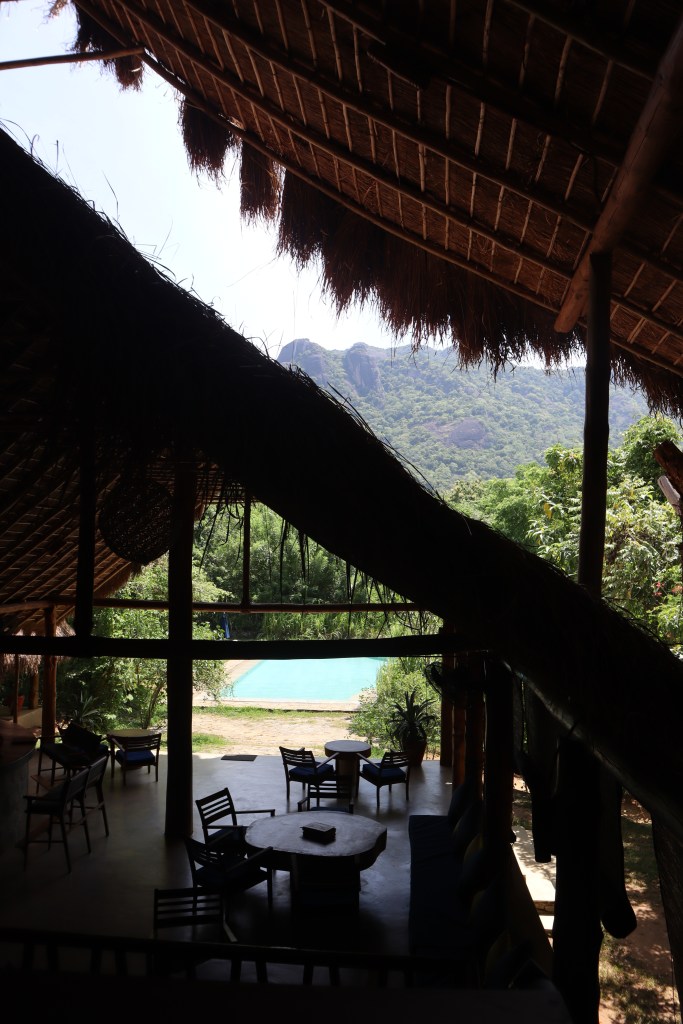
The clientele at Gal Oya Lodge is far more diverse than we’ve seen so far during our time in Sri Lanka, particularly compared with the South, where backpackers and digital nomads dominate the hotels and hostels. It’s a more mature, calmer crowd here – couples of all ages, small groups of friends, and the occasional solo traveller.
The Lodge provides a sustenance offering as diverse as its visitor base, with a wide range of cocktails on offer, a decent wine list, and a menu that uses plenty of fresh fruit and veg from the surrounding area. Dinner is a three-course event that guests select from in advance.
While the menu contains western and Mediterranean dishes, we mainly opted for the Sri Lankan specialities during our stay (the Sri Lankan rice and curry was feast-like, arriving in a seemingly endless sequence of miniature dishes) and found these to be the better choice. Breakfast was an exception, where the western brunch-style dishes were very good. The team at Gal Oya Lodge does a bit of everything – from waiting in the evening to preparing the welcome drinks -and are always attentive in ensuring that your wine glass is topped up and your coffee refilled in the morning. Due to the remote location, most of the staff members live onsite with rotating shifts, so guests have the opportunity to become well-acquainted with the team throughout their stay.
The aesthetic at Gal Oya Lodge is simple and in keeping with nature; however, the rooms are anything but rustic. Our Lodge Bungalow comprises a large sitting area, four-poster bed, private outdoor terrace, and – the real ‘wow’ moment – a fully outdoor bathroom so you can shower within touching distance of the wildlife (fortunately there are plenty of carefully concealed safeguards to ensure said wildlife keeps a comfortable distance!). The bathroom blends into its surroundings in a stylish melange of wood and stone with charming design features in keeping with the theme, for example the miniature brass elephants that are gently rotated to start the running water.
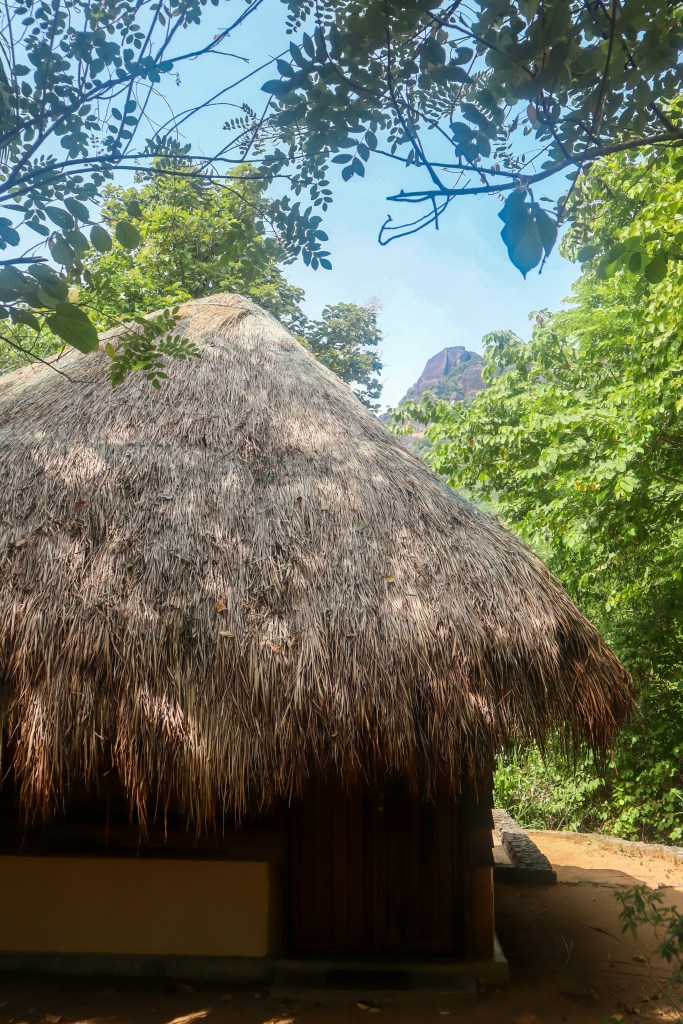
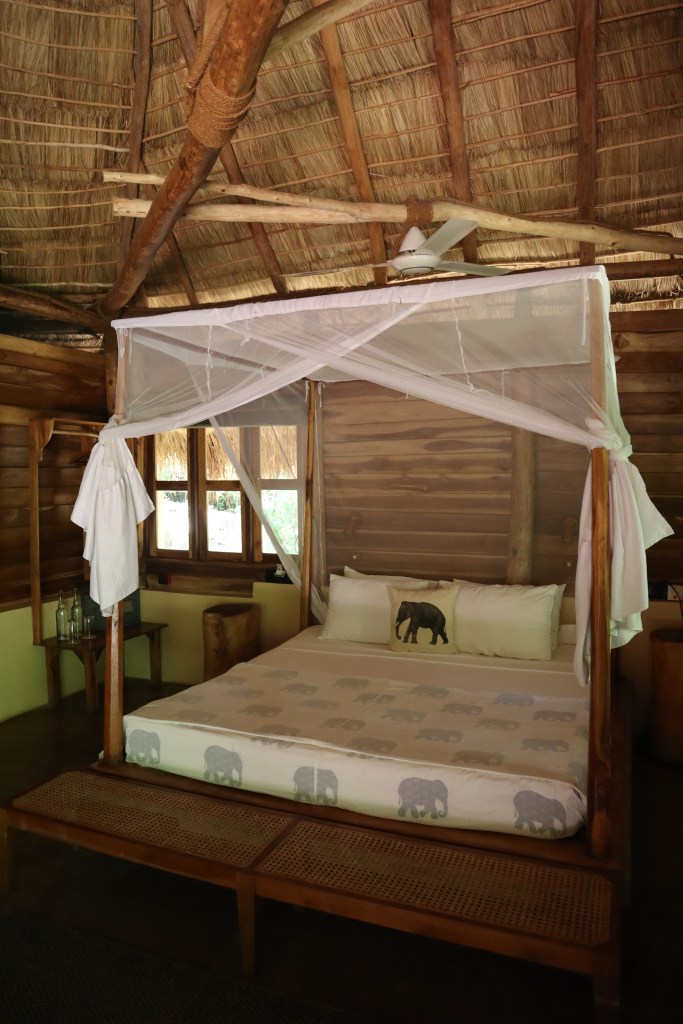
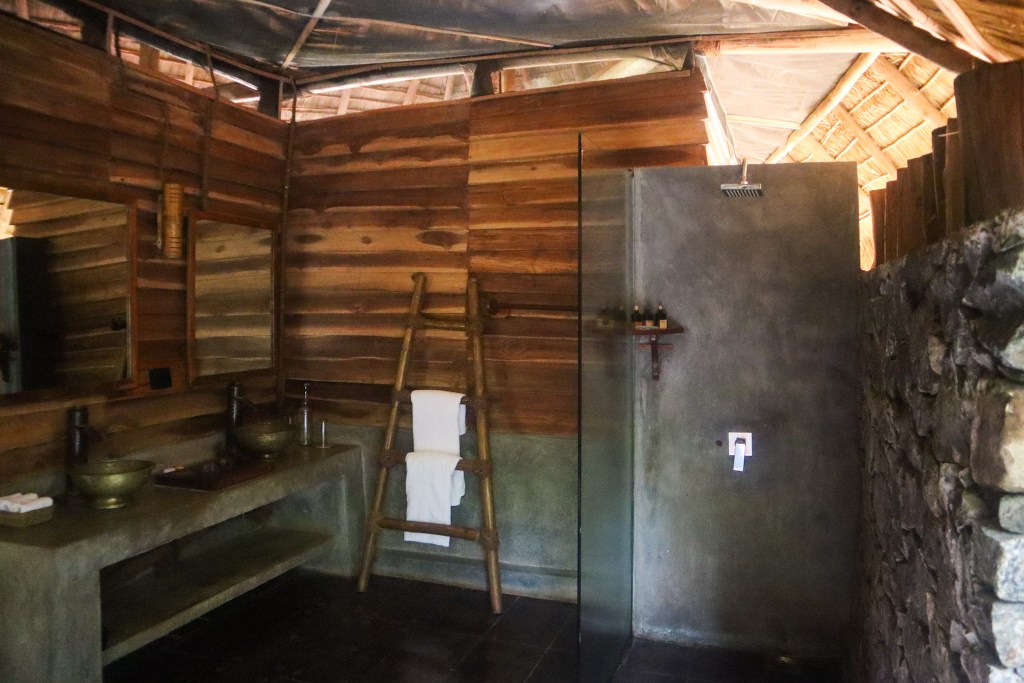
The rest of the bungalow is natural and tastefully designed, with lots of wood and rattan finishings. The theme of wildlife plays throughout, with prints of elephants on the bedding, natural colours, and furniture carved from wood. When we return to our room from dinner, a turndown service has taken place and the mosquito nets are drawn around our four-poster bed. The room is technically open beneath the thatched roof, but plenty of fans and air conditioning keep us comfortable during the humid nights (and netting to prevent unwelcome visitors). There’s a tea/coffee station, and we’re very grateful for the abundance of water in the room, which is regularly refilled so that we never go without.
The main reason to visit Gal Oya Lodge is of course the ability to get close to wildlife and nature, and during our stay we enjoyed a whole host of varied activities on the menu. Our first trip involved a 5am rise, ascending a steep path as dark turned to twilight before eventually reaching the summit of Monkey Mountain – a precipitous outcrop overlooking plains for miles towards mountains in the distance. It’s not an easy walk, but it’s guided and relatively quick (about 2h in total), and the view at the end is reward enough for the stretching and clambering involved in the final ascent to the summit.
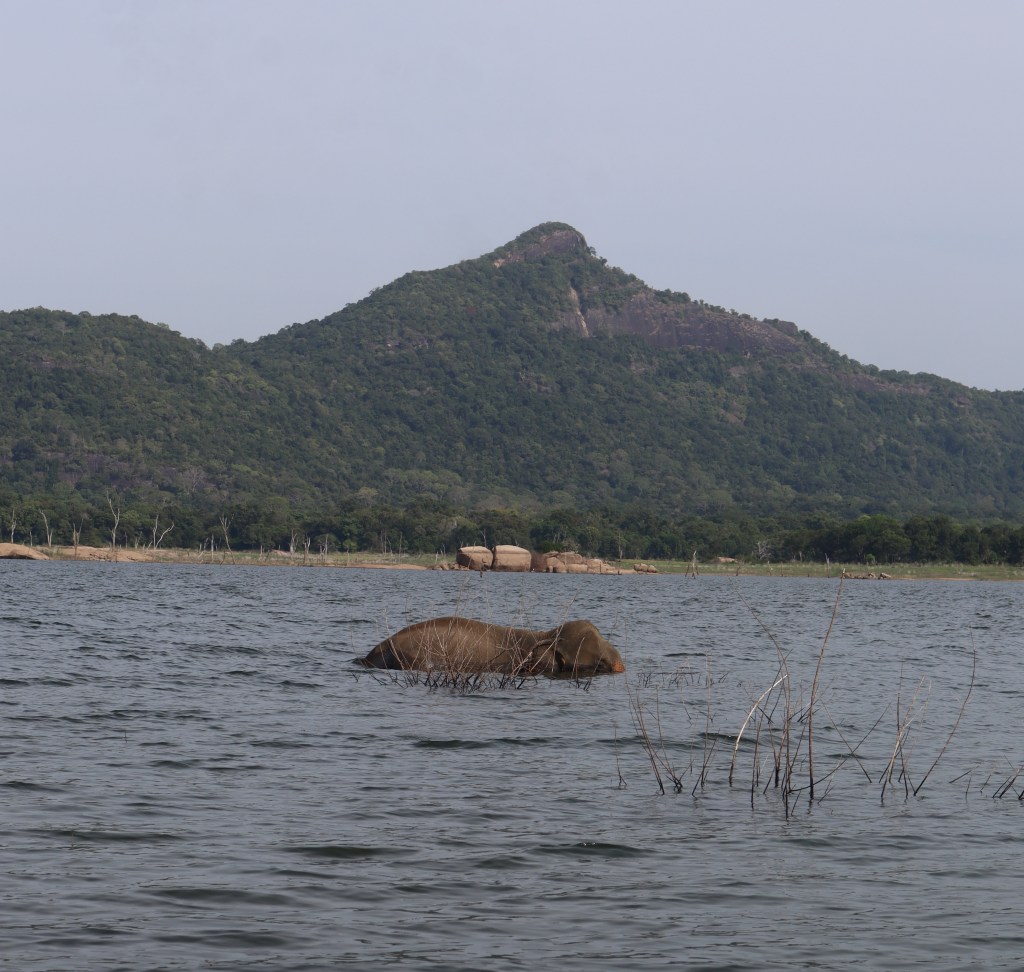
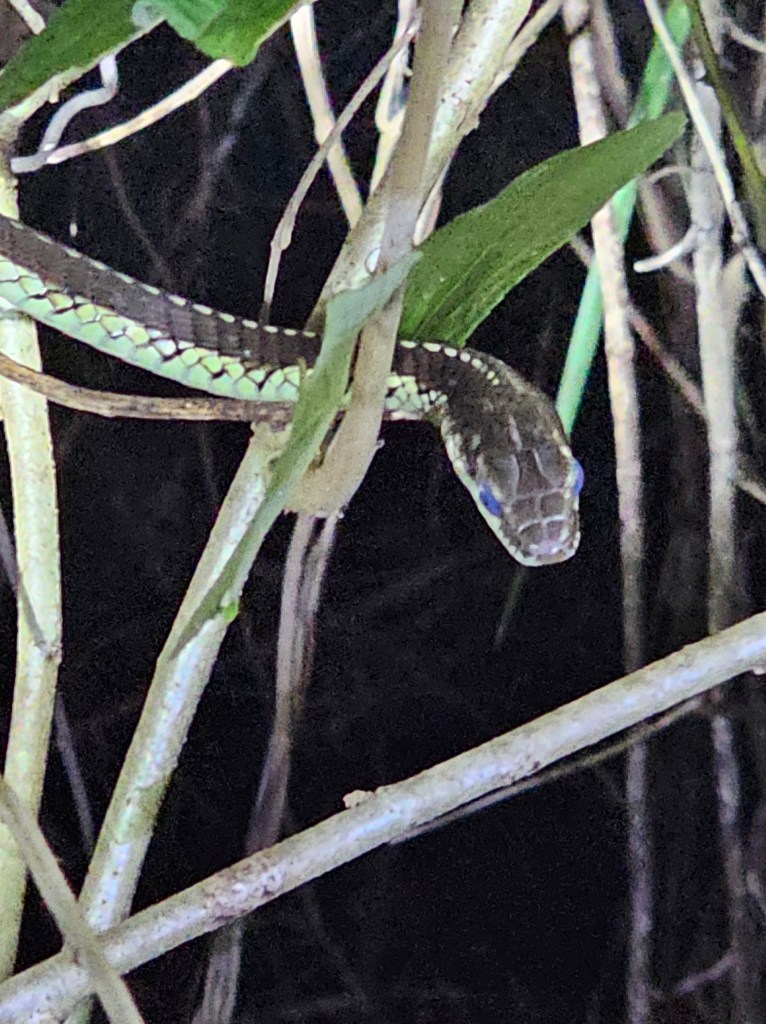
Our days are spent doing an assortment of activities, from a night walk through the grounds by torchlight (we’re delighted to spot a snake, and our guide expertly communicates with owls in the distance), to a lake safari where we can’t believe our luck at catching an up-close glimpse of the famous Gal Oya swimming elephants.
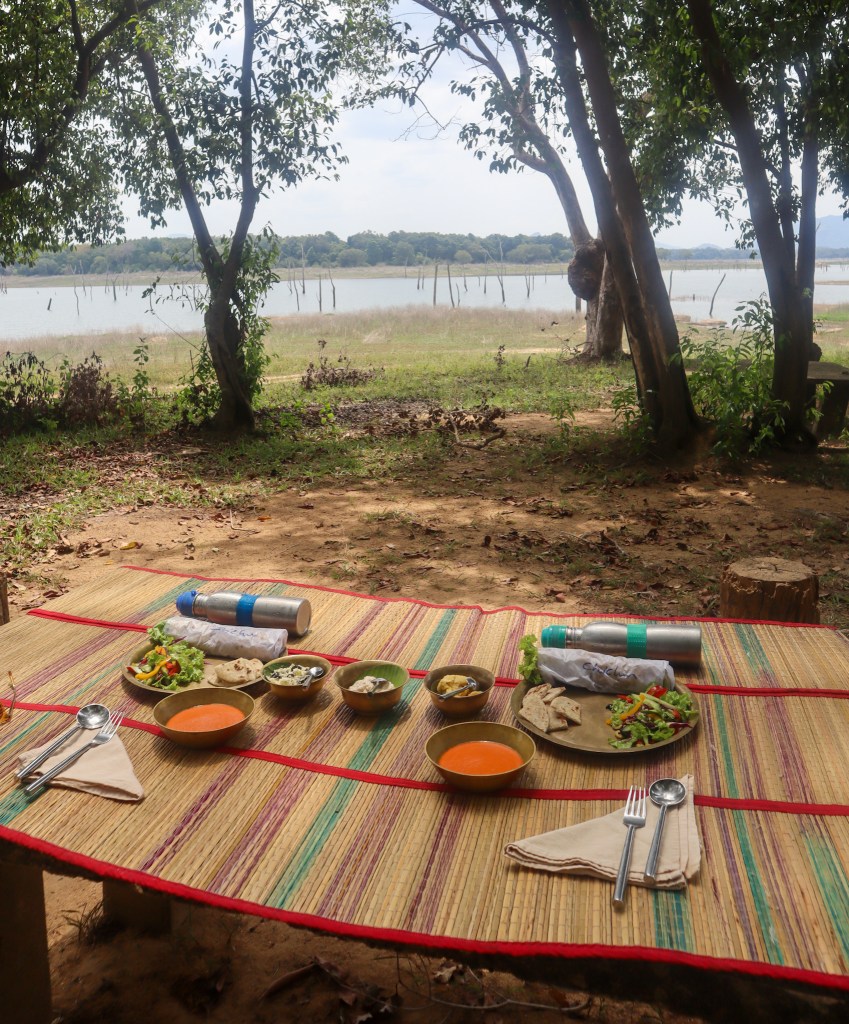
The culinary experience continues even when you’re out and about on excursions, and we’re astounded when our guide sets up a full breakfast on the rock face of an island in the middle of the lake, complete with blanket and several pots of fresh fruit, curd and honey, and breakfast sandwiches. The set-up is even decorated with fresh flowers – small details that make the experience that bit more special.
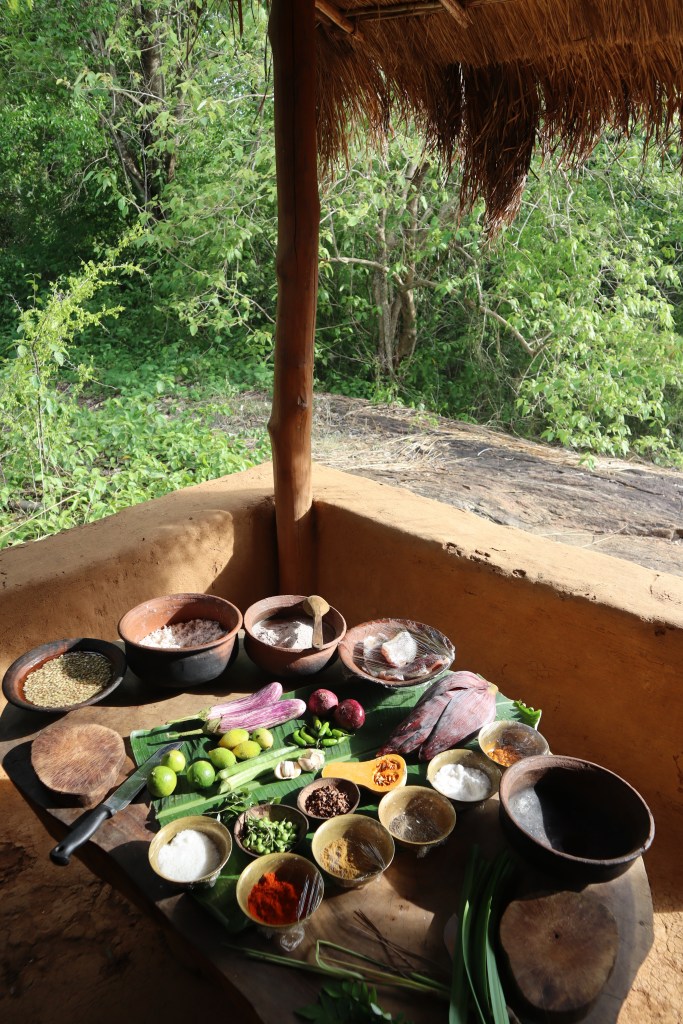
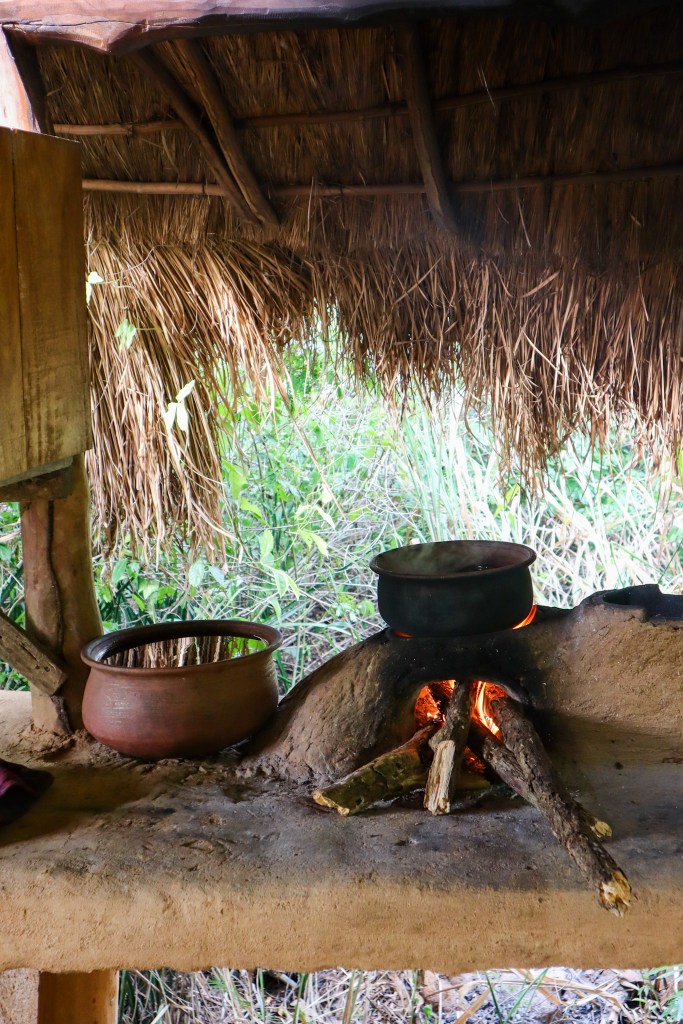
We take part in a traditional Sri Lankan cooking class led by a local community chief, which takes place in a dedicated outdoor kitchen on the grounds of the Lodge. First, we pick some of our own ingredients (herbs and pandan leaves) in the perimeter of the lodge before he patiently guides us through the recipe for watalappan (coconut jaggery pudding) and fish curry from scratch, cooked in the traditional way in clay pots over an open flame. It’s one of the most delicious meals we’ll eat during our time in Sri Lanka.
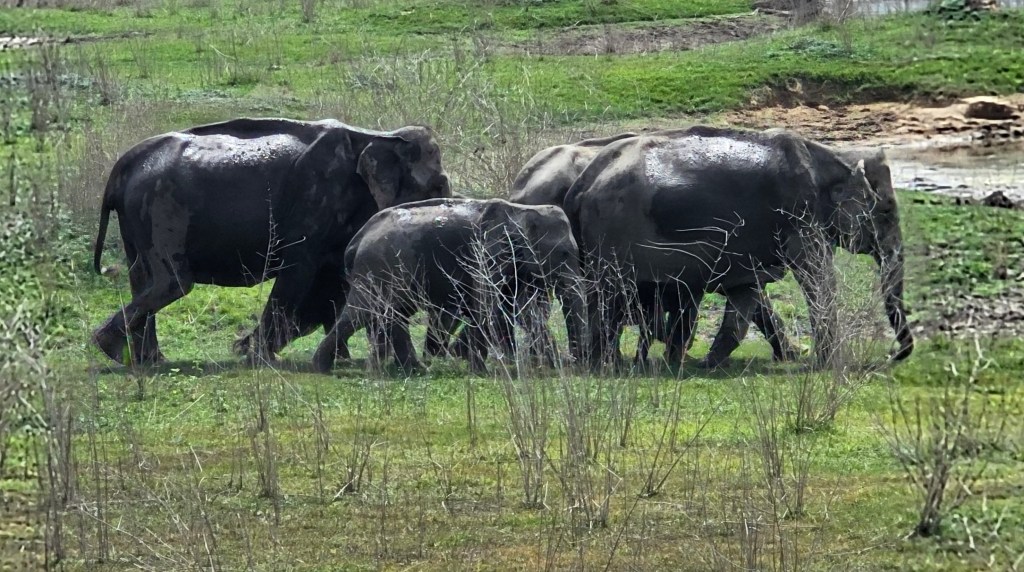
The highlight trip, though, has to be the safari tour, which begins with an exhilarating ride through fields and lakes in Gal Oya Lodge’s private jeep. We are the only two participants on the trip – and by the looks of things in the entirety of the national park; there’s not another soul in the park. During this trip, we count around 100 elephants, hundreds of monkeys, countless birds, butterflies, and insects. We see a family of elephants escorting their newborn calf to wash in the lake (our guide takes such an interest in the wildlife here that he’s able to identify the age of this specific elephant, having been tracking its progress since birth). This is where the effort of travelling a little further afield really pays off. This type of exclusive experience simply wouldn’t be possible in the national parks of the south.
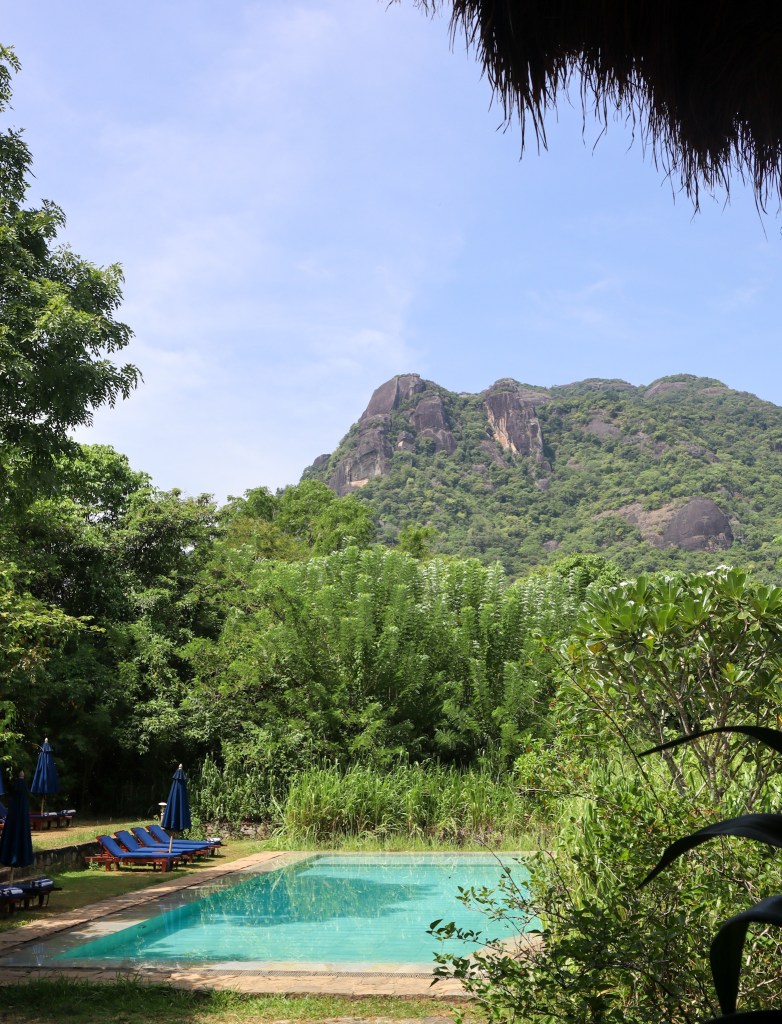
Guests can choose to do as few or as many of the activities as they like, and the Lodge provides for R&R. The pool, from which you can enjoy impressive mountain views, blends seamlessly into the surrounding nature with fringes of wild foliage.
It is not intended to emulate the manicured pools of a five star resort, and this relaxed approach in turn encourages a certain casual attitude among the guests. Whether it’s a chilled beer by the poolside or a board game in the communal space, anything goes here.
The overwhelming feeling at Gal Oya Lodge is one of passion and care. One evening, our guide takes us to the onsite Jim Edwards research centre, named after the father of the hotel’s owner in tribute to his love of wildlife. Here, our guide passionately shows us footage of jaguar and wildcat sightings caught on one of the 23 cameras that the Lodge has set up around the park, and talks us through some of the rare butterflies he has spotted over the years. It’s very clear that sustainable tourism and protection of these wild species is top of the agenda for everyone working at the Lodge.
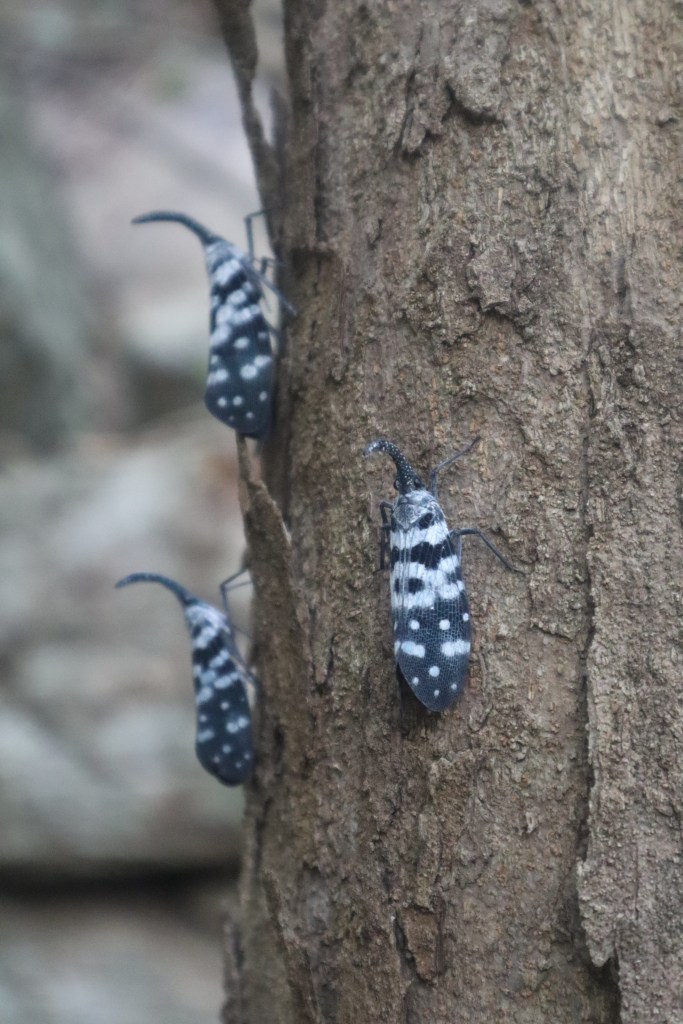
This genuine respect for nature transcends the lip-service paid by many other wildlife resorts. In the three days we’ve spent here, we’ve seen a myriad of wildlife, hiked exhilarating peaks, eaten food straight from the source (and cooked ourselves in the most traditional way), ticked off many firsts, found total relaxation by the pool… and we’ve talked (!). The prospect of being completely off-grid may put some people off, but the advantage is that we’ve played board games, chatted over a drink, and connected with each other free of digital distraction – a rarity in the fast-moving everyday.
As we speed away from Gal Oya and re-enter the real world, we’re almost at pains to reconnect. Yes, it takes a little more effort to get here (although the set-up and team at Gal Oya really alleviates any hassle), but this is one occasion where the road less travelled is definitely worth it. We’d fully recommend taking this unique opportunity to genuinely disconnect, engage, and relax.
We stayed
in a Lodge Bungalow, priced from $301 per night including bed and breakfast. Half/full board rates are available on request.
We experienced
Jungle night walk – complimentary with room
Monkey Mountain hike – complimentary with room
Visit to Jim Edwards Research Centre – complimentary with room
Jeep safari – $130
Lake safari – $170
Jungle cooking course – $65
This was a press stay – all opinions are our own.
Discover more from
Subscribe to get the latest posts sent to your email.
 thewanderluxe.co.uk