Ask anyone from Colombo to name the best restaurant in the city and they’ll likely say Ministry of Crab. In fact, the restaurant, which was founded in Colombo in 2011 by chef Dharshan Munidasa in partnership with cricketers Mahela Jayawardena and Kumar Sangakkara, is consistently named among the best in Asia – certainly in Sri Lanka – and is being name-checked further afield too, as its branches continue to pop up around the continent.
So what is it that makes Ministry of Crab worth visiting, and keeps it solidly at the top of Colombo’s growing fine dining options? We head out to investigate just this on a lively Saturday evening in Sri Lanka’s capital.
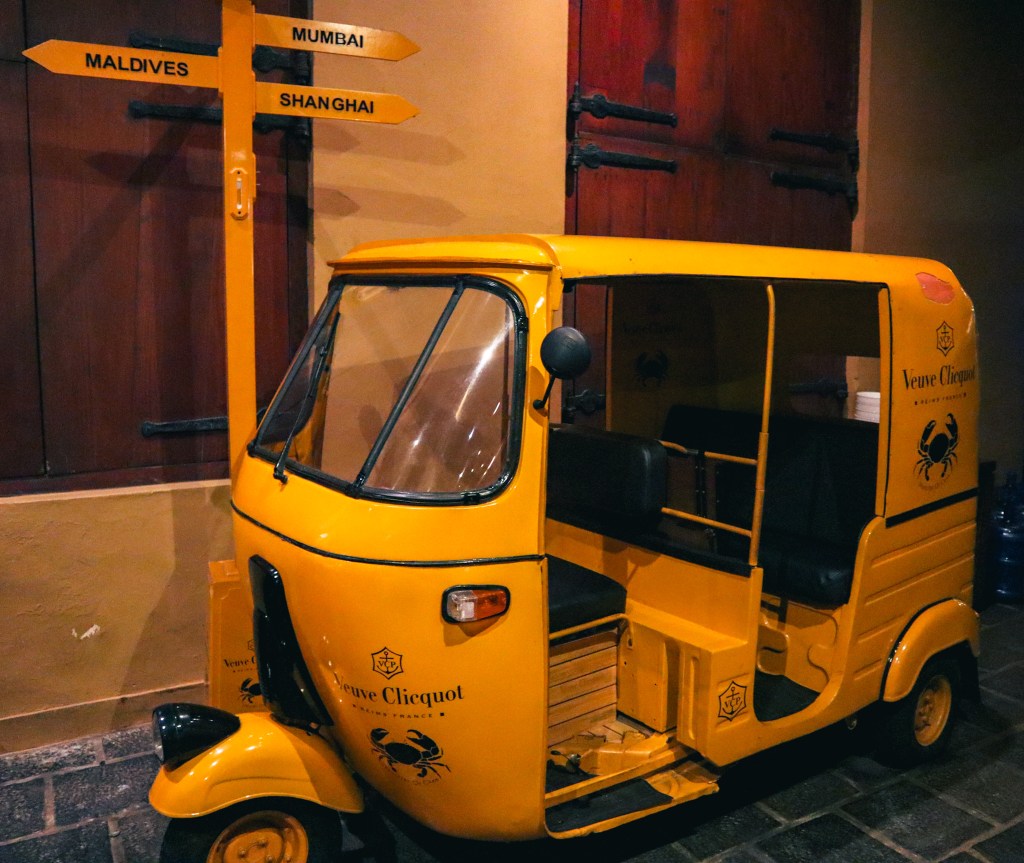
The first thing worth mentioning about Ministry of Crab is its unique setting. The restaurant sits nestled below the wooden beams of the oldest building in the Colombo Fort – a former Dutch hospital dating back to the Dutch colonial period in the late 1600s. The hospital’s courtyard is one of the liveliest centres of Colombo’s nightlife, attracting well-heeled locals and visitors alike. En route to Ministry of Crab, we pass long tables of revellers working their way through beer towers in the courtyard of the neighbouring Dutch pub, located in the same complex. Our arrival to Ministry of Crab is announced by a bright orange tuk tuk – the distinctive shade of the Veuve Clicquot champagne brand. The coming together of heritage and luxury is already clear before we’ve stepped inside the building.
The theme of heritage is central to the story of Ministry of Crab and why it came to be in the first place. The idea came to Chef Munidasa while he was presenting a television programme on the Sri Lankan mud crab, which enjoyed renown in other parts of the world, but was rarely attributed to its motherland.
Enter the restaurant’s other two founding partners, and it seems fitting that Colombo’s most-loved restaurant would be led by champions of the country’s most-loved sport: cricket.
Following their professional retirement, the two were looking for a venture that would showcase the spoils of their homeland, partnering with their good friend Munidasa. Together, the three became the Ministers of Crab.
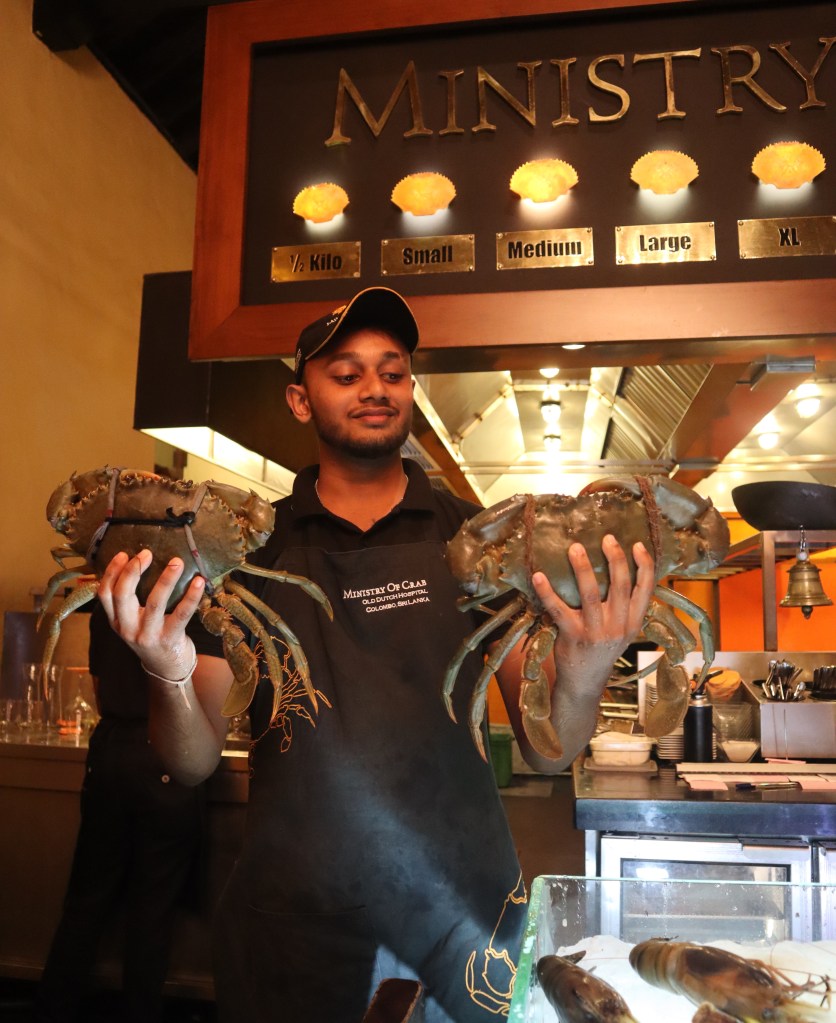
They created a seafood restaurant that would focus on the indigenous mud crab, and Ministry of Crab was born, first opening its doors to the public in December 2011. It hasn’t stopped growing since – as is clear from the buzzing atmosphere on this particular night, as waiters meander round tables communicating with each other on walkie talkies, like high-powered businesspeople brokering a deal, and tables of bibbed diners laugh as they perfect their crab-cracking techniques.
As the brand grows and pops up around the globe, the team behind the restaurant has managed to maintain a sense of independent spirit. You won’t find branded soft drinks behind the bar, just in-house blends made to Ministry of Crab’s own recipe. Our meal begins with an apéritif in the form of a jug of sparkling iced tea – the finest Ceylon variety, of course – which provides welcome refreshment before we move on to wine.
Tonight, we’ll sample a selection of the menu’s highlights and most-loved classics, starting with the house variation on caviar, the Crab Liver Pâté. This pâté is derived from crab liver, which constitutes just 1% of the crab, thus making it a rare delicacy and one that you may be lucky to find available when you visit. The pâté is served with melba toast and a small pot of kithul treacle. Our host advises us that diners fall into two camps when eating this dish: the purists who prefer the saline umami of the flavour on its own, or those with a sweeter tooth, who prefer to add just a drop of the sugar syrup. The version sans sugar gets our vote.
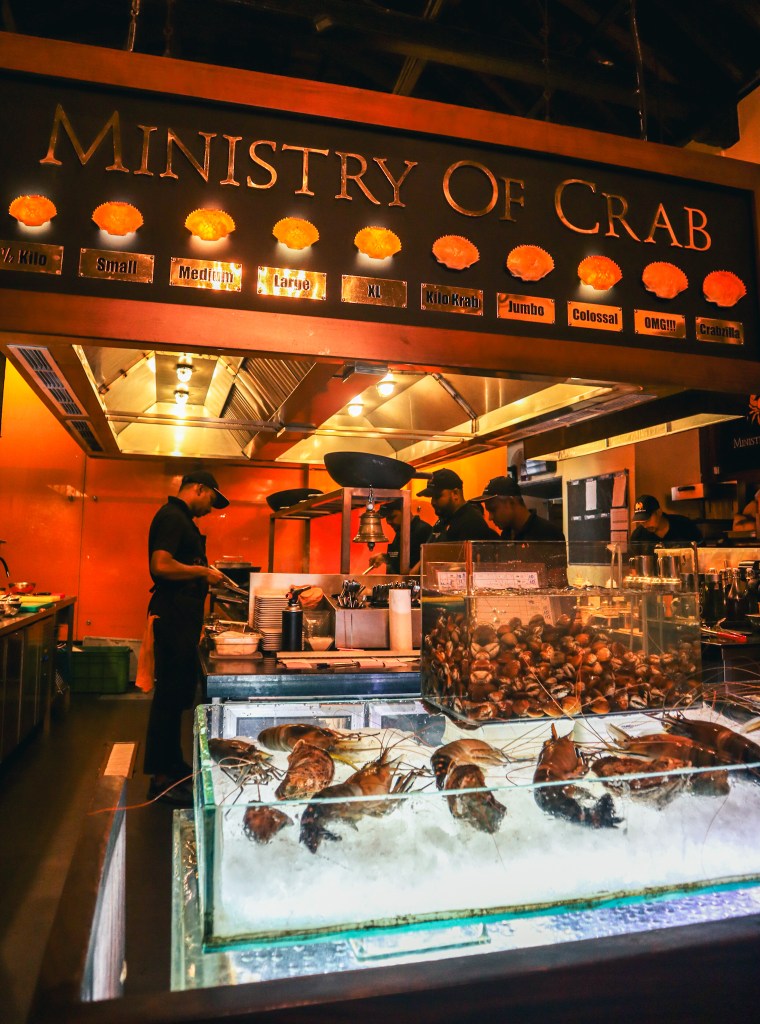
At Ministry of Crab, people-watching is half the fun. Running down the centre of the restaurant is a long table occupied by a large tour group of tourists whose merriment fills the air.
At the other end of the room, above an open kitchen, a giant illuminated sign informs guests via a lighting system which sizes of crab have arrived in fresh that day, ranging from a half kilo all the way to the mighty Crabzilla, weighing in at a mammoth 2kg.
For our next course, we’re served a fresh salad of avocado and white crab meat, flavoured with wasabi and pepper. Chef Munidasa is half-Sri Lankan, half-Japanese, and his signature style incorporates the flavours of both cuisines into a unique medley of spice and umami. Authenticity is key, and Ministry of Crab sources all of its ingredients within Sri Lanka’s borders, with the exception of just three: olive oil, soy sauce, and Japanese wasabi. The crab and avocado combination is a classic, but the twist comes from the quality of the crab meat and the kick of the wasabi mayonnaise.
Our attention drifts away from our salad momentarily to witness a film crew at the next table documenting their dining experience for Australian television. Australia is an important market for the restaurant, with the largest Ministry of Crab due to open in Melbourne after a number of successful pop-ups. This new edition will be the eighth signature MoC franchise, along with two affiliated Japanese restaurants and a steakhouse under the brand. The restaurants are primarily concentrated in Asia and Australia as the freshness of the star ingredient is imperative (as enshrined in the irreverent Constitution that hangs on the wall), and the mud crab is available – or at least quickly transportable – in these locations. Regrettably, this means that we’re unlikely to see any new Ministry of Crab restaurants popping up in Europe anytime soon; however, special brand events and pop-ups have taken place in exclusive culinary locations such as London’s The Shard.
It’s clear that things are about to get messy as we’re advised to don our MoC monogrammed aprons. We join the chefs in the kitchen, who present to us the giant prawn we’re about to eat.
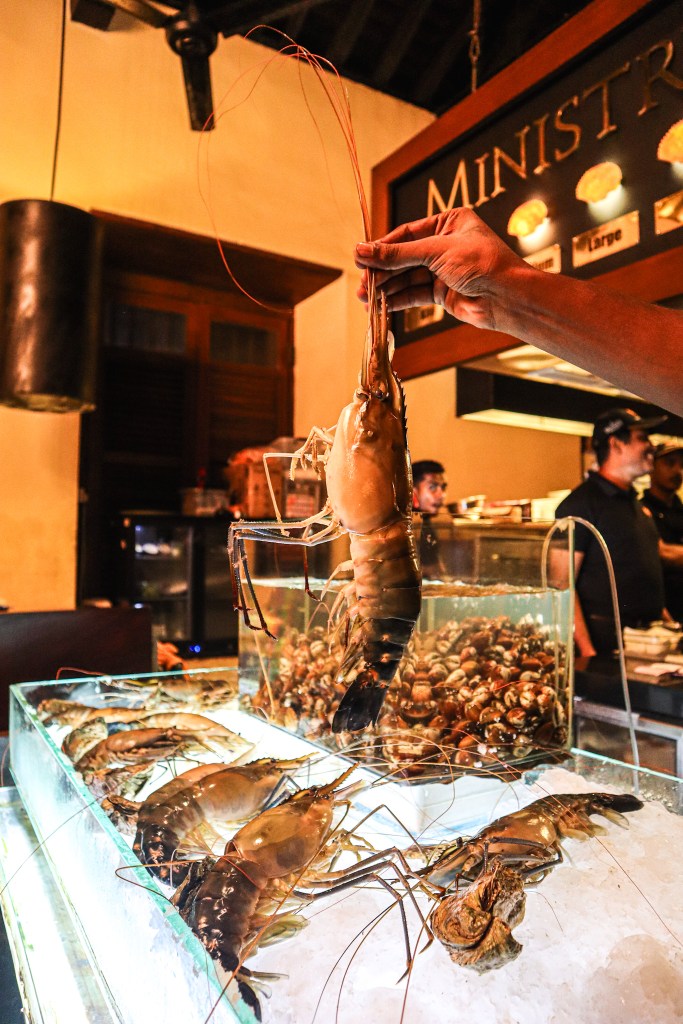
It really is giant; we’ve never seen prawns this big, appearing more like lobsters in size. The Sri Lankan prawns served here can weigh up to 500g, and we feel the literal weight of this imminent undertaking as the waiter puts the prawn in our arms as though handing over a baby.
One final but important point of admin to cover before the dish arrives: to confirm whether we’re right or left handed. The art of perfect shelling is part of the experience here, and the team do what they can to make it as accessible as possible.
Despite the colossal quantities of seafood on offer, effort is made to ensure that none of the goodness is wasted. Where many restaurants discard the meat from the head of the prawn, diners here are encouraged to treat it as a delicacy, savouring every last taste. Our giant prawn (which is actually ‘regular’ in MoC sizes – the Prawnzilla reaches 500g) is ready and arrives at the table, big enough to share between two, and we’re guided through a demonstration on perfect prawn dissection. Chargilled garlic bread is served on the side for mopping up the garlic butter sauce in which the prawn is served, the butteriness adding rich layers to the earthy flavour of the meat from the head.
Ministry of Crab champions the notion that Sri Lankan seafood is a luxury commodity and should be enjoyed as such, accompanied by a good sparkling wine or champagne. The flavours of the prawn and crab match well with the dryness of tonight’s French sparkling rosé. The restaurant has taken this idea of pairing a step further by partnering with the Veuve Clicquot champagne house; the two brands enjoy a shared love of high quality produce and and their signature orange hue. The colour has multi-layered symbolism in the case of MoC: it’s the bright shade of the crab’s shell when it’s boiled, as well as a nod to the historic surroundings of the Dutch hospital.
We get the impression that everything at Ministry of Crab is devised in a similarly thoughtful way; the tropical heliconia plants sprouting from vases around the restaurant are chosen for their resemblance to crab claws; the ‘heads and tails’ coasters tell the story of when Mahela and Kumar tossed a coin to decide which of the two would be the company’s Chairman.
It’s finally the moment we’ve been waiting for and, to signal the enormity of the event, we’re joined at our table by Chef Munidasa himself to give a live demonstration of the best way to shell and eat a mud crab. This personalised experience is not special treatment for us; we see him floating from table to table throughout the evening during breaks from cooking, happily chatting with diners and offering expert advice. The crab we’ll eat is Jumbo sized, meaning it’s more than 1.1kg – more than enough to share between two. The beauty of the dish is its simplicity, arriving in a stock of whole Sri Lankan black pepper, which is boiled down to form a thick and flavoursome stock.
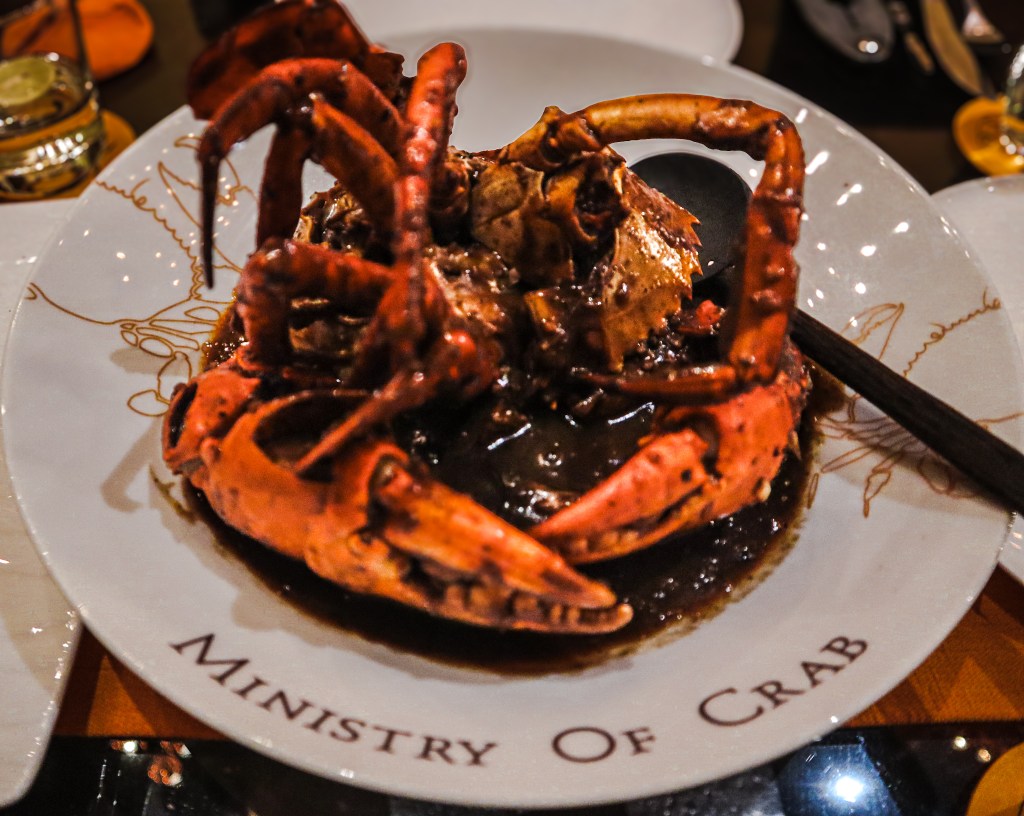
We get to work with our crab pliers, digging into every nook and cranny, drawing out sauce from the claws and extracting meat from the crevices within the shell. It’s thirsty work, but fortunately our waiter has brought a glass of full bodied red wine that pairs beautifully with the spice of the pepper. We understand the scenes of giddiness at other tables as we work together to tackle the giant crustacean – proof that fine dining doesn’t have to mean formality. Part of the fun is the messiness required for such a dish, so the bowls of Ceylon tea, used as an aromatic hand cleanser, and natural cinnamon sticks for toothpicks are a necessary addition.
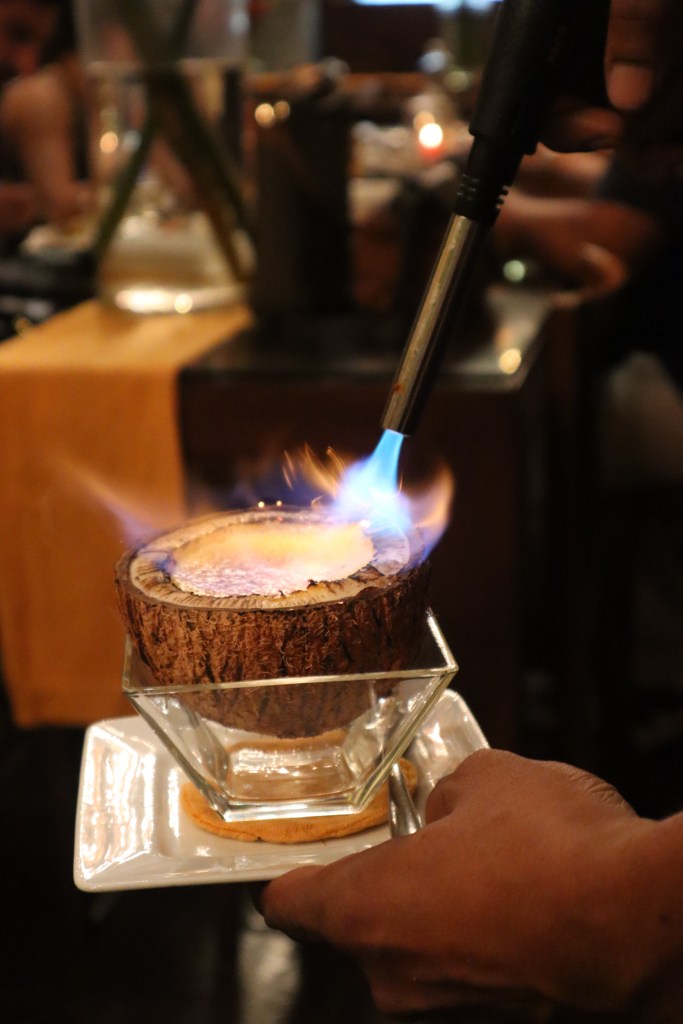
We’ve learnt by now that Ministry of Crab doesn’t shy away from a theatrical dining experience, and our dessert arrives with a flourish of characteristic drama. It’s a coconut crème brûlée, served within half a coconut shell and toasted in a flamboyant burst of blowtorch flames live at the table.
The star dish was our previous course so we’re not expecting too much from the dessert, but we’re pleasantly surprised when the first taste reveals a melange of rich cream with flecks of freshness in the form of coconut pulp.
It feels wrong to leave a party when it’s in full swing, and that’s just how it feels to leave Ministry of Crab on this weekend evening. But this is a place in high demand – so much so that they accommodate diners in several sittings throughout the night, and we’re currently standing between another table and their crab. The popularity of Ministry of Crab signals a growing acceptance that formality is no longer a hard and fast prerequisite for fine dining; it can be fun and camp and frivolous, and require guests to look silly in aprons and get their hands dirty. And why not embrace this frivolity with a glass of fine French champagne in hand? This Ministry is gathering a fellowship of faithful disciples in many different countries and shows no signs of slowing down. All hail the sacred crab!
We ate
Crab liver pâté with melba toast and sugar palm oil – $20
Avocado crab salad – $15
Garlic chilli prawn (to share) served with chargrilled garlic bread – $40
Jumbo mud crab (to share) in Sri Lankan black pepper sauce – $170
Coconut crème brûlée – $5
We drank
Studio by Miraval rosé – $15 per glass
Reserve here to ensure a table at Ministry of Crab Colombo.
This was a press visit – all opinions are our own.
Discover more from
Subscribe to get the latest posts sent to your email.
 thewanderluxe.co.uk