Nestled among the rolling hills of St-Rémy-de-Provence, through a valley so winding that it’s earned the name ‘Val de l’Enfer’ (the valley of death) lies an estate that has been owned by the same family for four generations.
Domaine de Métifiot, located near the town of Baux de Provence, has the terroir credentials to compete with the Provençal vineyards of the region, but embraces a modern approach to wine-making that spills over into the design, wine tourism, and production techniques.
This 16-hectare vineyard has been passed down through four generations of the Bateman family, starting in the 19th century when it was used as farming land by the great-grandfather, a shepherd. The Domaine’s use was adapted over the years: first as a fruit-growing farm and then, after two generations, with the planting of olives. In 2016, the Domaine was eventually passed to its current owners – Benoît and Laurence Bateman – who would convert it into an organic olive farm and vineyard, and introduce the design-led ethos that makes Domaine de Métifiot stand out from the more traditional wineries of the Alpilles.
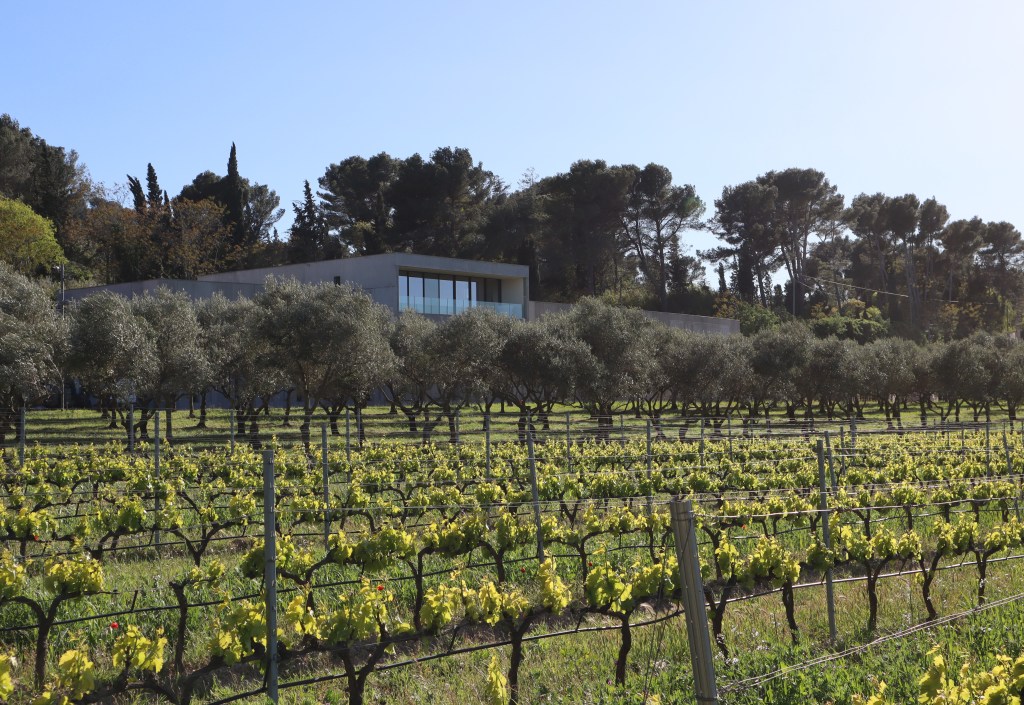
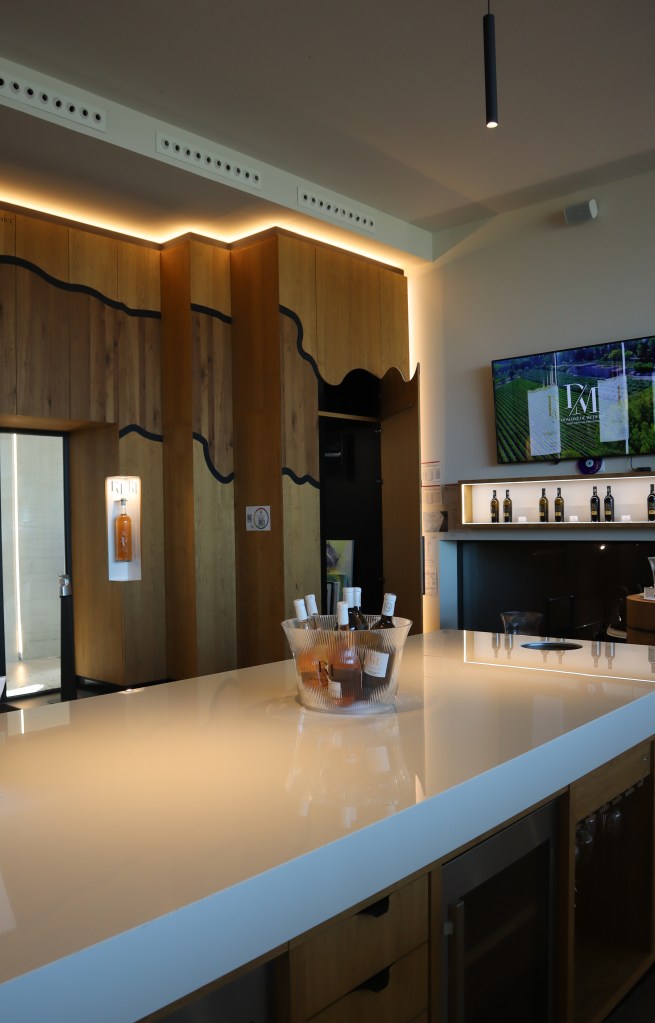
The design is the first thing visitors to the Domaine will notice. The main building, which houses the visitor centre and wine cellar, is a stylish lair of concrete and glass, rising above the vines and olive trees and in keeping with the natural colour palette of the surrounding Alpilles mountain range. Where many of the region’s wineries have opted to stay close to their conventional historical backdrop, the Bateman family has opted to make a bold statement that this is no ordinary operation. A glass-bottom walkway leading to reception offers guests the first glance of the wine cellar below – all clean lines and chic earthen tones.
Domaine de Métifiot is open for public visits and tastings six days a week, with a variety of experiences on offer. The most basic tasting package, priced at just €15 includes a tour of the wine cellars, as well as a tasting of six wines – three from the Essentiel range (IGP Alpilles region) and three from the Domaine de Métifiot collection, which carries the prestigious appellation (AOC) from the Baux de Provence region.
If you’re looking to sample a little more of what the region has to offer, there’s a more elaborate tasting session that includes six wines paired with a platter of meats and cheeses from the local area.
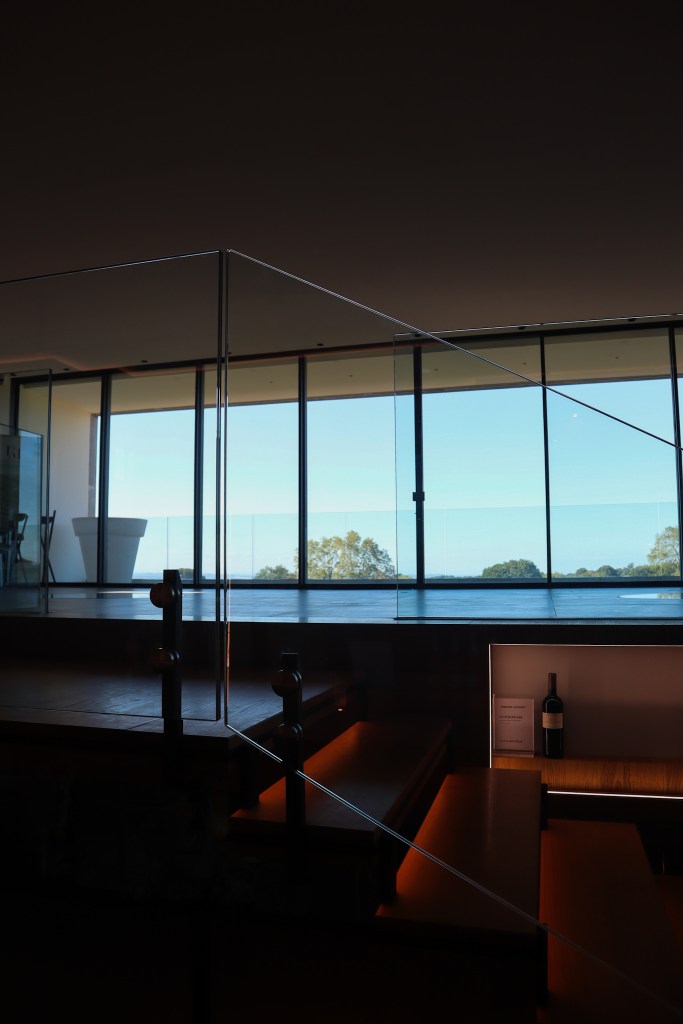
On sunny days, the tastings take place on the exterior balcony, which offers a spectacular view over the vineyards, stretching as far as the imposing figure of Mont Ventoux, the highest peak in Provence, in the distance.
The view can be savoured even in the colder months thanks to a wall of glass windows in the main reception space. This aesthetically-pleasing space can also be booked out for private or corporate events, and the main space houses an art exhibition featuring local artists from the region.
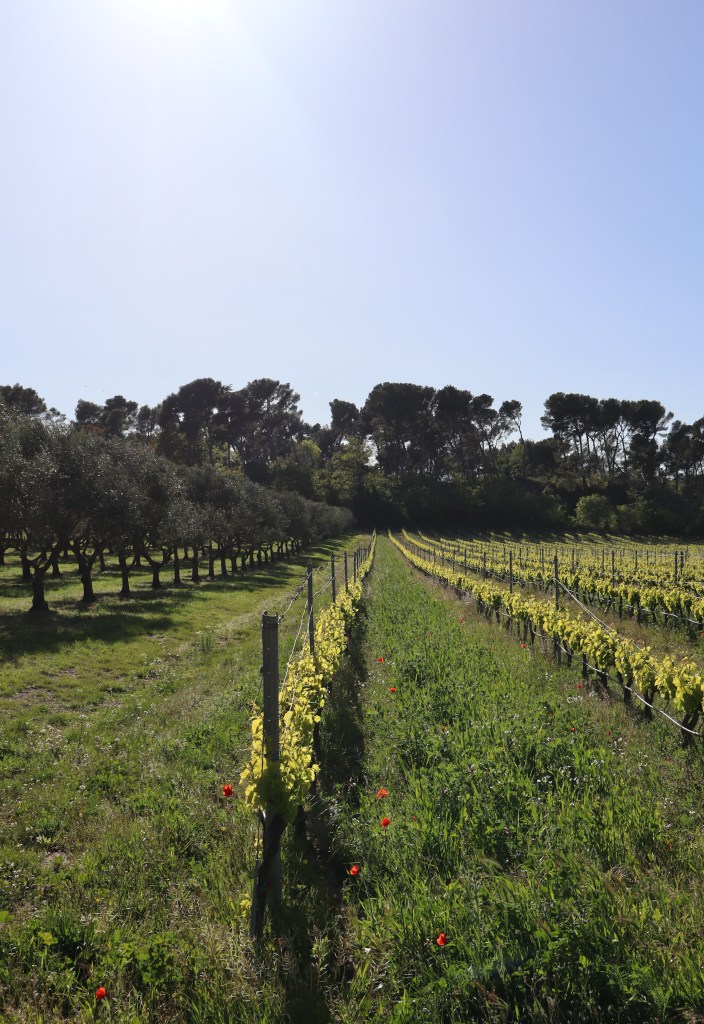
Before sampling the wines ourselves, we take a walk through the rows of vines, planted in 2016 and first harvested in 2019 to create the wines that are available for purchase from the winery’s shop today.
The combination of sunlight and strong northerly Mistral wind makes for fertile wine-growing land; Domaine de Métifiot has 16 acres of vines, producing seven reds and seven whites – 100% organically and biodynamic – from a rich variety of grape types, including Syrah, Cabernet, Mourvèdre, Grenache, Clairette, and Chardonnay.
Although Domaine de Métifiot is relatively youthful compared to the vineyards in the region, the wines produced don’t necessarily reflect this newness.
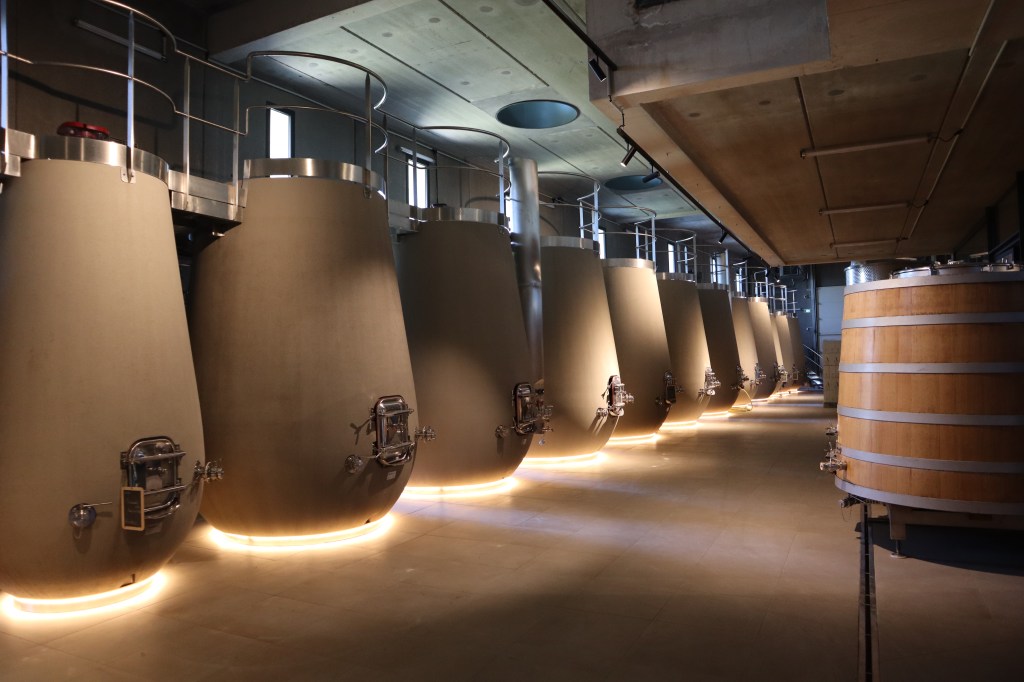
For the production process, the Bateman family travelled to a number of different vineyards and wineries around the world for inspiration. The initial idea for the building came from a trip to South Africa, where they saw how the architecture blended cohesively into the surrounding landscape. It was also on reconnaissance trips in France and other countries that they saw examples of how design can play an important part in wine production, including the fermentation vats in use at Domaine de Métifiot, which wouldn’t look out of place in a modern art gallery or boutique hotel – concrete for the red wines and stainless steel for the whites and rosés.
As buying organic wines becomes more and more popular, the Domaine has gone one step further, producing their wines biodynamically – in other words: produced from the cleanest, safest grapes, without any use of synthetic pesticides or fertilisers. The Mistral supports the cleansing process as it prevents disease, and the biodynamic method is deemed to be a more pragmatic way of production that involves – in the team’s own words – “listening to and observing” the plants, and using ingredients like essential oils, orange, and herbs in the pre-harvest process as an organic barrier against disease.
The team has also taken an innovative approach to the ageing process, using a mixture of clay and oak barrels, and futuristic egg-shaped vats which move sediment by way of a vortex. This latter part of the process affords the wines a unique taste.
While wine-making in this part of the world is a revered art that generally favours tradition, Domaine de Métifiot is bucking the trend in its approach to innovation and style. And the new generations of Batemans – in line to inherit the family enterprise – are, at a young age, already in training to hone their expertise.
When visiting the winery, be sure not to miss the opportunity to taste some of the Domaine’s excellent olive oil. The liquid gold is a precious nectar in this region, where fewer cows mean that butter – used in abundance in more northerly parts of France – is often replaced by olive oil in cooking and baking. The same care is applied to olive oil production as to wine, with fully organic farming and a 100% manual harvesting process. As with the grapes for wine, the olives are categorised by variety (Grossane, Picholine etc.) and extracted through cold press to create an extra virgin variety so special that it carries its own Appellation d’Origine Controllée (Baux de Provence – the oldest in France).
Back in the tasting room, we’re busy sampling a white (a light citrus-based aperitif-style crowd pleaser), rosé (clear notes of minerality afforded by the soil and Mistral winds), and red (barrel-aged for 18 months to produce a distinctive taste that pairs well with meat -especially lamb – and goat’s cheese), with the sound of the olive trees and vines rustling outside.
The walls are lined with bottles for sale, the less-is-more design on the labels reflecting the chic minimalistic style of the winery itself.
In a few months’ time, teams from the Domaine will take to the vineyard to begin harvesting the grapes under the cool shelter of night, which will eventually be transformed into more of the bottles that line the showroom walls.
Visitors to Provence are spoiled for choice when it comes to wine tasting, but it would be fair to say that Domaine de Métifiot offers a modern twist on the experience that may be more difficult to come by. This is a very pleasant way to spend an afternoon or early evening, tasting high-quality Provençal wines in their natural environment, made by a family raised on the very soil in which the grapes are planted.
Tours and tastings at Domaine de Métifiot are available from Monday – Saturday (between 10-12.30 and 15.00 – 19.00). Tastings can be reserved online.
The Domaine can also organise events, including catering, for groups on request.
Domaine de Métifiot wines can also be purchased online.
This was a media visit – all opinions are our own.
Discover more from
Subscribe to get the latest posts sent to your email.

