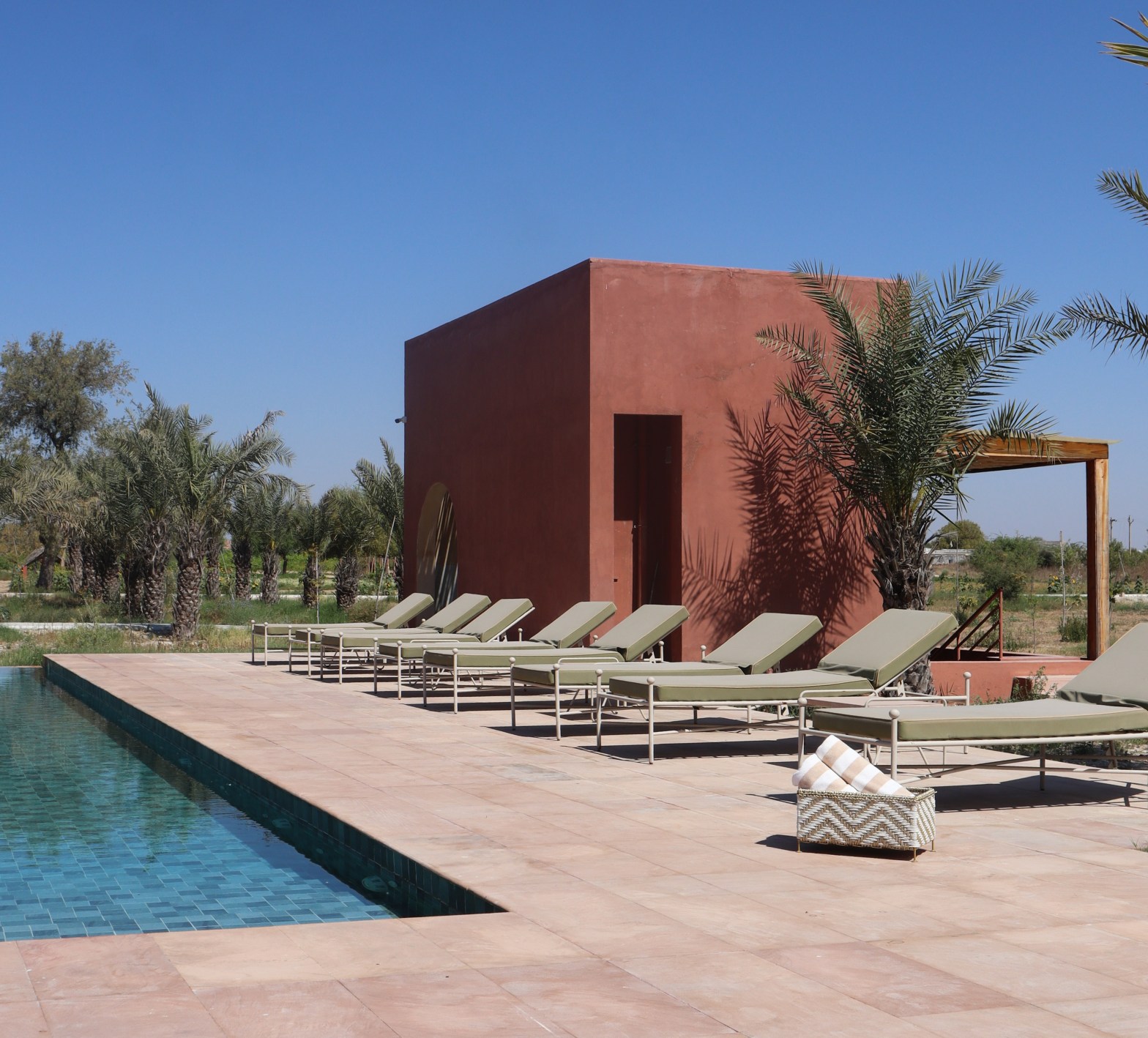
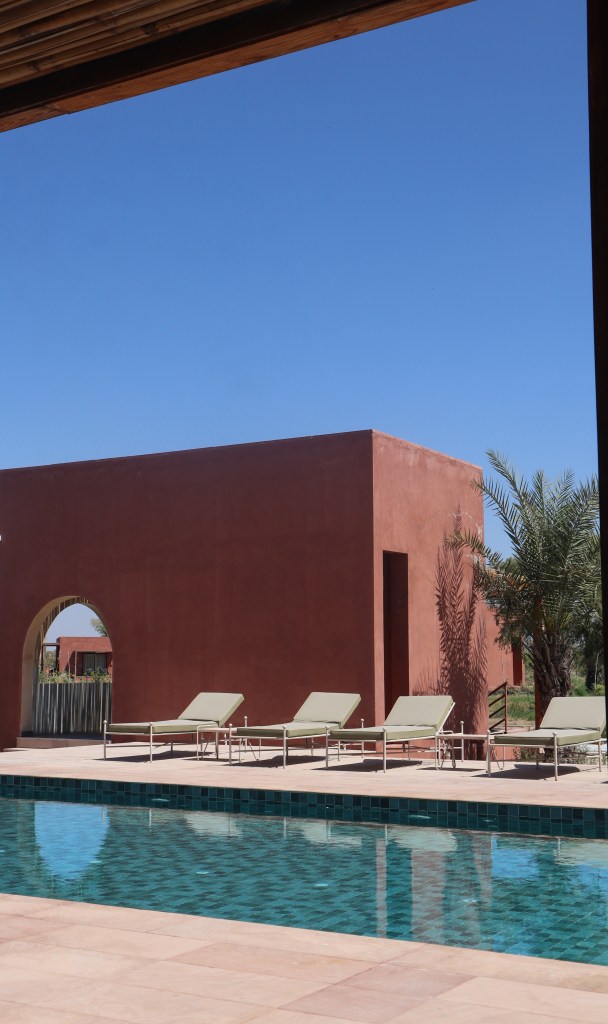
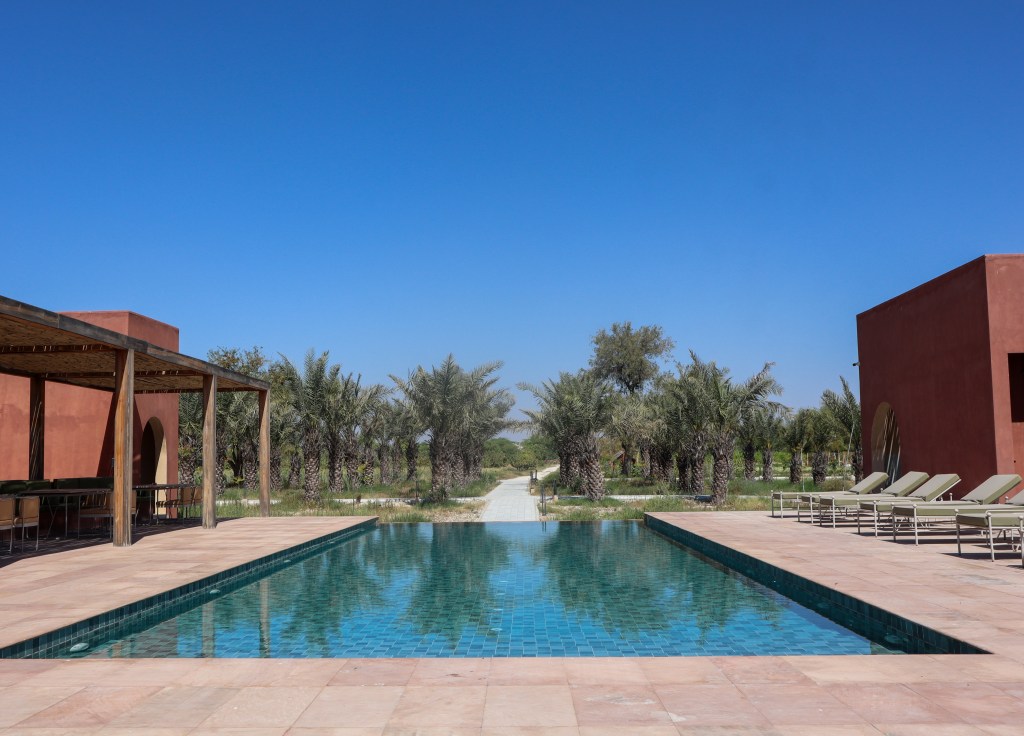
Here, lying on a sun lounger beside the bright turquoise waters of a swimming pool, the only sound is the gentle lapping of the waves and the melodic orchestra of birds. It’s unbelievable to think that we’re just 45 minutes’ outside the hustle and bustle of Jodhpur, a city of 1.7m people in the northern Indian region of Rajasthan. The journey to get here was the typical assault of the senses you often hear about in association with northern India: a chaotic arrival at the train station followed by a journey through gridlocked streets to a cacophany of car horns, only to arrive at this unexpected oasis of tranquility in the countryside.
Mharo Khet – “my farm” in Hindi – is the hottest ticket on the Indian boutique hotel scene. Featuring on the hotlists of the likes of Condé Nast and Time Magazine (who recently named it one of the world’s greatest places), you’d imagine a place swarming with visitors with a waiting list of months for a room. Unbelievably, today it’s just us and the wildlife.
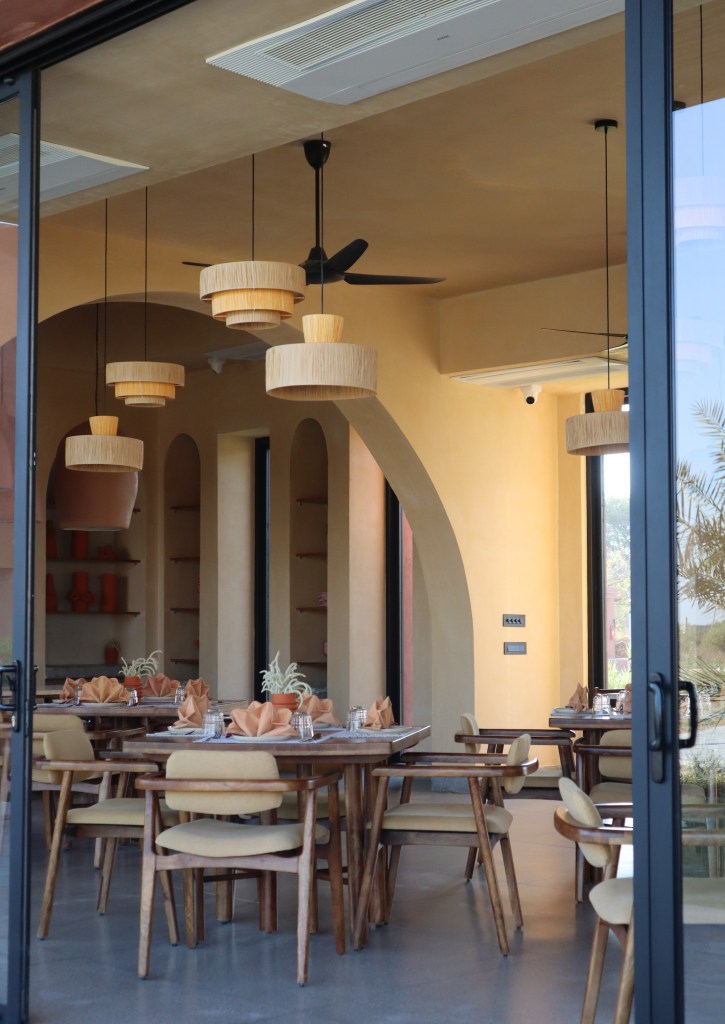
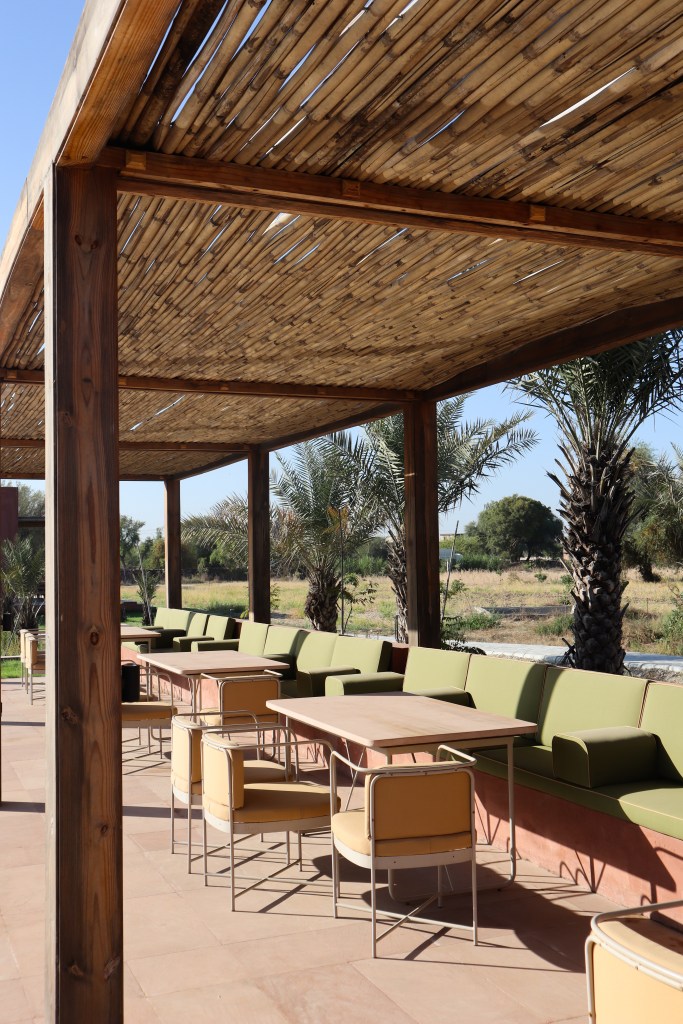
This hotel is all about prioritising the good things in life: high quality, great food, and plenty of natural beauty. We arrive in the evening when it’s pitch dark with no light pollution and hundreds of stars. The place feels magical, illuminated by dots of orange lanterns scattered around the farm’s grounds, and in the distance we see the glow of the hotel’s restaurant and a faraway blur of guests who have travelled to sample a menu well-renowned in the Jodhpur dining scene.
A member of the reception team guides us through the dark to our bungalow, bright and inviting in the distance. We’re staying in one of 10 luxury bungalows, each named after ragas – note patterns used in classical Indian music. As the ragas represent the movement of the sun through different parts of the day, Mharo Khet has been designed as a tribute to nature and salutation of the sun.
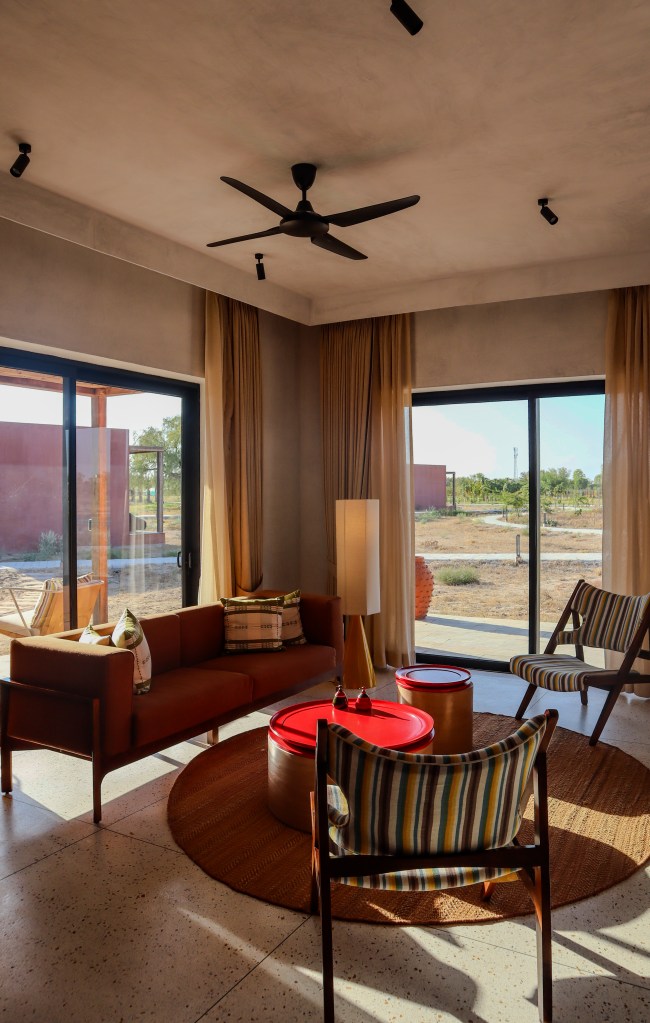
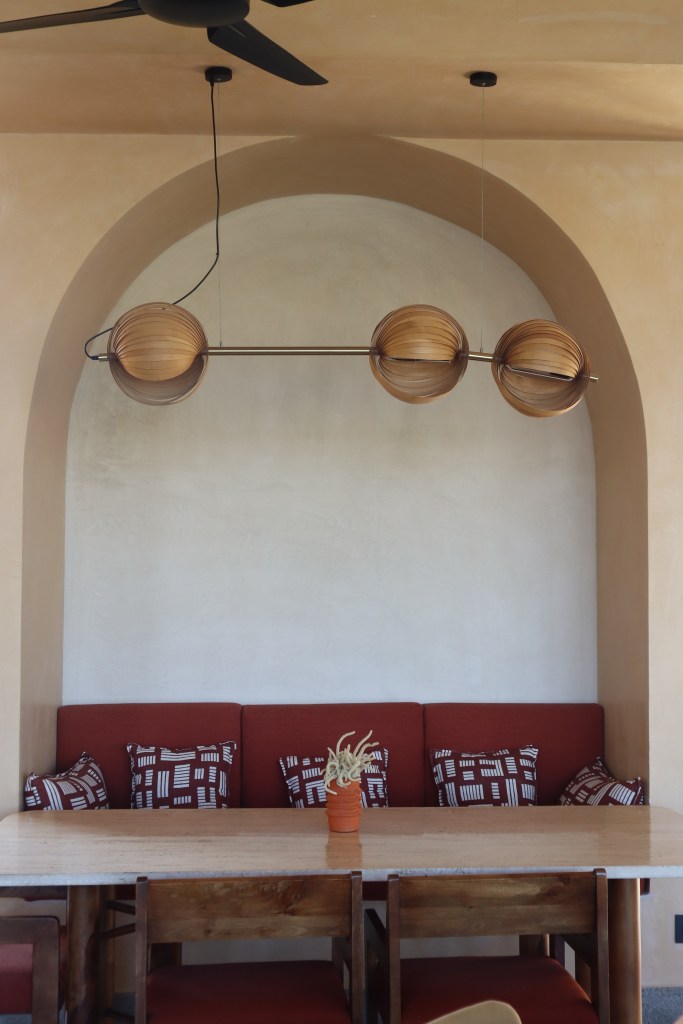
Inside, our bungalow is unexpectedly beautiful. The interior design is chic and minimalist, but with books, sculptures and statement lighting adding a lived-in vibe. Far from feeling like somewhere to rest your head for the night and depart quickly in the morning, the bungalows feel like fully-fledged homes where you could easily spend weeks at a time. The walls are adorned with abstract paintings that hint at natural surroundings, while the sculptures and ornaments point to the uniqueness of the land: woven pots, Kutch embroidery, and books about wildlife native to this part of the world. Everything is muted and peaceful in tones of lime-washed greige and putty, contrasted by splashes of primary colours from pop art-esque tables and lamps.
The bedroom is huge, dominated by a large double bed against a feature wall in shades of terracotta and cream.
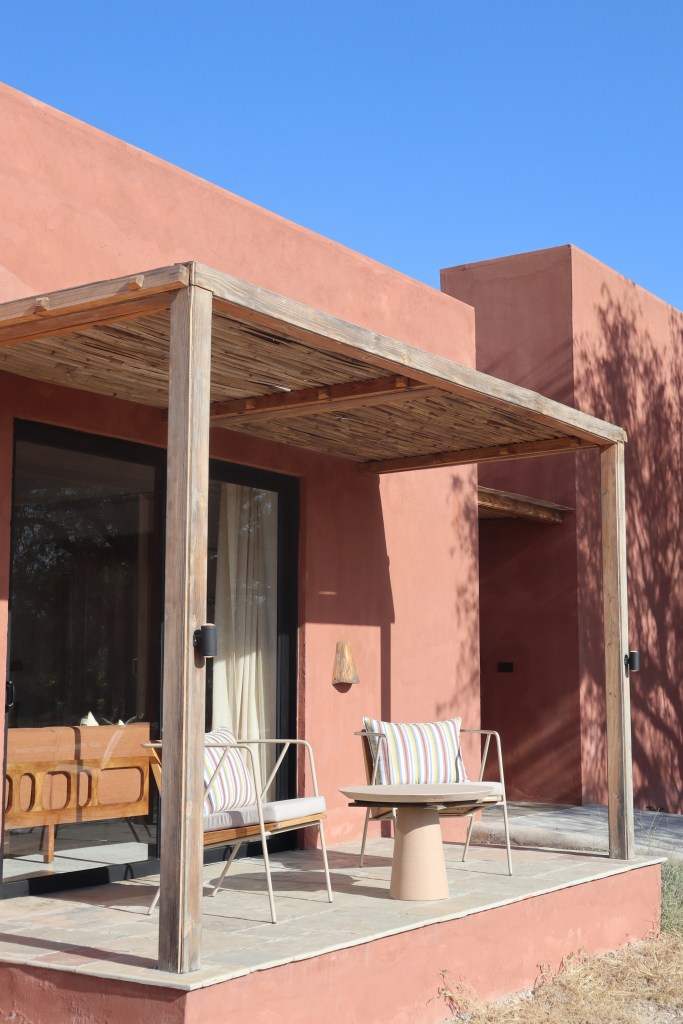
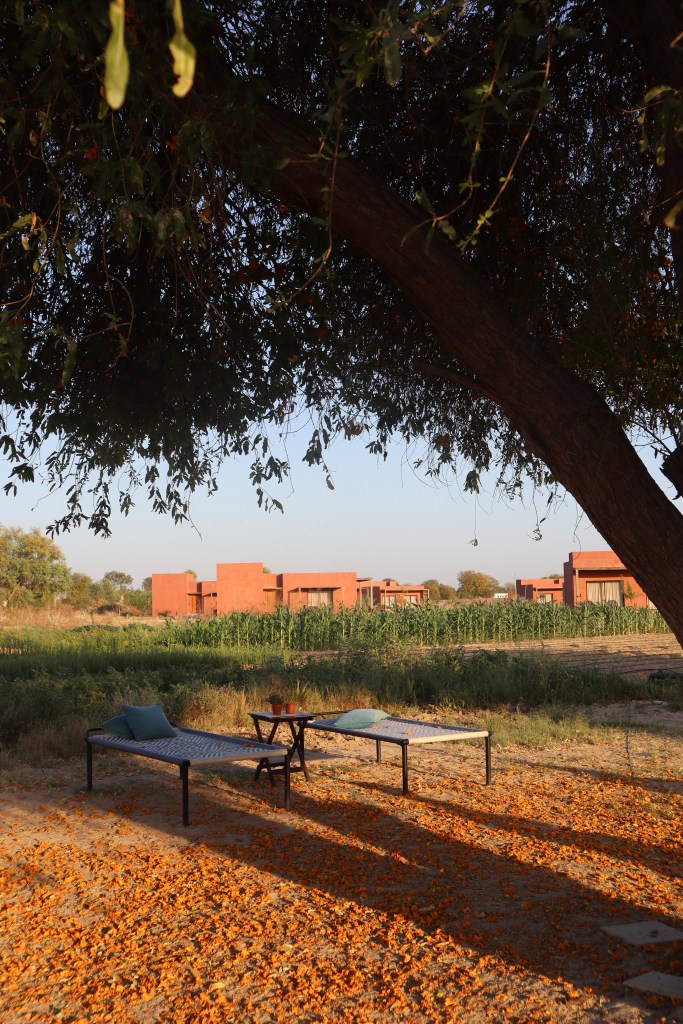
When we wake up early in the morning with the birdsong, we’re thrilled to discover not one but two outdoor verandahs – one designed to watch sunrise and the other for sunset. Or – put far more poetically by the General Manager later – “one for coffee and one for beer”. We test both out during our stay, enjoying the warm glow of the rise and fade of light and the birds that serenade us at either end of the day.
The early morning brings another treat: a pre-breakfast delivery of homemade bread or baked goods to our room, so we enjoy the peace and quiet of sunrise with the most delicious walnut and banana bread fresh from the kitchen.
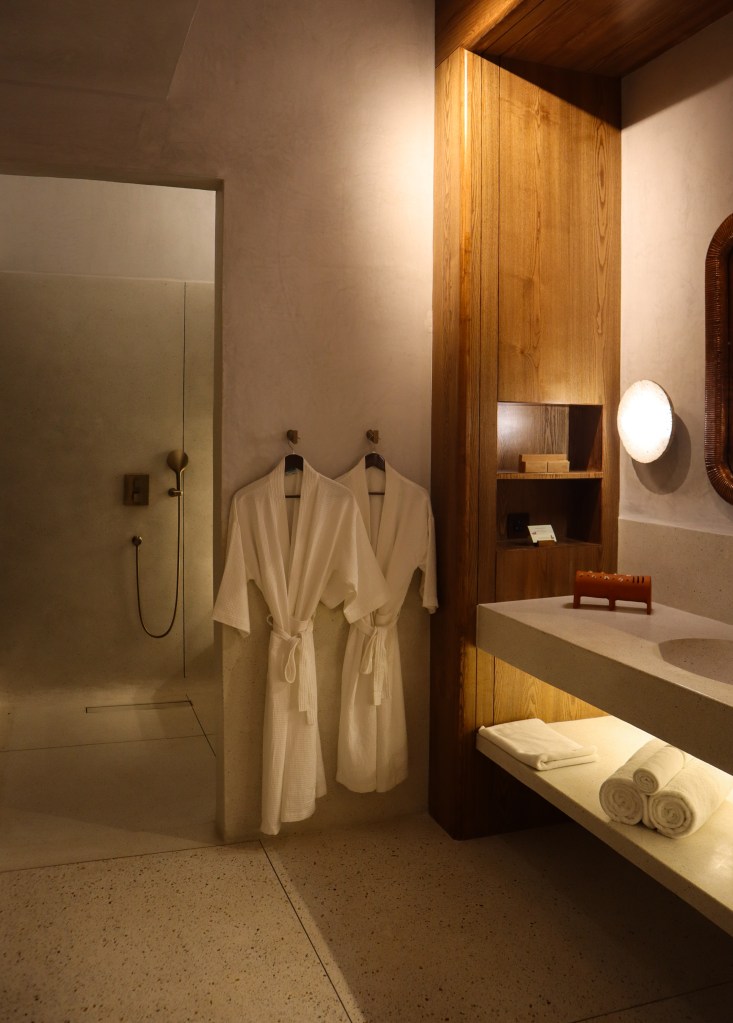
The bungalow’s bathroom is a small suite in itself with walk-in rain shower, large double vanity area and toilet. One of the shower walls is a glass door which, when opened, reveals a small inner courtyard, allowing guests to shower al fresco but in total privacy. A welcome and unexpected feature for India is that the bathroom’s water supply is fully drinkable, coming straight from Mharo Khet’s own well.
Morning baked goods consumed and enjoyed, our appetite is whetted for breakfast. It’s an à la carte menu where guests can choose from a vast array of Indian and international dishes. We sample both during our stay and all are excellent, but the Indian dishes are particularly worth trying. We taste south Indian dosa, idli, and poha, all served alongside health-boosting fruit juice (from the farm’s own fruit trees, of course) and barista-level coffee or chai. Among the international options are eggs Benedict, sweet pancakes, and muesli bowls packed with nutritious goodness.
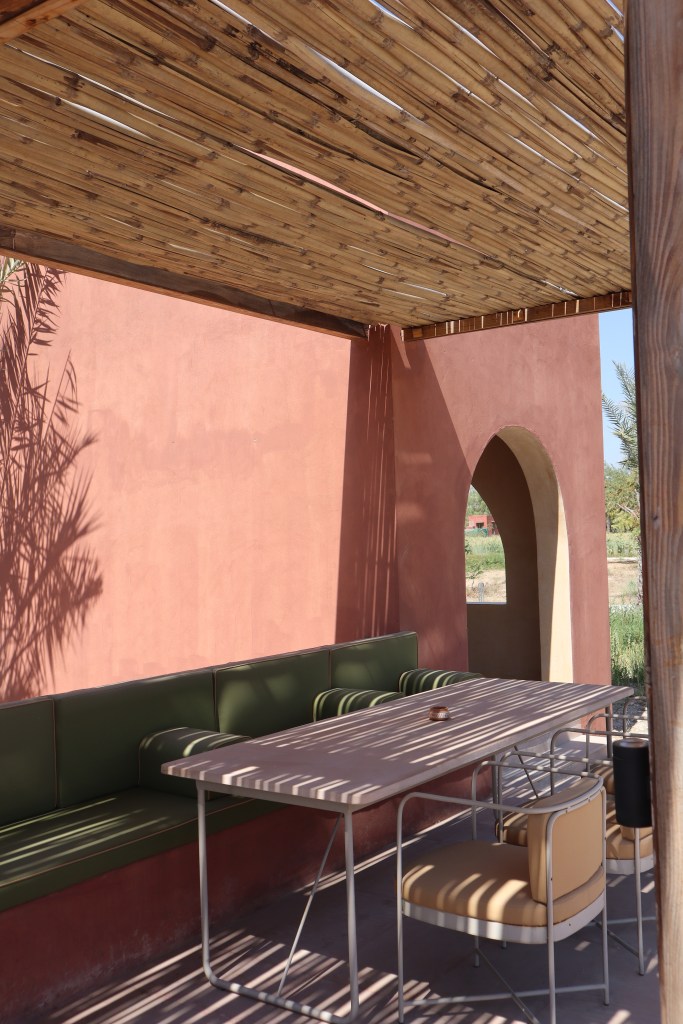
After this veritable feast, we need some time to digest and so most of our day is spent poolside, endlessly admiring the Palm Springs-esque aethestic of pink walls against turquoise water, and emptying our heads of all concerns, observing birds fluttering overhead and insects buzzing around. Food and drinks can also be served poolside if the thought of leaving your spot for lunch is just too taxing.
Mharo Khet has made the most of its unique rural location by designing a varied activities menu with something on offer for everyone. Most experiences are intended to introduce visitors to the area’s local traditions, and are delivered in collaboration with people from the local Manai village (a key tenet of the hotel’s ethos is offering sustainable employment opportunities to support local people) demonstrating a deep respect for their traditions. Some of these experiences include a Champi head massage, traditional razor shave under the shade of a tree, village games, yoga practice, and cooking classes. For those looking for a once-in-a-lifetime experience, there’s a private tour of the Mehranghar Fort at sunset, delivered by the Fort’s curator.
We’re curious about the sustainable nature of the kitchen and its reputation, and so decide to partake in a tour of the farm (one of several complimentary experiences on Mharo Khet’s menu). We begin with a short drive on the back of a tractor as the late afternoon heat is burning off, stopping en route to see a traditional stone house (now used as a pantry) and understand how the sustainable water well system works.
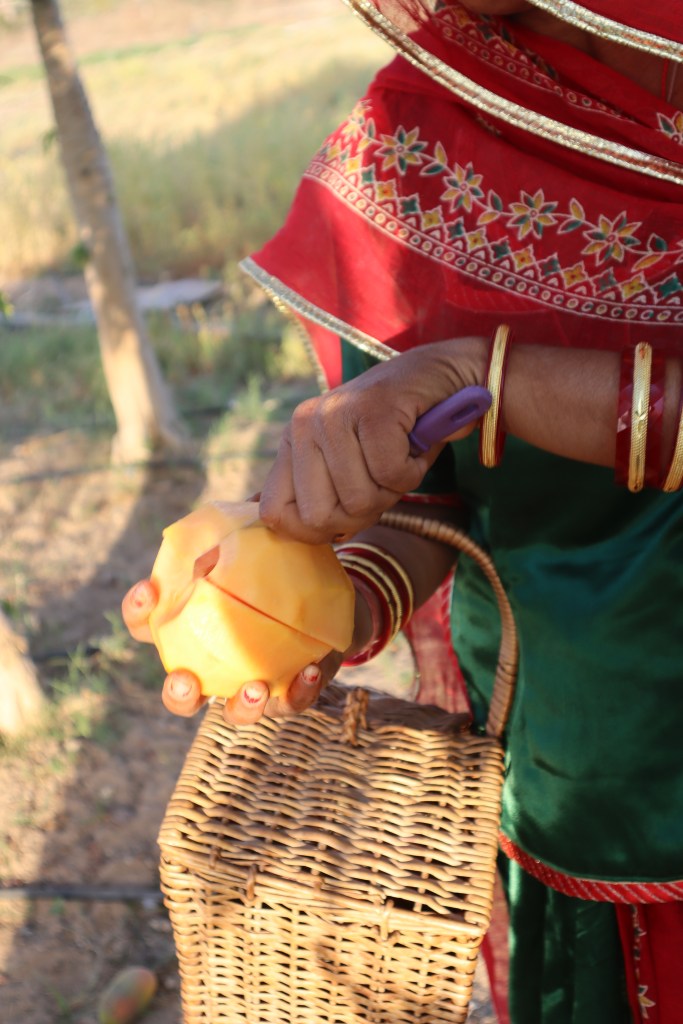
All along the journey, we’re accompanied by a knowledgeable guide, who explains everything in detail, and a woman from the local village – dressed in a beautiful red and green sari, which appears to be the more traditional uniform of the hotel – who expertly cuts fresh fruit, vegetables and herbs straight from the plant to allow us to taste the freshness of the produce on offer here. As we meander through the enormous greenhouse, it’s noteworthy just how many varieties of fresh fruit and greens are self-produced at Mharo Khet – no doubt owing to the glowing feedback for the hotel’s menu. We try unbelievably sweet tomatoes, the most fragrant herbs, and see enormous versions of the comparatively pathetic vegetables found in supermarkets back home.
One final stop to have fresh salted lime juice with the General Manager, and the tour ends in characteristically magical style at a tree swing with a perfect sunset view. We’ve arrived just in time to watch the sun dip below the horizon.
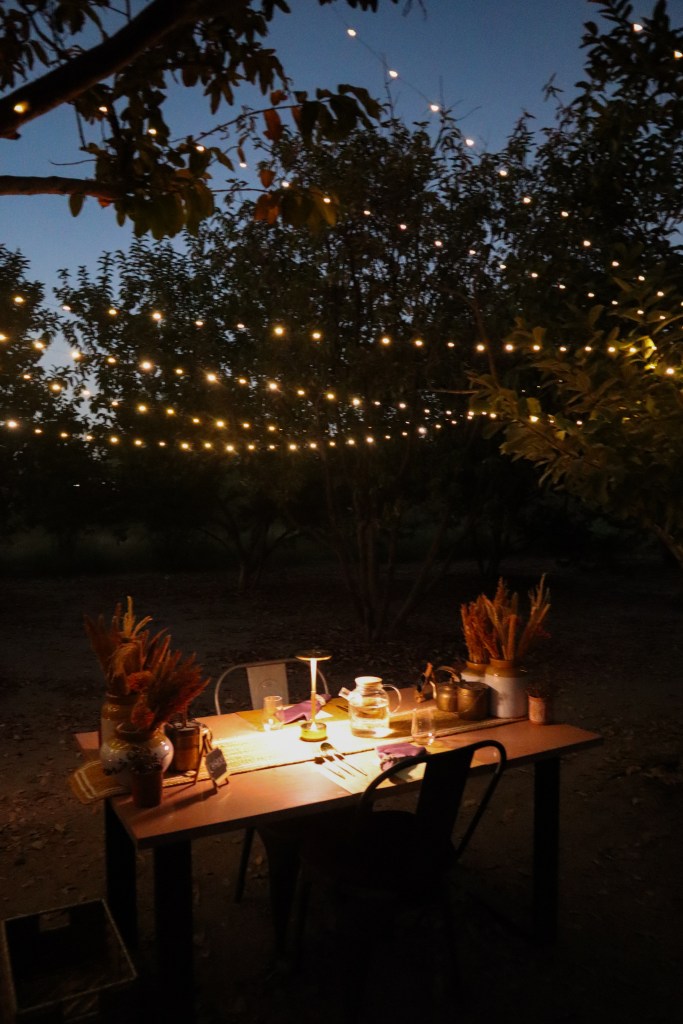
From here, we’re led by lantern-light through the branches of guava trees to a quiet spot in the middle of the grove, where garlands of fairy lights drape above a perfectly set dining table. This is Paeru, Mharo Khet’s flagship experience. Paeru is a 9-course vegetable-forward tasting menu, set in nature and projecting nature through its dishes – quite literally from farm to table.
Chef Ishan Ahluwahlia – who cut his culinary teeth at the likes of Indian Accent, New York – has been recognised by Michelin for his fun and whimsical approach to experimental cooking. The current menu is a journey through life: starting with curd rice wrapped in curry leaf to show birth, moving through childhood, to a plate playfully smashed in half to show tumultuous teenage years, set with yakitori mushroom and koji caramel.
Mid-life crisis is represented by jackfruit haleem with a crunch of puffed millet, before petha, sea buckthorn and red rice convey the comfort and wisdom of later life. Finally, sweet settlement in the form of strawberry mousse with saffron and dill. We spend the meal in wonderment at the creativity of the dishes and trying to pick out the delicate balance of complex flavours. To accompany the menu, Mharo Khet offers a list of local and international wines, beers and spirits to choose from – including the local Jodhpur gin that we’ve chosen.
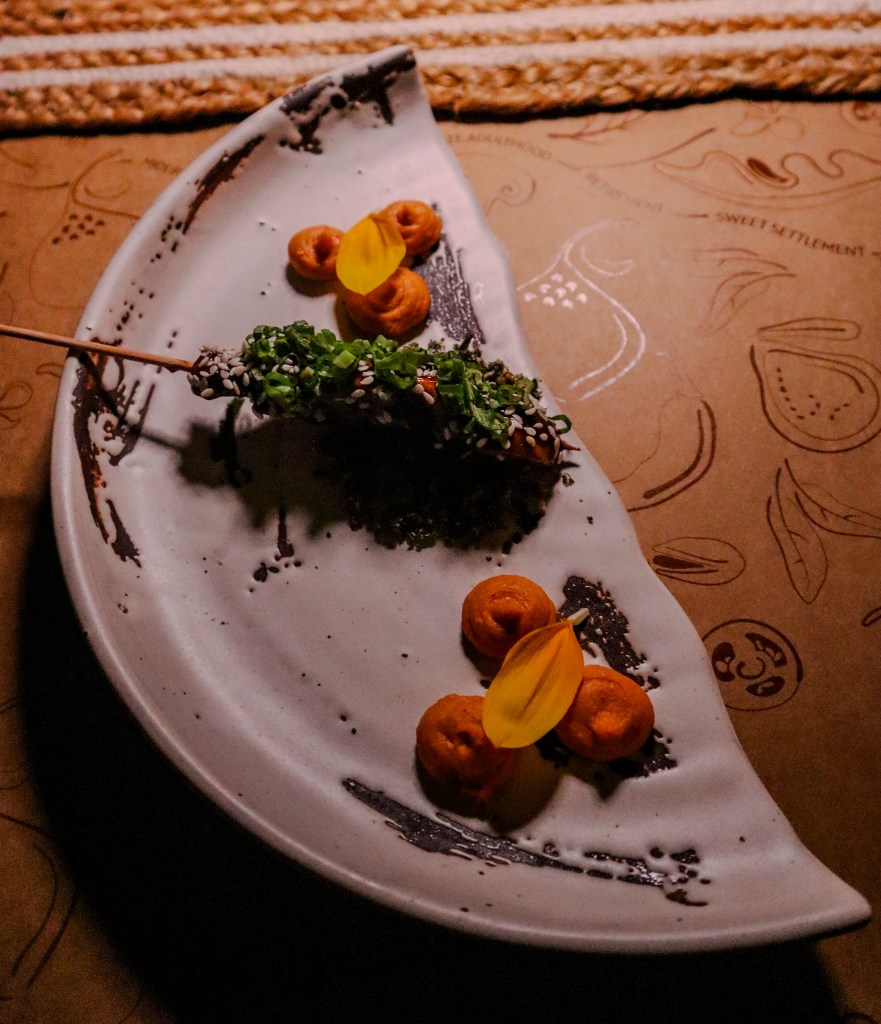
For fear of over-using ‘magical’, there’s no other way to describe this deeply atmospheric experience, where the cicadas hum and team members materialise like apparitions through the trees with lanterns, bringing art-like dish after dish to enjoy by fairylight.
When we return to our room that evening, the room has been turned down – lamps low, slippers in place, and some mint leaves dipped in chocolate (“kissed” by dark chocolate, as the writing on the leaf promises). Suddenly, there’s some continuous loud noise, like gunfire, outside in the distance. We temporarily feel a little apprehensive. To assuage any worries, we decide to call the reception, which is on-hand 24/7. A little bemused, the reception informs us that India has just won the cricket world cup, and the celebrations can be heard from as far as Jodhpur.
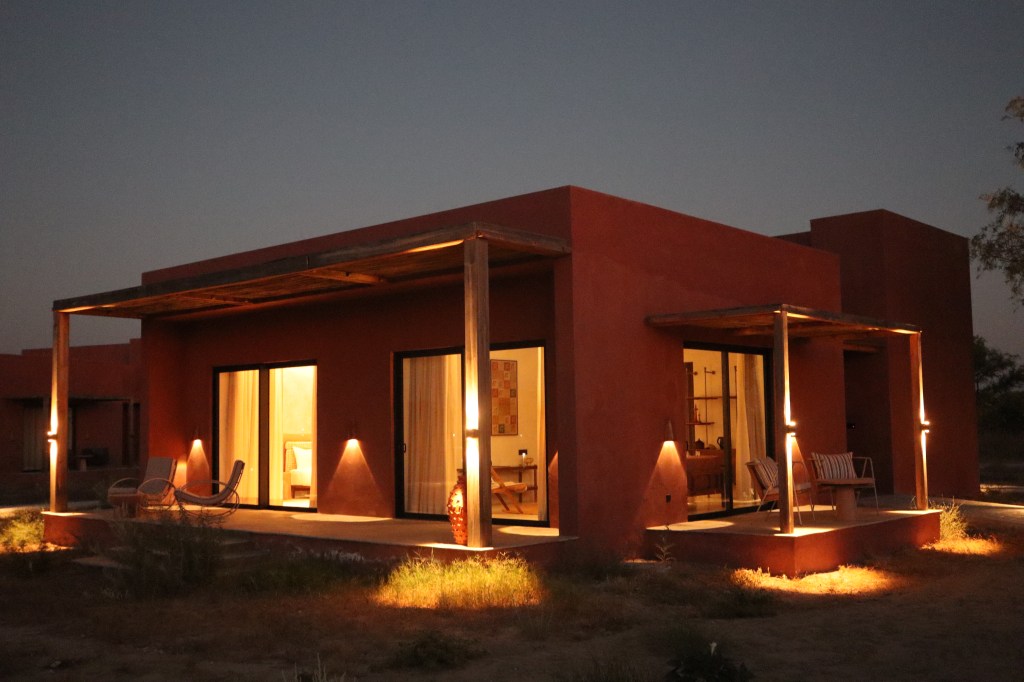
We choose to savour as much of our final morning as possible, waking at the crack of dawn to take in sunrise from our verandah. As the dark of early morning fades to lilac and the day begins, the chorus of wildlife takes its cue – a musical show to accompany our morning bread basket delivery (homemade bread and honey scented with the garden’s flora).
One last peaceful walk through the grounds to breakfast; one last dish to try from the chef’s à la carte menu; one last perfectly spiced masala chai; one last look at the glittering Hockney-esque pool.
The staff members who have made our stay so special over the last few days – the restaurant team, bar staff, general manager, reception team – go out of their way to bid us farewell.
One last deep breath as the taxi pulls away from the peace and quiet, through the front gate and eventually rejoins the beeping and overtaking of Rajasthan traffic. Mharo Khet stays in our minds in the weeks following our return, popping up almost daily on lists of the best new hotels or most aesthetic stays. It’s firmly made it onto our list and we’d recommend adding it to yours too – somewhere to take a breather from the frenetic buzz of Rajasthan, disconnect, and just take a minute to really look at the beauty of this amazing part of the world.
We stayed
in one of Mharo Khet’s ten luxury cottages, priced from 28,000 Indian rupees (exc. vat). This rate included an excellent à la carte breakfast and morning delivery of baked goods.
We participated
in the free walking tour of the farm and the Paeru 9-course tasting menu experience, priced at 5310 rupees per person (not including drinks).
This was a media stay – all opinions are our own.
Discover more from
Subscribe to get the latest posts sent to your email.
 thewanderluxe.co.uk